

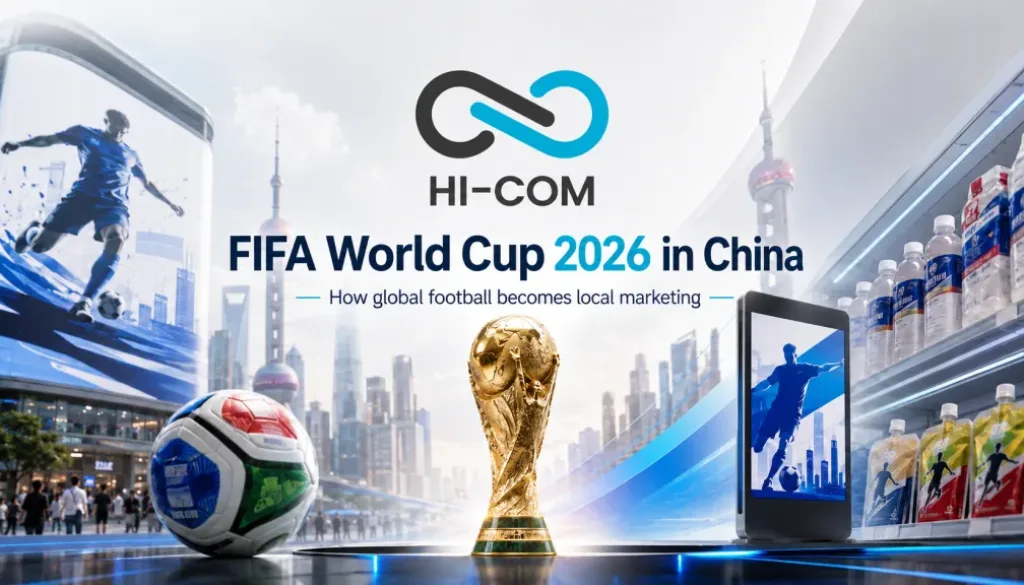
FIFA World Cup 2026 China Marketing: Shanghai’s Football Fever, Brand Activations and Night-Time Fan Culture
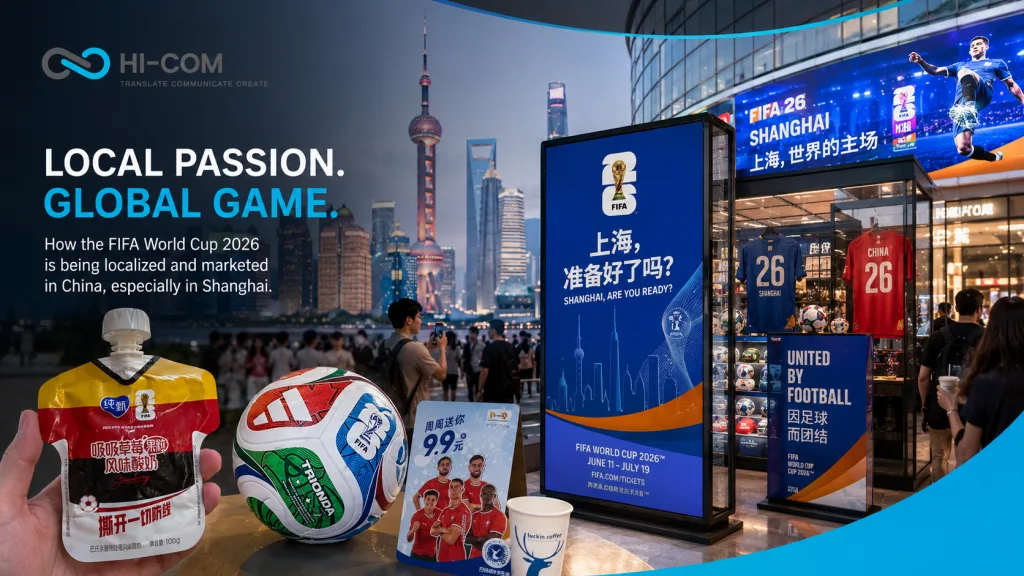
The FIFA World Cup 2026 is taking place across the United States, Canada and Mexico, but China is one of the most interesting markets to watch. In Shanghai, the tournament is visible in metro stations, shopping malls, cafés, sports bars, pop-up stores, outdoor event spaces, short-video platforms and branded fan experiences.
For international brands, this is a useful case study. A global event does not become powerful in China only because it is famous. It becomes powerful when it is adapted to local habits, local platforms, local time zones and local consumer behaviour.
The FIFA World Cup 2026 is also the largest edition of the tournament so far. It is the first FIFA World Cup with 48 teams and three host countries: the United States, Canada and Mexico. That wider format creates more matches, more storylines and more commercial opportunities for brands that know how to localize global attention.
In China, this World Cup is not only a football tournament. It is a digital-first cultural moment shaped by late-night viewing, Chinese brand sponsorships, Shanghai pop-ups, social media content, sports bars, celebrity marketing, Chinese manufacturing, smart technology and pop-culture IP.
Why FIFA World Cup 2026 China Marketing Matters Now
The FIFA World Cup 2026 matters in China because it combines sport, entertainment, celebrity culture, retail, food and beverage, social media and city events. Even without China’s national team on the pitch, Chinese consumers are taking part through viewing parties, brand activations, official merchandise, player endorsements, short videos and local football experiences.
This is the key marketing insight: in China, the World Cup is not only a sports event. It is a cultural and commercial platform. It gives brands a limited window to create attention, build emotional connection and generate social sharing.
For brands entering China, this type of global event is a reminder that local execution matters. The campaign needs the right language, channels, content rhythm, offline touchpoints and consumer journey. It also needs speed. The best moments are often short-lived, and Chinese platforms move fast.
The “Invisible Chinese Team”: China’s World Cup Presence Without Qualification
China did not qualify for the FIFA World Cup 2026. However, the country is still highly present in the tournament ecosystem. Chinese viewers, sponsors, manufacturing hubs, technology providers, referees, celebrities and pop-culture symbols all contribute to what Chinese media and fans often describe as an “invisible Chinese team.”
That expression is useful for marketers. It shows that participation in a global event is not limited to playing on the field. A country can participate through supply chains, consumer culture, media attention, technology, sponsorship and national pride.
A Digital-First World Cup Audience in China
Chinese interest in the World Cup remains massive. FIFA reported that after 41 matches, the 2026 tournament had already reached 205 million unique viewers on CCTV channels in China. This confirms that football still has strong national reach, even without China’s team in the competition.
At the same time, viewing habits are changing. During the 2022 FIFA World Cup, China accounted for 49.8% of global viewing hours on digital and social platforms. This matters because Chinese fans increasingly follow football through smartphones, short videos, livestream clips, highlights, social commentary, tactical analysis and online discussions.
The North American time zone also changes the way Chinese audiences watch. Many matches take place late at night or early in the morning in China. As a result, many fans do not watch every full match live. Instead, they follow key moments, referee decisions, goals, player reactions, memes and brand content across Douyin, Weibo, Xiaohongshu, WeChat and video platforms.
Chinese Sponsors: Fewer Logos, Deeper Strategic Roles
Chinese brands remain important World Cup players. Lenovo, Hisense and Mengniu are among the major Chinese names connected with FIFA and the FIFA World Cup 2026 sponsorship ecosystem. The number of Chinese top-tier sponsors is smaller than in some previous tournaments, but the remaining brands are using the event more strategically.
This shift is important. The World Cup is no longer only a logo-placement opportunity. It is a platform for technology visibility, product launches, retail activations, fan zones, content partnerships and global credibility.
For China marketing teams, this is a key lesson. Sponsorship should not stop at awareness. It should connect brand meaning, consumer touchpoints, product experience and social sharing.
Made in China: Yiwu, Merchandise and the Supply Chain Behind the Fans
China’s World Cup presence is also industrial. Many fans around the world interact with Chinese-made products without noticing it. Jerseys, flags, souvenirs, fan accessories, mascot items, scarves and football-related merchandise are often connected to Chinese manufacturing hubs.
Yiwu is especially important. Chinese media reported strong growth in Yiwu’s sports-goods exports before the 2026 tournament, confirming the city’s role as a global sourcing hub for World Cup-related goods.
This matters for brands because sports marketing is not only media. It is also product readiness, supply-chain timing, packaging, retail displays and local distribution. A successful World Cup campaign in China needs the product side to move as fast as the media side.
Technology, VAR and the Smart World Cup
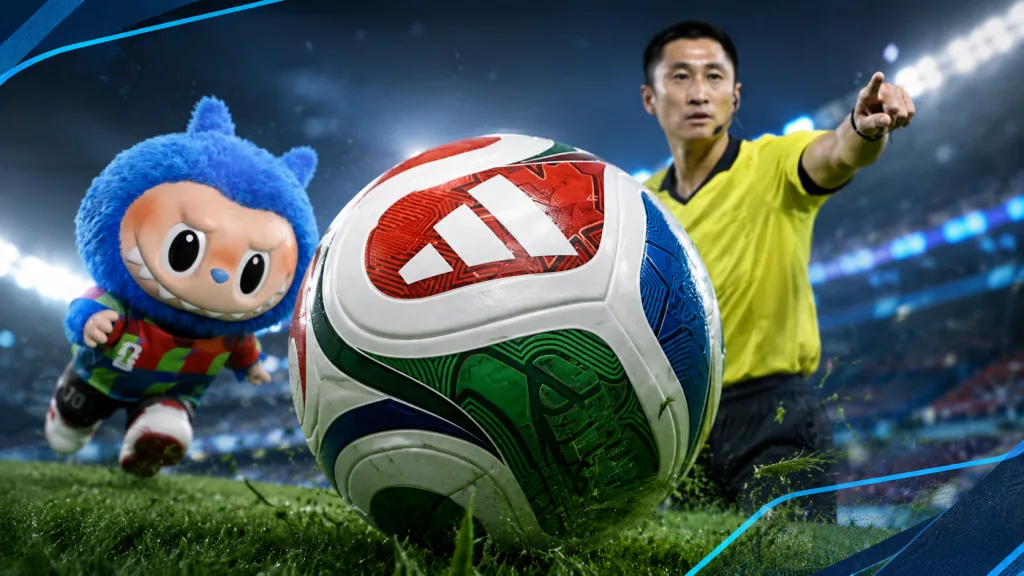
The FIFA World Cup 2026 is also a technology story. The official match ball, TRIONDA, uses connected ball technology with a 500Hz motion sensor. This supports match data and officiating workflows.
Chinese technology companies are also part of the wider tournament conversation. Lenovo’s role as a FIFA technology partner and Hisense’s visibility in broadcast and VAR-related environments show how Chinese companies are not only selling to consumers. They are also positioning themselves as infrastructure and innovation partners for global events.
For marketers, this creates a wider message. Chinese brands are increasingly trying to move from “visible sponsor” to “essential technology partner.” That is a stronger, more defensible form of brand authority.
Ma Ning and the Chinese Refereeing Team
Chinese referee Ma Ning has become one of the most discussed Chinese figures of the FIFA World Cup 2026. With China’s men’s national team absent again, his presence gives Chinese fans another point of connection to the tournament.
Ma Ning’s role also shows how national pride can attach to unexpected figures. A referee, a technology brand, a manufacturing hub, a toy character or a beverage campaign can all become part of the national World Cup conversation.
For brands, this is important. Fan culture in China is flexible. Consumers do not only support teams. They also support symbols, stories, personalities, products and moments that give them a reason to participate.
Labubu, Pop Culture and the World Cup Stage
Labubu became one of the most visible Chinese pop-culture elements around the FIFA World Cup 2026. The character appeared in World Cup-related cultural moments and generated wide discussion on Chinese social media.
It is important to be precise: Labubu is not the official FIFA World Cup 2026 mascot. FIFA’s official mascots are Maple, Zayu and Clutch. However, Labubu’s World Cup visibility still matters because it shows how Chinese IP can move from collectible culture into global sports entertainment.
For consumer brands, this is a major signal. Sports marketing in China is no longer only about teams and athletes. It also includes toys, fashion, drinks, snacks, celebrities, livestreams, music videos, memes and limited-edition collaborations.
Shanghai Field Notes: When Football Becomes City Media
Shanghai is one of the best places to observe how global sports marketing becomes local consumer activation. HI-COM’s field photography from Shanghai shows several clear patterns: metro advertising, shopping mall displays, football pop-ups, beverage campaigns, football-themed cafés, retro jersey exhibitions and live fan gatherings.
Adidas and the Legendary Street Pitch Experience
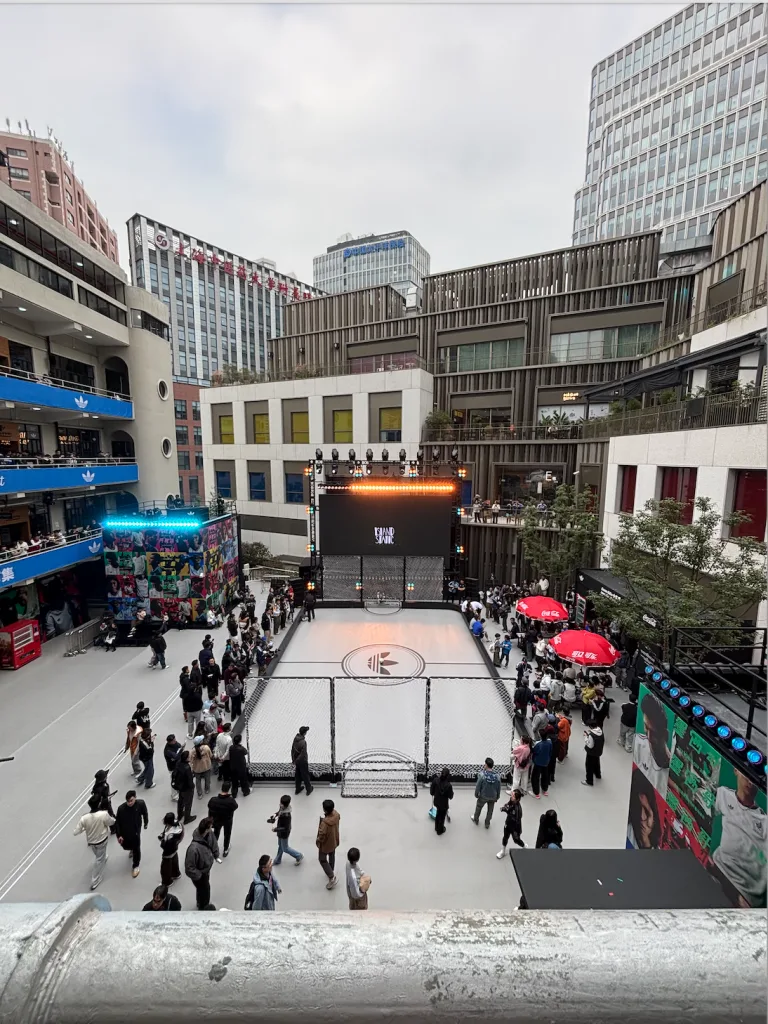
One of the strongest examples is Adidas’ football activation in Shanghai. The Adidas “Legendary Pitch” pop-up at the West Bund Dome Art Center combined street football, 3v3, 2v2 matches, freestyle football, live music, food vendors, limited merchandise and social sharing opportunities.
This is exactly how global brands should approach China. The campaign is not only an advertisement. It is a place people can visit, photograph, share and remember.
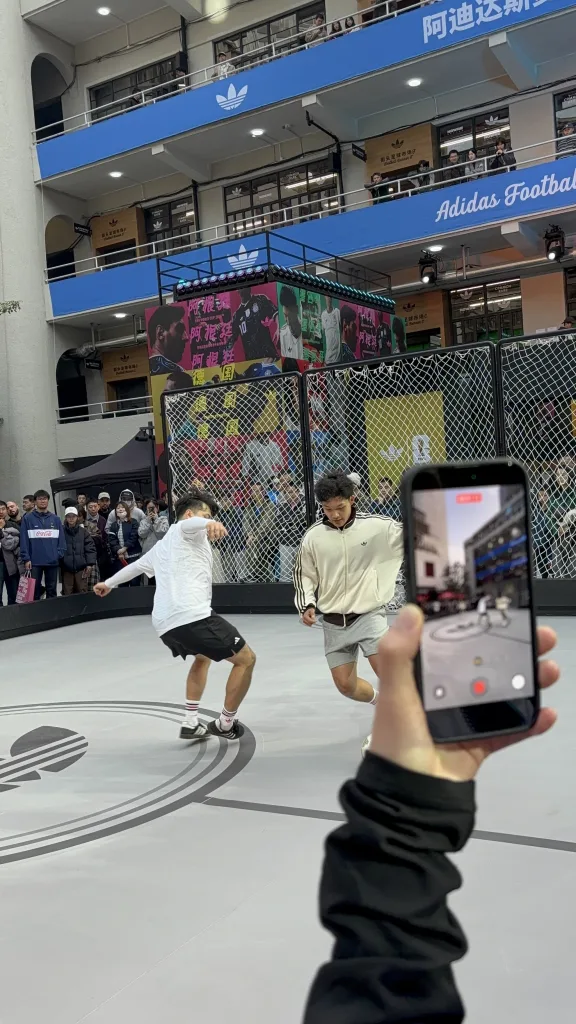
In China, the strongest offline events are often designed for online circulation. A football pitch is not just a pitch. It is a content set, a community point, a retail opportunity and a brand memory.
Metro Advertising and Player-Led Campaigns
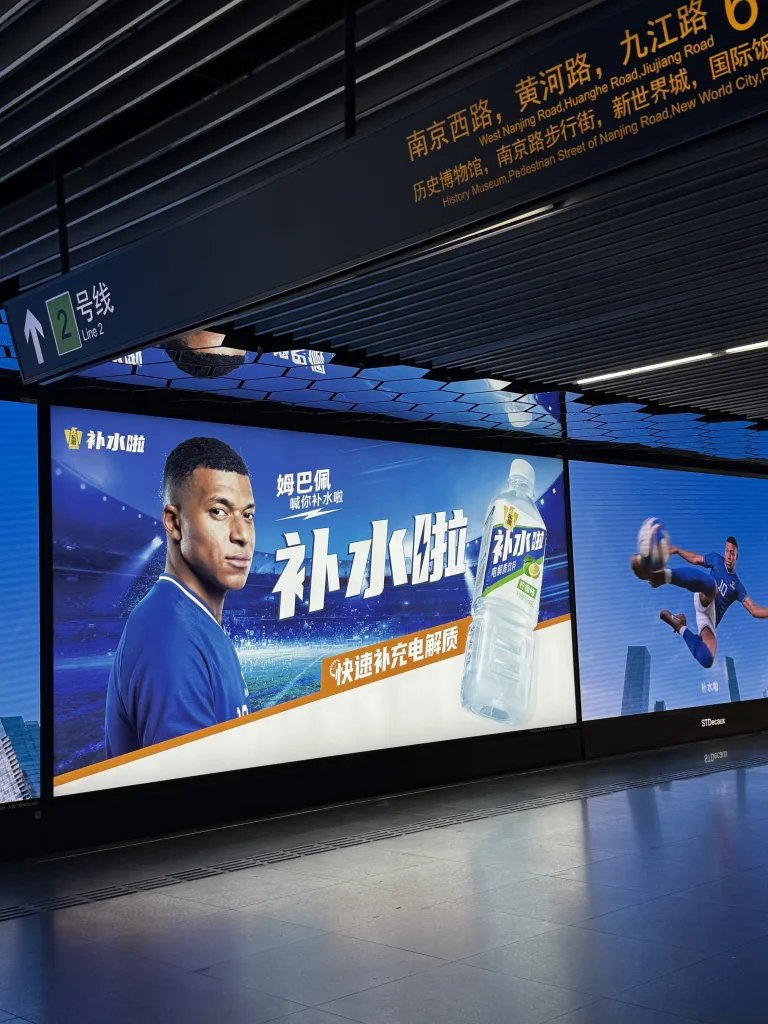
Shanghai metro campaigns show how football advertising can dominate high-frequency urban spaces. Large-format visuals linked to global football stars create instant recognition, while station displays and LED walls give brands repeated exposure.
Campaigns built around players such as Kylian Mbappé, Lionel Messi and Cristiano Ronaldo work because they cross language barriers. However, global fame alone is not enough. In China, these campaigns still need local copywriting, platform adaptation, retail timing and social content logic.
A metro ad in Shanghai can quickly become more than outdoor media. It can become a Xiaohongshu post, a Douyin clip, a WeChat Moment or a group-chat recommendation.
Luckin Coffee, Portugal and Everyday Football Consumption
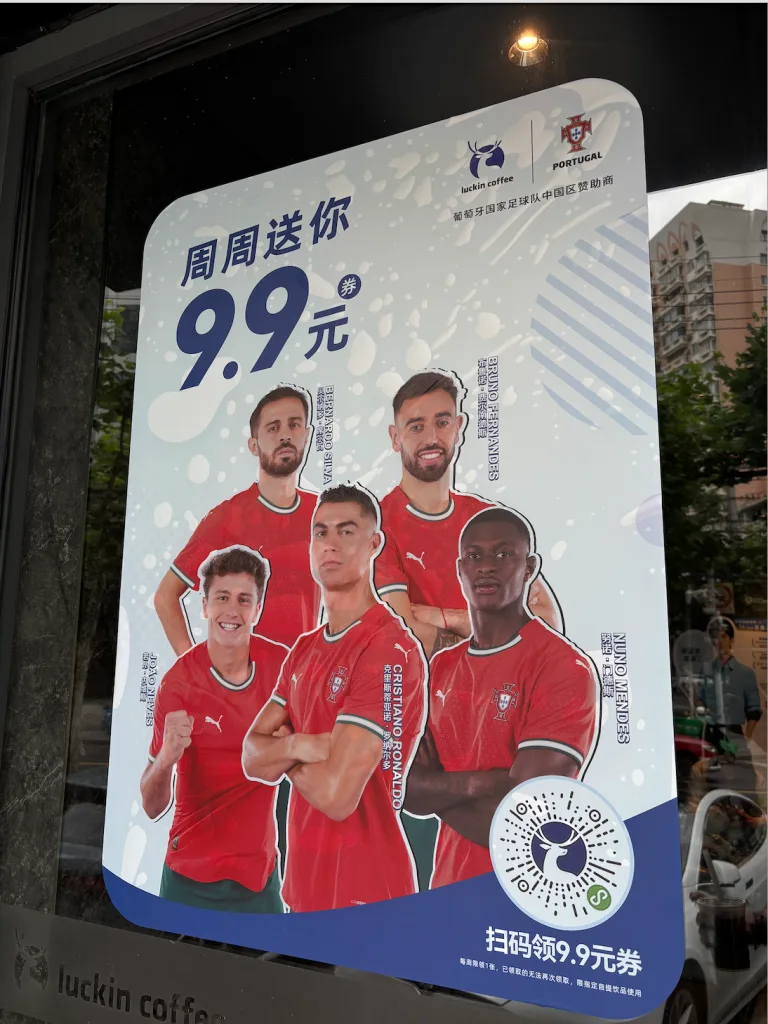
Food and beverage brands are using the World Cup to enter everyday routines. Field photos from Shanghai show football-themed coffee and beverage packaging linked to European football culture and national-team identity.
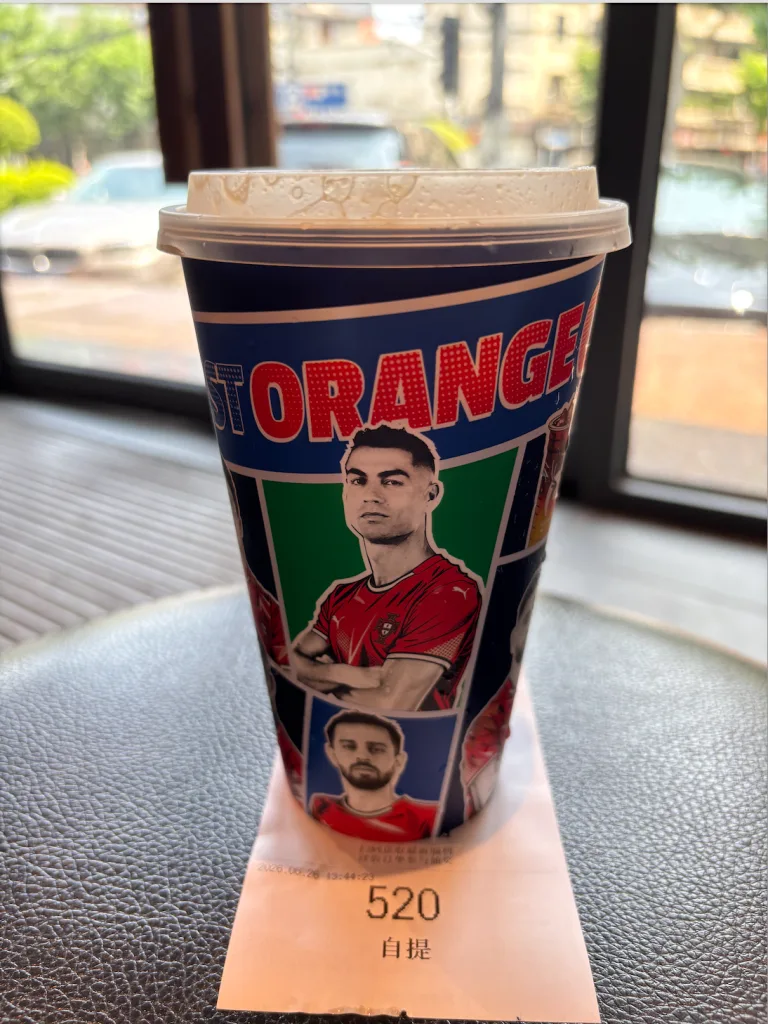
The Portugal national football team and Cristiano Ronaldo are especially strong symbols for this type of activation. They connect star power, national-team identity and daily consumption.
For a brand such as Luckin Coffee, football can transform a normal drink into a seasonal ritual. A customer is not only buying coffee. They are buying into a match-night mood, a team story and a shareable moment.
Messi, Snacks and Retail Theatre
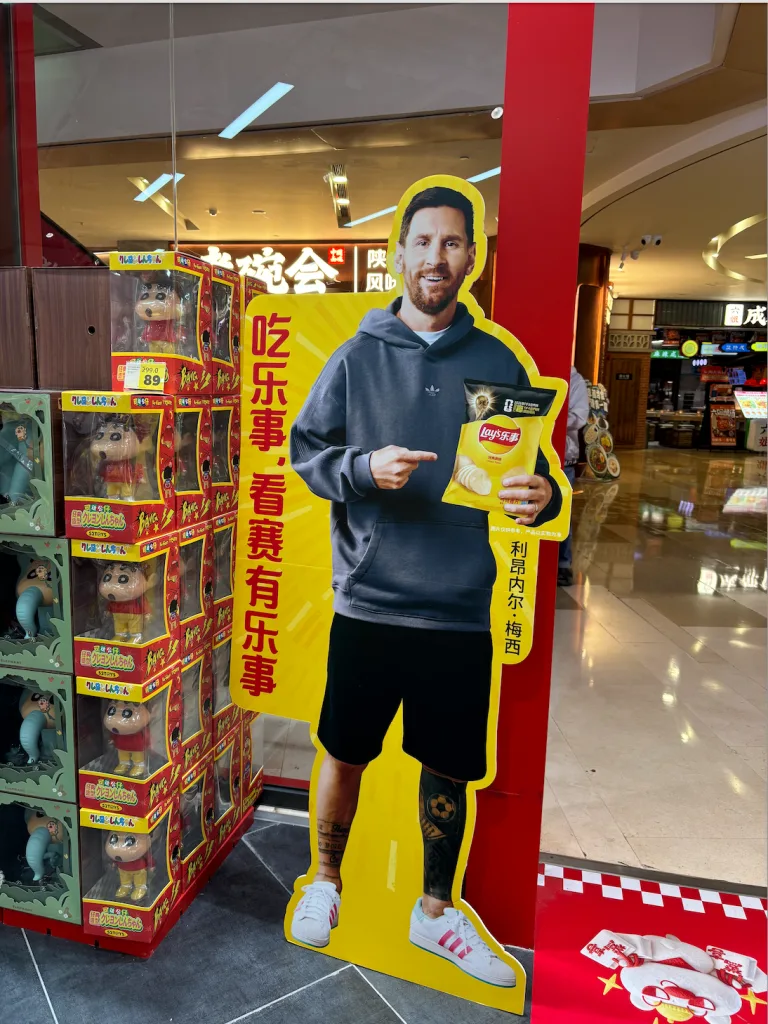
Football-linked snack campaigns and mall displays show another useful pattern: the World Cup turns retail into theatre. Consumers may stop, photograph, share and remember a display because it connects with a global sports moment.
In China, retail and social media are closely connected. A shopping mall display can become a Xiaohongshu post, a short video, a livestream background or a WeChat conversation starter.
This is why campaign design matters. The display must be visually clear, locally relevant and easy to photograph.
Retro Jerseys and Football Nostalgia
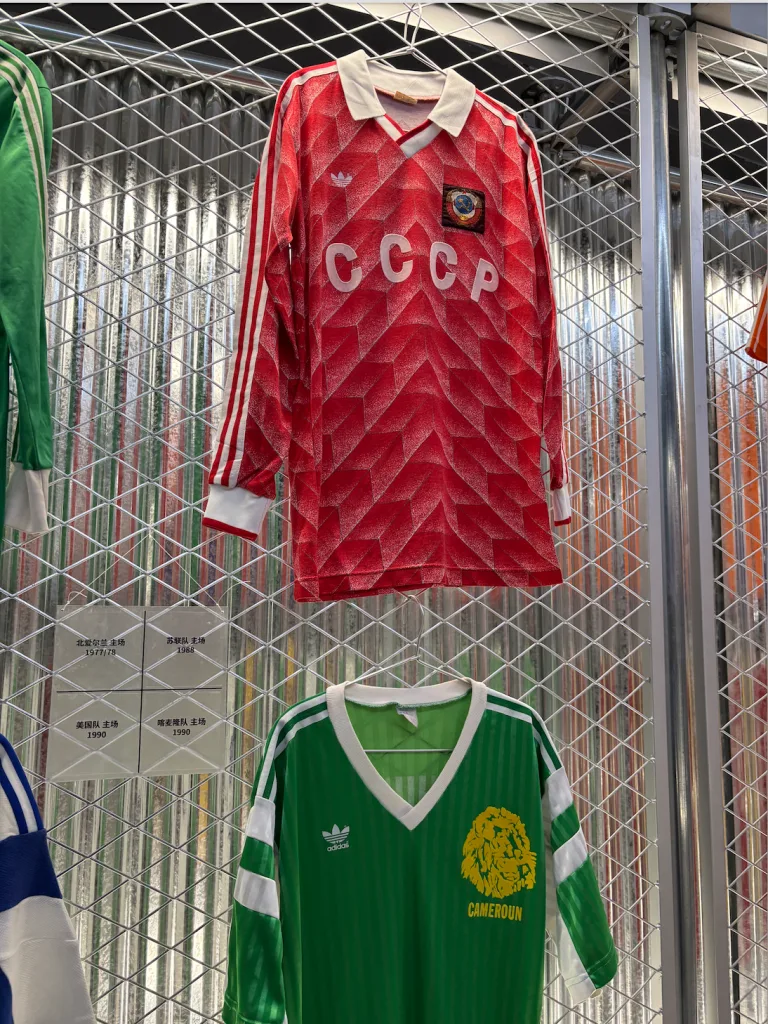
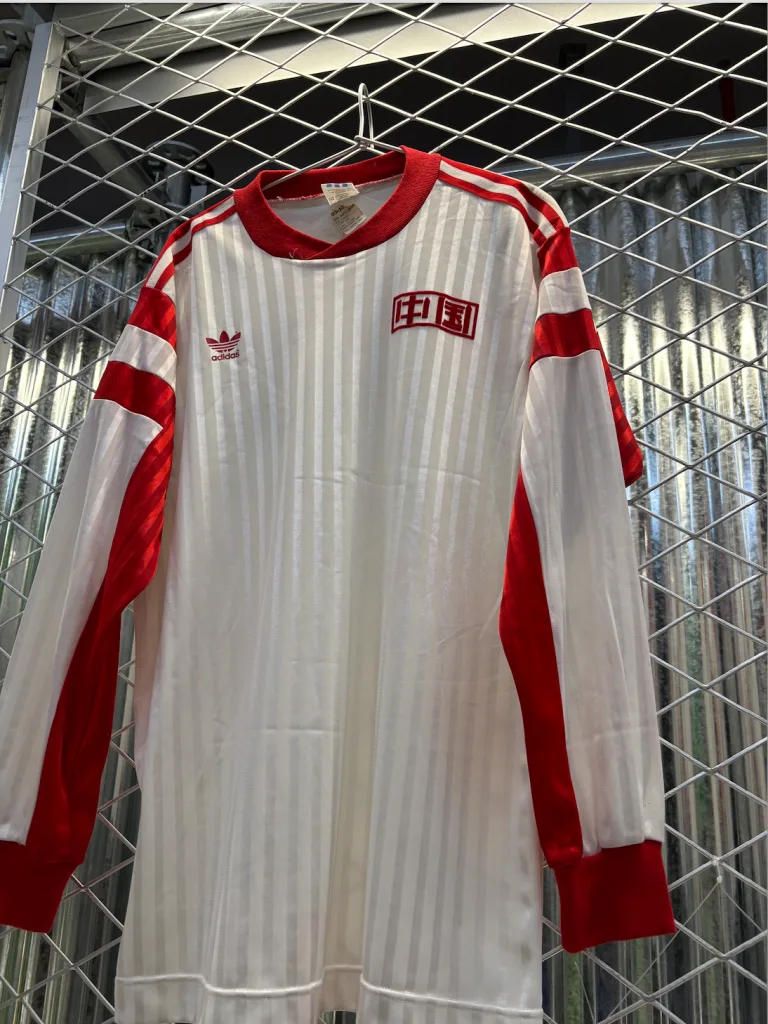
Retro jerseys, historic national team shirts and World Cup heritage displays also play an important role. They connect older fans with memory and younger fans with style.
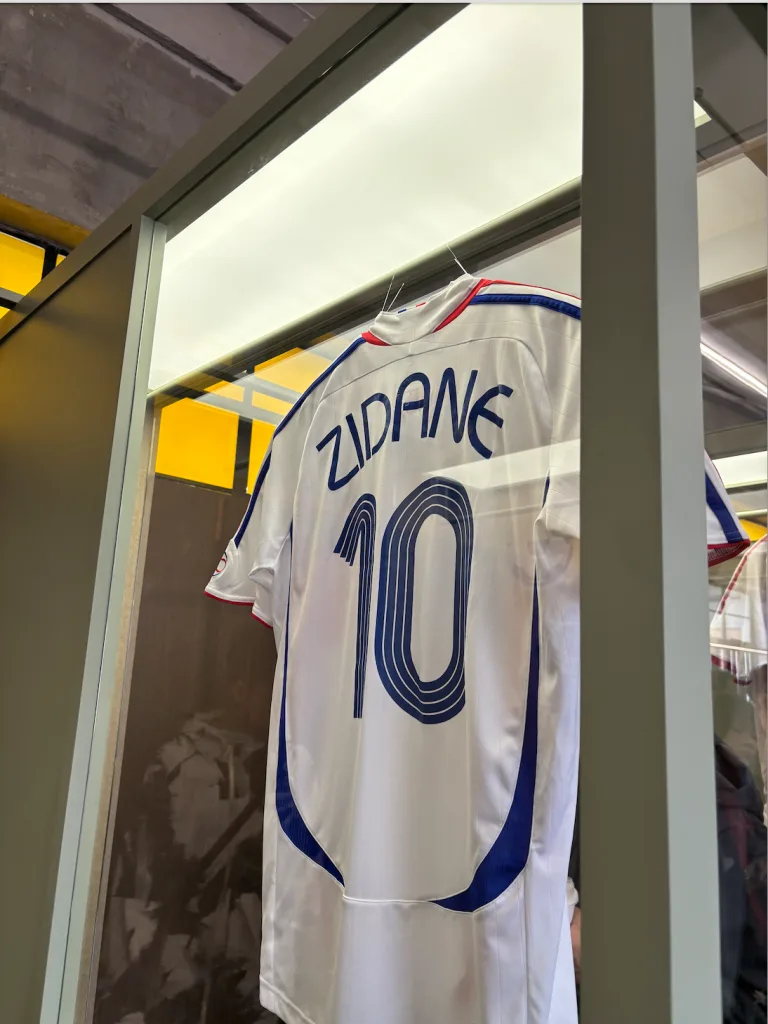
This is valuable for brands because nostalgia can make a campaign feel deeper. It adds emotion, history and authenticity to a short-term event.
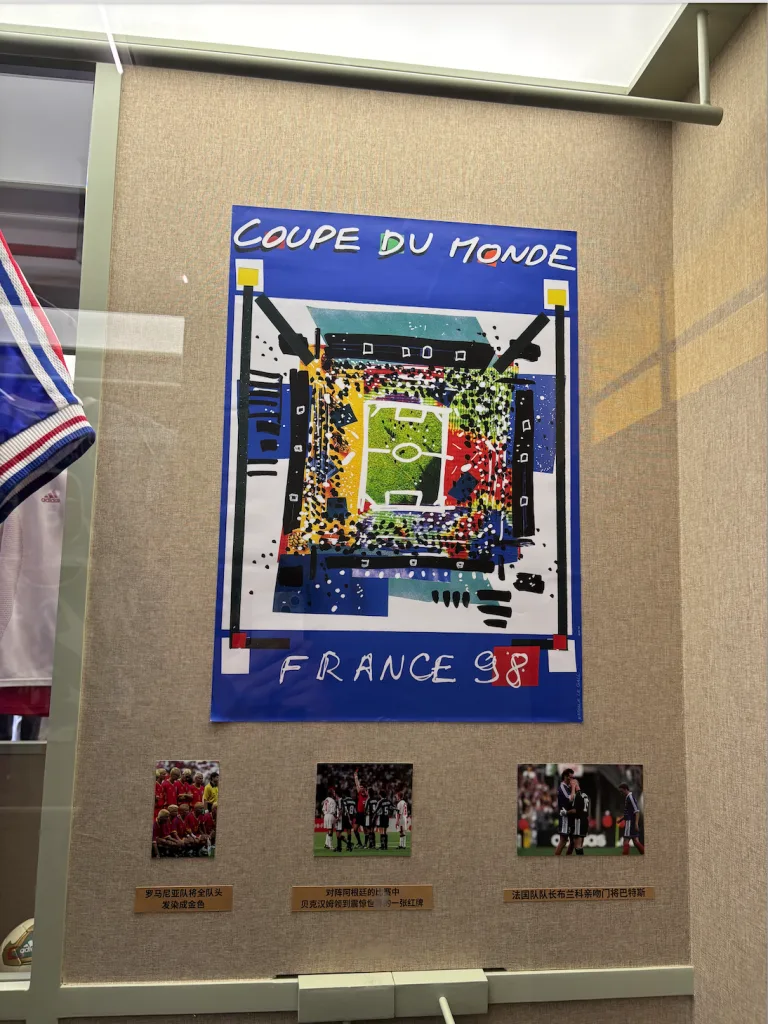
In Shanghai, football nostalgia can work especially well when it is placed inside lifestyle venues, retail spaces and event zones. It turns football culture into a visual experience.
Where to Watch World Cup 2026 in Shanghai: Bars, Late-Night Games and Fan Rituals
Because of the time difference with North America, Shanghai’s World Cup experience is also a nightlife story. Many matches happen late at night or early in the morning. This creates demand for bars, restaurants, sports venues and all-night viewing spaces.
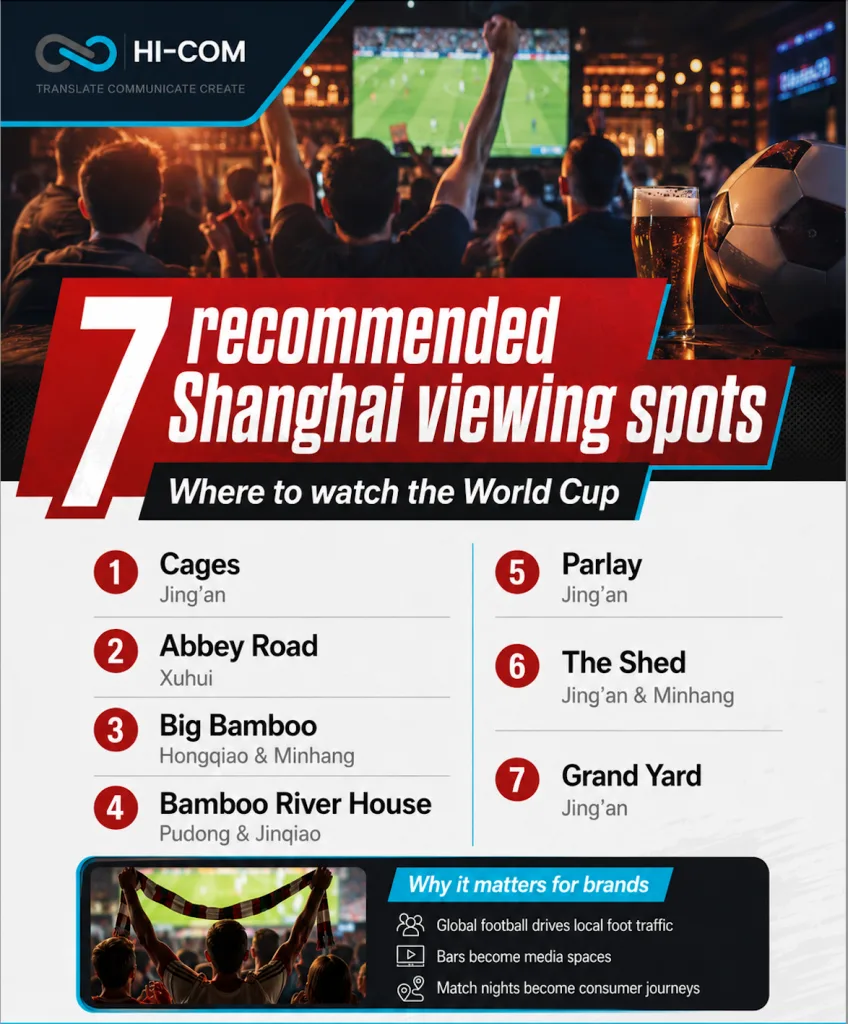
Recommended Shanghai Viewing Spots
Cages, Jing’an
Cages is one of Shanghai’s best-known sports bar and entertainment complexes. It is strong for big-screen games, groups and late-night World Cup atmosphere.
Abbey Road, Xuhui
Abbey Road offers a more relaxed neighbourhood setting. It is a good choice for selected fixtures and fans who prefer a less intense viewing environment.
Big Bamboo, Hongqiao and Minhang
Big Bamboo has long been associated with Shanghai’s international sports community. It is useful for viewers based outside the city centre.
Bamboo River House, Pudong and Jinqiao
Bamboo River House is useful for viewers based on the east side of Shanghai. For late matches, advance booking is recommended.
Parlay, Jing’an
Parlay is a newer sports bar option with big screens, barbecue and a more polished match-night setting.
The Shed, Jing’an and Minhang
The Shed is a classic Shanghai sports bar with an established football-watching audience.
Grand Yard, Jing’an
Grand Yard is a neighbourhood pub option with food, drinks and game-time specials.
For brands, these venues matter because they show how global football creates local foot traffic. Bars become media spaces. Screens become community anchors. Match nights become consumer journeys.
Shanghai World Cup Pop-Ups: From West Bund to Lujiazui
The World Cup is also visible in public spaces and shopping destinations. Shanghai has seen football-themed experiences in commercial districts, official merchandise zones, skyline pop-ups, brand stores and outdoor activity spaces.
At Shanghai World Financial Center, FIFA-licensed immersive soccer pop-ups have been set up across high floors, combining official products, themed activities and Lujiazui skyline views. This turns the World Cup into a tourism, retail and lifestyle experience.
Other city activations, including Nanjing Road and West Bund football experiences, show how Shanghai turns the tournament into a citywide consumer event.
A consumer might see a football ad in the metro, visit an Adidas football carnival at West Bund, buy a Portugal-themed coffee, photograph a football display in a mall, then watch a match at 3am in Jing’an. Each touchpoint reinforces the same cultural moment.
What Brands Can Learn from World Cup Marketing in China
1. Global campaigns need local timing
A World Cup campaign that works in Europe or North America cannot simply be copied into China. The match schedule is different. The social platforms are different. The consumer rhythm is different.
In Shanghai, late-night matches create demand for overnight viewing packs, breakfast offers, bar reservations, WeChat updates and transport planning.
2. Offline experience drives online visibility
In China, offline activations are often designed for online sharing. A pop-up store, metro campaign or jersey exhibition should be visually strong enough to become social content.
Brands should not only design ads. They should design spaces, moments and photo opportunities.
3. Celebrity relevance must be localized
Messi, Cristiano Ronaldo and Kylian Mbappé are global names. However, China campaigns need local storytelling, local language, local platforms and local fan logic.
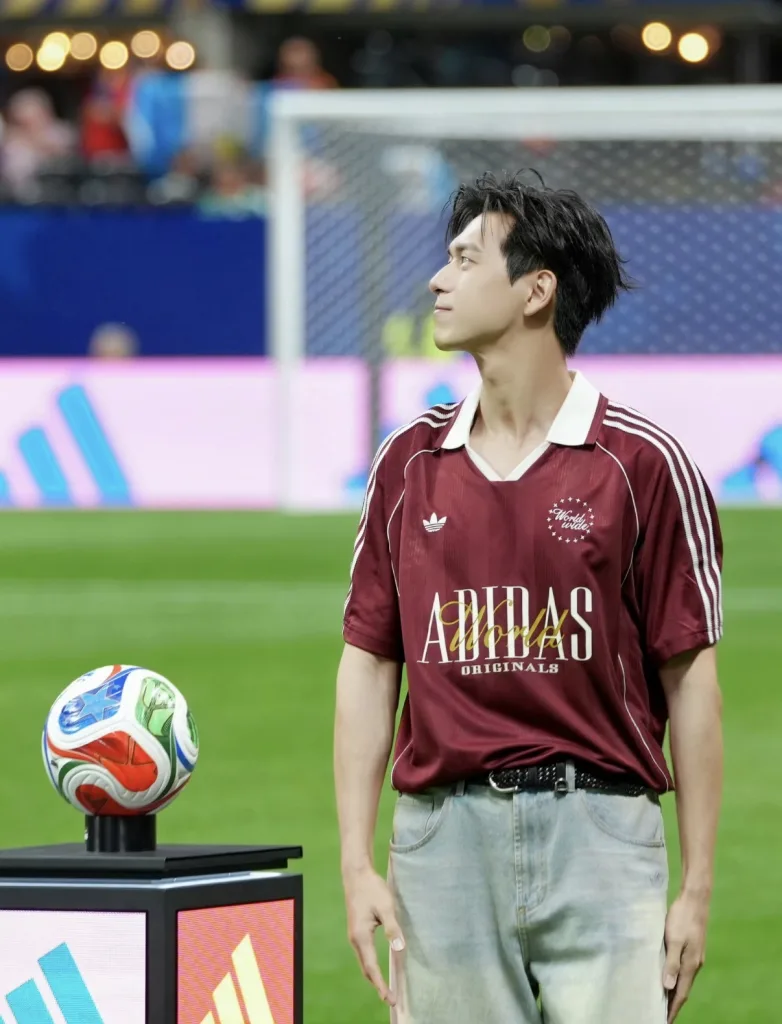
Chinese actor Li Xian’s World Cup-related ceremonial appearance also shows another route: combine global football IP with Chinese celebrity relevance.
4. Retail must connect to emotion
A World Cup product is more effective when it feels like part of a fan ritual. Coffee, snacks, drinks, jerseys and collectibles all work better when tied to match nights, national teams, limited editions or group viewing.
5. Brands need speed and local monitoring
The World Cup is short. Campaigns must be prepared before the event, but they also need real-time adaptation. A brand should be ready to react to match results, player moments, viral conversations, memes and platform trends.
6. The strongest campaigns connect media, retail and service
A strong China campaign should connect online visibility, offline experience, product availability and a clear next step. Without that bridge, attention disappears quickly.
This is where local execution becomes critical. Translation, market adaptation, event support, KOL coordination, social content and partner verification all affect campaign performance.
HI-COM Insight: Turning Global Sports Moments into China Campaigns
For international companies, the FIFA World Cup 2026 in China shows why local insight matters. The opportunity is not only to translate a slogan. It is to understand how Chinese consumers discover, discuss, photograph and share branded experiences.
HI-COM Asia is based in Shanghai and works inside the Chinese market. This gives our team direct visibility on consumer behaviour, retail activations, local events, platform trends and cross-cultural communication.
For brands preparing campaigns in China, HI-COM can support China marketing strategy, localization, multilingual content, Chinese social media, KOL and KOC activation, event communication and on-the-ground execution.
Our previous China market insights include our guide to the Dragon Boat Festival in China and our analysis of the 618 Shopping Festival China retail strategy. Both show the same principle: global and local brands need to understand the cultural moment before they activate around it.
Beyond Marketing: China Business Support for Brands and Teams
World Cup campaigns also create business needs beyond communication. Companies may need to verify Chinese partners, translate official documents, prepare contracts, support event teams, brief interpreters or manage cross-border files.
HI-COM supports these needs through several China-focused services:
- Certified Chinese translation for official, business, legal and administrative documents.
- Chinese official document support for documents used abroad.
- Chinese company verification and NECIPS research before working with partners or suppliers.
- Interpreting services in China for business meetings, events, factory visits and conferences.
This matters because sports marketing in China is not only about visibility. It is also about execution. A brand may need the right words, the right partners, the right documents and the right people on site.
Conclusion: The World Cup Is a Conversion Moment for Brands in China
The FIFA World Cup 2026 proves that China can be central to a global sports event even when the tournament is hosted on the other side of the world.
Shanghai’s response shows the full picture: late-night bars, football carnivals, subway advertising, retail pop-ups, celebrity campaigns, branded drinks, official merchandise, Chinese manufacturing, smart technology and social sharing.
For brands, the lesson is clear. The Chinese market rewards campaigns that are localized, visual, social and fast. A global event gives attention. Local execution turns that attention into engagement.
If your brand wants to activate around sports, events, retail moments or cultural festivals in China, contact HI-COM Asia to adapt your message, build the local strategy and execute with the right language, channels and market insight.
Plan your next China campaign with a China-based team that understands marketing, localization, events and cross-cultural execution.