

How to Check a Chinese Company with NECIPS Before Doing Business in China
Before sending money to a Chinese supplier, signing a manufacturing agreement, or starting a sourcing project in China, one question matters most: is the company real, active, and legally registered?
For many foreign businesses, verifying a Chinese company is more complex than it first appears.
Suppliers often provide an English company name, a website, an Alibaba page, or a WeChat contact. These details are useful, but they do not prove that the legal entity behind the business is legitimate.
In China, one of the most important public tools for company verification is NECIPS, the National Enterprise Credit Information Publicity System. In Chinese, the platform is called 国家企业信用信息公示系统.
NECIPS is China’s official public enterprise database. It allows users to verify whether a Chinese company exists and review information related to registration, business activity, compliance records, and enterprise credit status.
To check a Chinese company with NECIPS, foreign businesses usually need the official Chinese company name or the Unified Social Credit Code. This is where many searches become difficult. The interface is in Chinese, and the English name used in sales materials rarely matches the registered legal name.
This guide explains how NECIPS works, how to access it, what information can be found on the platform, and why Chinese company verification matters before doing business in China.
Last verified: October 2026.
Key Takeaways
- NECIPS is China’s official public enterprise information system.
- The platform helps with Chinese company verification and supplier checks.
- Search NECIPS on gsxt.gov.cn (GSXT) with the Chinese legal name or, more reliably, the 18-character Unified Social Credit Code.
- Read the registration status first: 存续 or 在业 means the company is still registered.
- NECIPS can show registration status, business scope, penalties, and abnormal-operation records.
- A NECIPS check is useful, but it does not replace full due diligence.
What Is NECIPS?
NECIPS stands for National Enterprise Credit Information Publicity System. It is China’s official public database used to disclose company registration information and enterprise credit records.
The platform is managed by the State Administration for Market Regulation (SAMR). This administration supervises company registration and market regulation activities in China.
The objective of NECIPS is to improve market transparency and reduce information gaps between businesses, investors, suppliers, and commercial partners.
NECIPS contains information on millions of Chinese market entities, including:
- Manufacturers
- Factories
- Trading companies
- Technology firms
- Import-export businesses
- Logistics companies
- Joint ventures
- Distributors
- Service providers
Because the platform combines registration information with compliance records, NECIPS is often treated as China’s official enterprise credit database.
Is GSXT the Same as NECIPS?
Yes. GSXT is the web address of NECIPS: gsxt.gov.cn. The letters come from the pinyin of 公示系统 (gōngshì xìtǒng), the “publicity system” in the platform’s Chinese name. Foreign users search for the same database under three names: NECIPS, GSXT and National Enterprise Credit Information Publicity System.
The same records can also be searched through a mobile app published under the platform’s Chinese name, 国家企业信用信息公示系统. Commercial platforms such as Qichacha (企查查) and Tianyancha (天眼查) repackage much of this public data, but the official record is the one on GSXT.
How to Access NECIPS
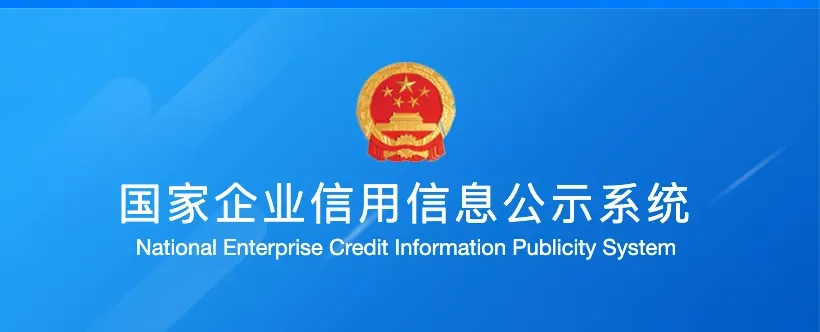
The official NECIPS website is:
The platform is public and free to use. Access from outside mainland China can sometimes be unstable, depending on network conditions and verification steps.
What to Do If GSXT Does Not Load
GSXT is a Chinese government website and it is often slow or unstable from abroad. If the page does not open, or the verification puzzle keeps failing, try again later, switch to another browser and complete the puzzle carefully. There is no official English version: a browser translation helps you read the page, but always copy the Chinese name and the code exactly as they appear. If it still does not work, a colleague or partner in mainland China can run the search and send you a screenshot of the full record.
Users can also search for 国家企业信用信息公示系统 directly through WeChat.
The screenshot above shows how foreign users may encounter NECIPS through a Chinese-language search environment. The main challenge is not only access. It is knowing what to search for once the platform opens.
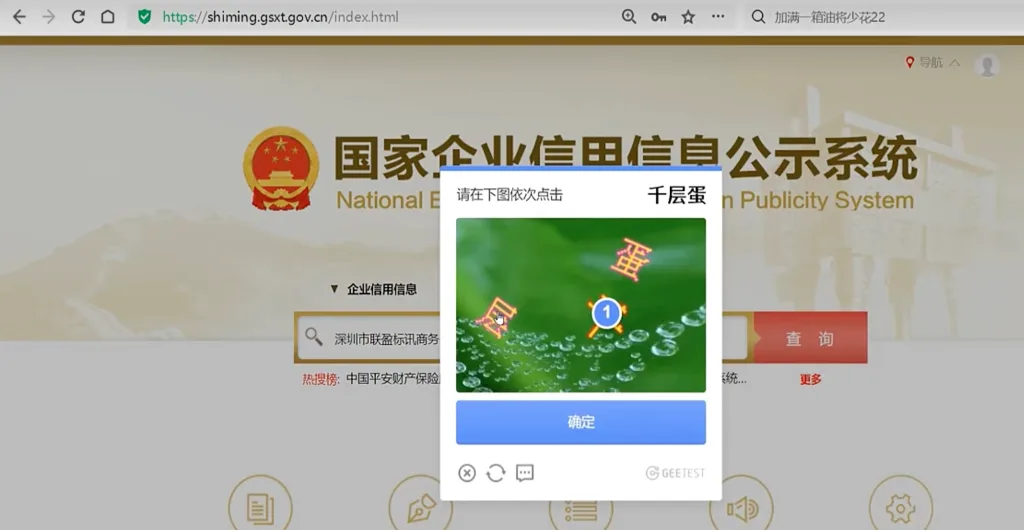
During access, a verification step similar to a CAPTCHA may appear. This is commonly shown as a GeeTest-style puzzle before the company results page loads.
NECIPS searches can be performed using:
- The official Chinese company name
- The Unified Social Credit Code
- Partial company names through fuzzy search
Many foreign businesses face an immediate issue: they do not know the supplier’s official Chinese legal name.
Very often, the English name displayed on Alibaba, LinkedIn, or a supplier website does not exactly match the registered Chinese legal entity. This makes Chinese company verification more complicated than expected.
What Information Can You Find on NECIPS?
A NECIPS company profile can reveal a large amount of public information about a Chinese business.
This can include:
- Official Chinese company name
- Unified Social Credit Code
- Registered address
- Date of establishment
- Legal representative
- Registered capital
- Business scope
- Shareholders
- Directors and supervisors
- Annual report filings
- Administrative licenses
- Administrative penalties
- Abnormal-operation records
- Serious breach records
- Equity freeze information
This information helps importers, sourcing teams, distributors, and investors compare a company’s public record with its commercial claims.
For example, if a supplier claims to own a factory, the business scope, registered address, and entity type should support that claim. If the company appears to be a trading business, the buyer should ask further questions before paying a deposit.
Why NECIPS Matters Before Doing Business in China
Many Chinese suppliers appear highly professional online. They often present polished websites, responsive sales teams, certifications, and detailed product catalogs.
These signals matter, but they do not confirm that the legal entity behind the business is reliable.
A NECIPS check can help identify warning signs before contracts are signed or payments are transferred.
Visible red flags include:
- The company is no longer legally active
- The business appears on abnormal-operation lists
- Annual reports are missing
- The registered address is inconsistent
- The business scope does not match the claimed activity
- The supplier claims to be a manufacturer but appears to be a trading company
- The company has been issued administrative penalties
- The business appears on serious breach lists
- The invoice information does not match the legal entity
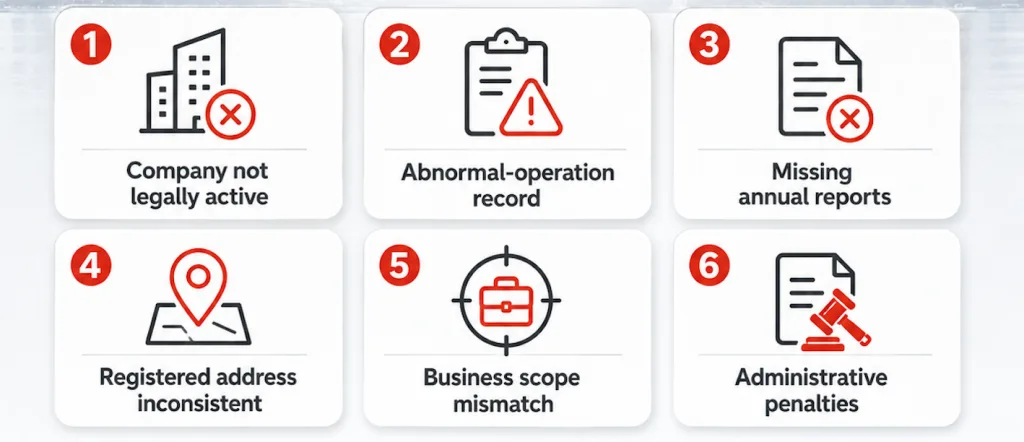
The red flags shown above correspond to specific types of NECIPS data. Registration status, annual reports, business scope, abnormal-operation records, and penalties all help build a clearer risk picture.
For procurement teams and importers, these issues can affect supply chain reliability, payment security, product compliance, and contractual enforcement.
How to Check a Chinese Company on NECIPS
The basic process is simple: identify the right company, search the public database, and review the official record.
The real work is in the details. A reliable NECIPS check starts with the correct Chinese legal entity.
Step 1 — Identify the Correct Chinese Legal Entity
The first challenge is identifying the supplier’s official Chinese legal name.
Foreign companies frequently receive only:
- An English company name
- A website domain
- A business card
- A proforma invoice
- A WeChat contact
- An Alibaba storefront
These details do not always correspond to the registered Chinese entity.
Before searching NECIPS, compare the supplier’s business license, invoice, contract name, bank account holder, and Chinese company seal. They should point to the same legal company.
Step 2 — Search NECIPS
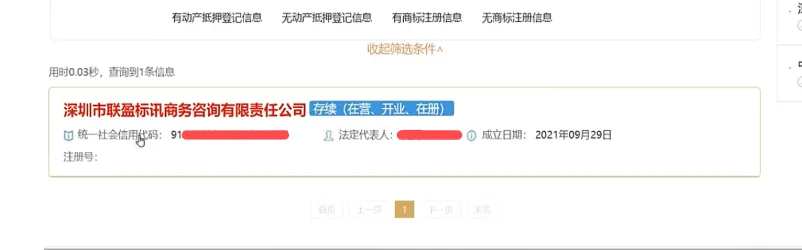
Once the Chinese company name has been identified, users can search NECIPS using the Chinese legal name or Unified Social Credit Code.
The platform supports fuzzy search functionality. Similar company names can still create confusion, especially in provinces with many manufacturers in the same sector.
The screenshot above shows the profile selection step. This is where users need to choose the correct company record, not simply the first result that appears.
Step 3 — Review the Public Record
After locating the company profile, users should review the fields that matter most for commercial risk.
- Registration status
- Business scope
- Legal representative
- Shareholders
- Administrative penalties
- Annual reports
- Abnormal-operation records
- Licensing information
This information should be compared with contracts, invoices, websites, business cards, bank details, and communication materials.
A mismatch does not always prove fraud. It does need an explanation before payment or contract signing.
What Does the Registration Status on GSXT Mean?
The registration status (登记状态) is the first field to read on a NECIPS record. It tells you whether the company still legally exists.
| Status on GSXT | What it means | What to do |
|---|---|---|
| 存续 / 在业 / 开业 | Active: the company is registered and has not been deregistered or had its licence revoked. | Normal. Read the rest of the record. |
| 吊销 | Licence revoked: the authority has withdrawn the business licence, even if the company has not been deregistered yet. | Stop before paying or signing. |
| 注销 | Deregistered: the company has closed and left the register. | Stop. The entity no longer exists. |
| 迁出 | Moved out: the registration has been transferred to another local authority. | Search again and check the latest record. |
An abnormal-operation record is not a registration status. A company can show 存续 and still be on the abnormal-operation list, so always read both.
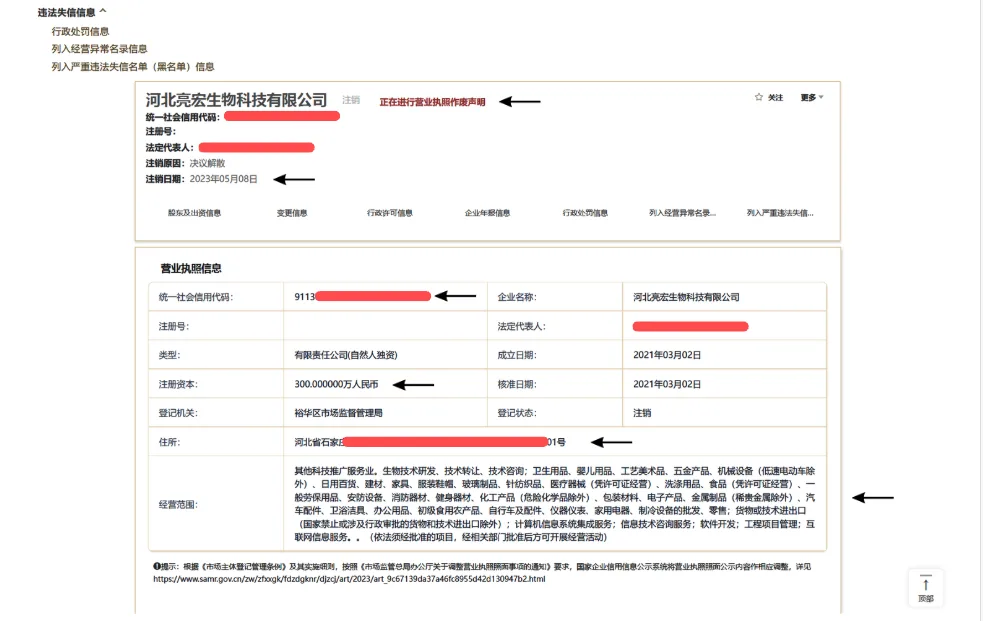
The step-by-step profile check above shows why NECIPS should be read as a structured record, not as a simple search result. Each field gives context about the company’s identity, activity, and visible compliance history.
How to Search NECIPS by Unified Social Credit Code
The most reliable way to find a company on NECIPS is its Unified Social Credit Code (统一社会信用代码), also written USCI or USCC. Company names can be similar, shortened or translated in different ways. The code belongs to one registered entity in mainland China only.
You will find the code on the company’s business licence (营业执照) and as the taxpayer number on its official invoices (发票). It always has 18 characters, made of digits and capital letters.
To search with it:
- Open gsxt.gov.cn and paste the 18 characters into the search box.
- Complete the verification puzzle.
- Open the record and compare the registered Chinese name with the name on your contract, character by character.
If the search returns nothing, check the code for typing errors first, then ask the company for a clear copy of its business licence. A Hong Kong company will not appear at all: it has no mainland credit code and is registered in Hong Kong, not on NECIPS.
A code that matches a real record proves that this company exists. It does not prove that the person you are dealing with represents it. The registered name, the contract, the invoice and the bank account holder should all point to the same entity.
Before you search, you can check whether a code is correctly formed with our free Chinese company check. It reads the structure and check digit of the code and compares it with the other details your partner has sent you.
Chinese Company Verification Compared to Kbis or Companies House
Foreign companies often ask whether NECIPS is comparable to Kbis, Companies House, or US company registries.
The comparison is useful. In France, businesses use Kbis extracts to confirm commercial registration. In the United Kingdom, Companies House provides public company information.
NECIPS serves a similar role in China. It confirms company registration information and also includes enterprise credit and compliance-related records.
This makes NECIPS useful for more than a basic existence check. It helps foreign businesses identify visible risk indicators linked to compliance, disclosure, and operational transparency.
The European IP Helpdesk guide on Chinese company information also explains why understanding Chinese company records is important for intellectual property protection and commercial due diligence.
Can NECIPS Help Verify a Chinese Supplier?
NECIPS is usually the first official step when verifying a Chinese supplier.
Before transferring deposits, foreign companies use NECIPS to verify:
- Whether the supplier legally exists
- Whether the company is active
- Whether the business scope matches manufacturing activity
- Whether public penalties exist
- Whether annual reports are missing
- Whether the registered address appears credible
NECIPS should not be treated as a complete due diligence investigation.
For larger transactions, businesses should also combine NECIPS with:
- Business license verification
- Bank account checks
- Contract review
- Factory audits
- Litigation searches
- Site visits
- License verification
Why Foreign Companies Struggle with NECIPS
Although NECIPS is public, many foreign companies still struggle to use the platform effectively.
The main reasons include:
- The platform is entirely in Chinese
- English company names are often unofficial
- Machine translation can miss legal meaning
- Business scope terminology is technical
- Several companies may share similar names
- Compliance terminology requires local interpretation
In our work with international clients, the most common gap is entity confusion. One supplier may use an English brand name online, a different Chinese company name on its invoice, and another entity on a bank account. The first task is not judging the supplier. It is identifying the exact legal company behind the transaction. Once that is clear, the NECIPS record becomes much easier to read and compare.
For this reason, many businesses prefer working with local consultants, legal advisors, or due diligence specialists when reviewing Chinese company records.
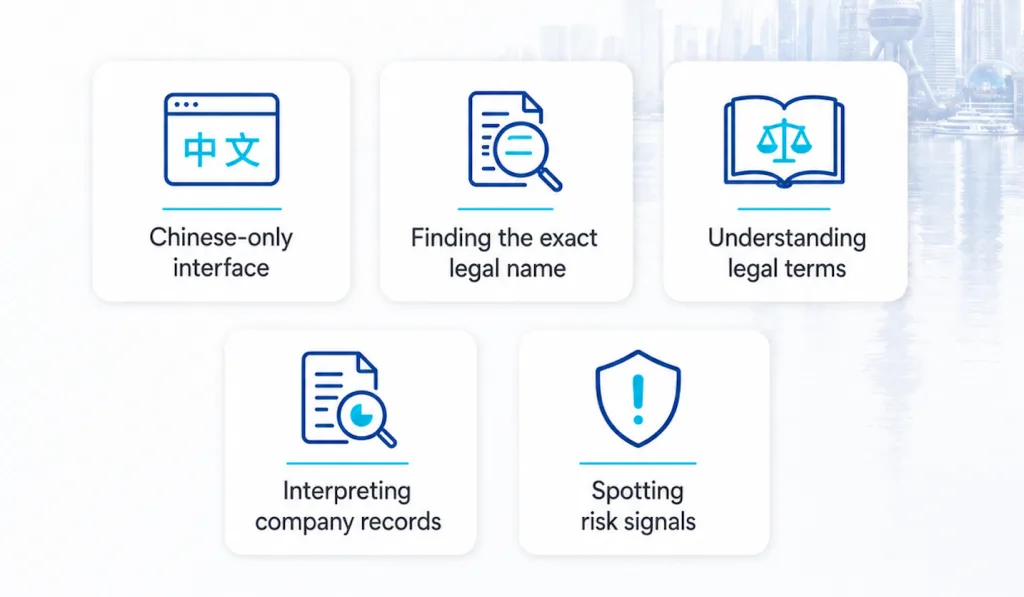
The infographic above summarizes the practical barriers foreign companies face when using NECIPS: Chinese-language search, legal terminology, company-name matching, and local interpretation.
What Is an Abnormal-Operation Record in China?
One of the most important sections on NECIPS is the abnormal-operation list (经营异常名录).
A company can appear on this list for several reasons, including:
- Failure to submit annual reports
- Inability to contact the company through its registered address
- Failure to comply with disclosure obligations
Every company must file its annual report for the previous year on NECIPS between 1 January and 30 June, under the Interim Regulations on Enterprise Information Publicity. A company that misses the deadline can be placed on the list, which is why a missing annual report and an abnormal-operation record often appear together.
An abnormal-operation record does not automatically indicate fraud. It does show that the company has a public compliance issue.
Foreign partners should treat this as a warning sign and ask for a clear explanation before moving forward.
What Is a Serious Breach Record?
A serious breach record (严重违法失信名单, the list of seriously illegal and dishonest companies) is more severe than a standard abnormal-operation entry.
These records can indicate major regulatory non-compliance or dishonest conduct.
Companies with serious breach records may face restrictions related to:
- Public procurement
- Financing
- Government projects
- Licenses
- Commercial reputation
For foreign buyers, this is a high-priority warning sign. It should trigger deeper review before any contract, payment, or long-term partnership.
Beyond Company Verification: Supporting Your Business Development in China
Verifying a Chinese company is often only the first step before launching a commercial relationship or entering the Chinese market.
If you are still looking for the right partner rather than checking one, our China partner and distribution search helps you find and shortlist candidates before the first meeting.
Once the verification process is complete, businesses may still require support with communication, localization, multilingual content, and market adaptation.
At HI-COM, we support international companies with certified translation services, multilingual communication, Chinese market localization, and digital marketing services in China.
Our team assists businesses with:
- Chinese-English business translation
- Certified document translation
- Website localization for China
- Chinese SEO and Baidu visibility
- WeChat and Xiaohongshu communication
- Cross-cultural branding and localization
- Business interpreting and multilingual support
For companies entering China, combining supplier verification with localization and multilingual communication support can help reduce risk while improving long-term visibility and credibility.
FAQ
What is NECIPS?
NECIPS is China’s National Enterprise Credit Information Publicity System. It is the official public database for Chinese company registration and enterprise credit information.
Can I search NECIPS in English?
NECIPS is built for Chinese-language searches. The most reliable search method is the official Chinese company name or the Unified Social Credit Code.
What is a Unified Social Credit Code?
The Unified Social Credit Code is an 18-character identifier used for Chinese legal entities. It helps distinguish companies with similar names.
Does NECIPS prove that a supplier is safe?
No. NECIPS provides public registration and compliance information. It should be used with business license checks, contract review, bank account checks, and deeper due diligence when the transaction is important.
What is the biggest mistake foreign companies make on NECIPS?
The biggest mistake is searching with an English supplier name. The official Chinese legal name is usually required to find the correct company record.
Is GSXT the same as NECIPS?
Yes. GSXT is the web address of NECIPS (gsxt.gov.cn). Both names refer to China’s National Enterprise Credit Information Publicity System.
Can I search NECIPS with a Unified Social Credit Code?
Yes, and it is the most reliable method. Paste the 18-character code from the business licence or an official invoice into the search box on gsxt.gov.cn, then compare the registered Chinese name with the name on your contract.
What does 存续 mean on GSXT?
存续 means the company is still registered: it has not been deregistered (注销) and its business licence has not been revoked (吊销). It does not mean the company has no compliance issues, so check the abnormal-operation and penalty sections as well.
When do Chinese companies file their annual report on NECIPS?
Between 1 January and 30 June each year, for the previous year. A company that misses the deadline can be placed on the abnormal-operation list.
Conclusion
NECIPS has become one of the most important public tools for verifying Chinese companies.
Before sending payments, signing contracts, or appointing distributors, reviewing a company’s public record can help reduce commercial risk and improve transparency.
The value of NECIPS depends on correct interpretation. A reliable check starts with the right Chinese legal entity, then moves through registration status, business scope, annual reports, penalties, and risk records.
As Chinese business records become more structured and easier to process, foreign companies that understand NECIPS now will be better prepared for faster, more data-driven supplier checks in the future.
About to pay a new Chinese partner? Run our free Chinese company check on the details they sent you, or ask our Shanghai team to review the company’s official records before you sign.
Reviewer note: This guide was prepared by HI-COM Asia’s China business communication team, with experience in Chinese-English business documents, localization, and cross-border communication.