

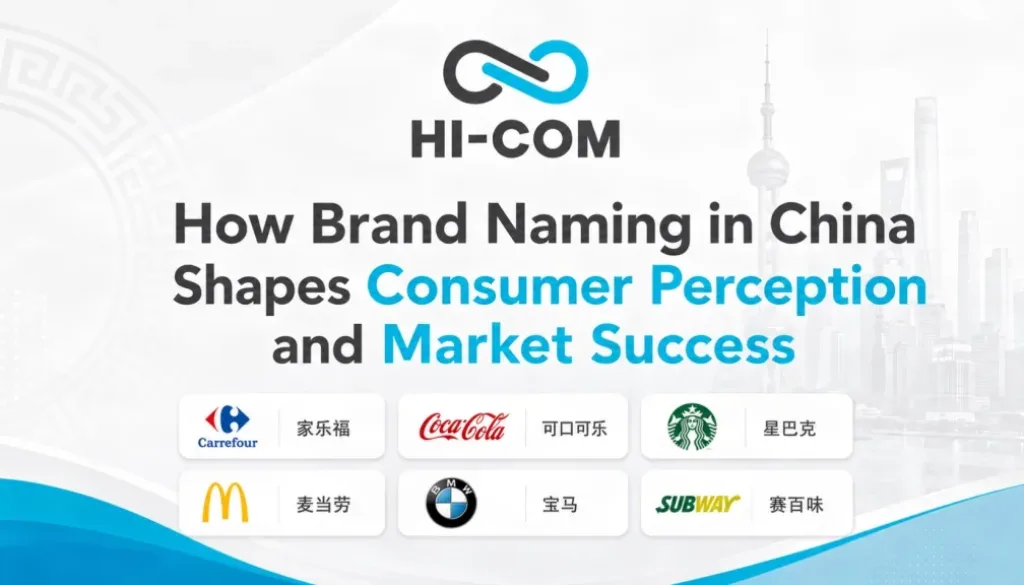
How Brand Naming in China Shapes Consumer Perception and Market Success

Some may think that brand naming in China is simply a straightforward translation task. The reality is something very different. It is in fact a strategic localization process that shapes trust, memorability, digital visibility, and consumer perception.
When international companies enter the Chinese market, their brand name is often the first message local audiences receive. Therefore, a strong Chinese name can support recognition, emotional connection, and long-term positioning. However, a poorly adapted name can create confusion, weak recall, or negative associations.
At HI-COM, we approach brand naming in China through a structured methodology. It combines linguistic expertise, market analysis, benchmarking, cultural insight, and trademark awareness. As a result, brands can build stronger localization strategies for the Chinese market.
Why Brand Naming in China Matters
Chinese consumers pay close attention to pronunciation, character meaning, rhythm, and symbolism. Consequently, a brand name must be easy to say, easy to remember, and meaningful in context.
A strong Chinese brand name should:
- Reflect the original brand identity
- Create positive associations in Chinese
- Remain simple and memorable
- Support visibility on Chinese digital platforms
- Fit the expectations of the target market
- Reduce cultural and legal risks
This is why successful Chinese brand naming requires more than direct translation. It also requires a clear understanding of language, culture, marketing, and consumer psychology.
Why Chinese Brand Names Can Change Meaning Across Culture and Technology
Chinese brand naming matters because meaning does not exist in isolation. A name can work beautifully in human communication. Yet, it can become confusing when translated without cultural context.
A well-known example is BMW in Chinese. The brand is commonly known as 宝马 (Bǎo Mǎ), which literally means “precious horse.” The name is poetic, memorable, and culturally positive. It also fits naturally into everyday Chinese speech.

However, AI translation tools often associate the characters 宝马 so strongly with the car brand that they translate the phrase as “BMW.” This can happen even when the phrase is used in a traditional or poetic context.
As a result, humorous mistranslations may appear during Chinese New Year. Some blessing phrases include words linked to fortune, success, and the symbolic idea of a precious horse. Without cultural understanding, AI can turn a traditional sentence into a strange brand-heavy message.
This example shows why Chinese brand naming requires more than literal meaning. It also requires phonetic accuracy, cultural intelligence, context, and awareness of how names appear in search engines, social media, and AI translation systems.
HI-COM’s Brand Naming Methodology for China
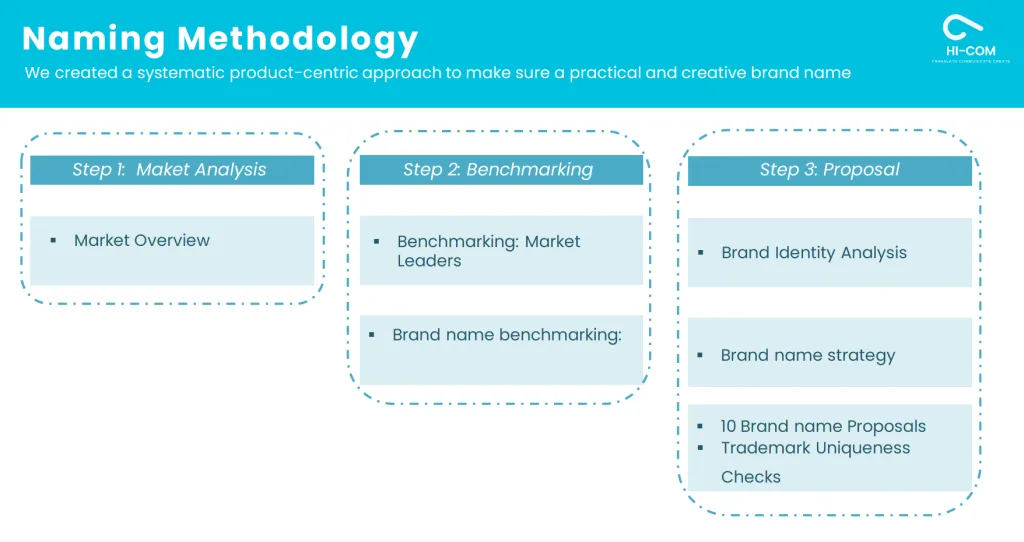
HI-COM uses a systematic and product-centric approach to create Chinese brand names that are both practical and creative. Each step helps us connect the brand’s identity with local expectations.
Step 1 – Market Analysis
Before creating name proposals, we first analyze the market environment. This includes industry trends, consumer expectations, pricing position, competitor names, and local communication habits.
Moreover, this step helps us understand how the brand should be perceived in China. It also helps identify naming directions that should be avoided.
Step 2 – Benchmarking
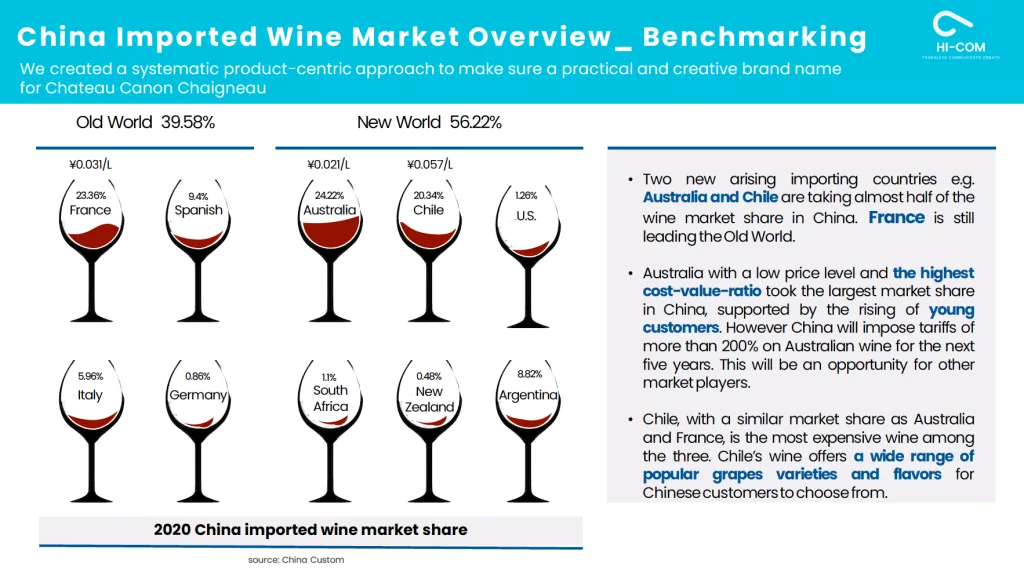
Next, we study local and international brands already active in the Chinese market. Benchmarking helps identify naming patterns, phonetic strategies, symbolic references, and common character choices.
Furthermore, this phase allows us to define a naming direction that feels natural for Chinese consumers. At the same time, it preserves the international brand identity.
Step 3 – Brand Name Proposal
After the analysis phase, HI-COM develops several Chinese brand name proposals. Each proposal is reviewed according to sound, meaning, memorability, cultural relevance, and business fit.
The goal is not only to create a name that sounds good. Instead, the goal is to create a name that supports market entry, communication strategy, and long-term growth in China.

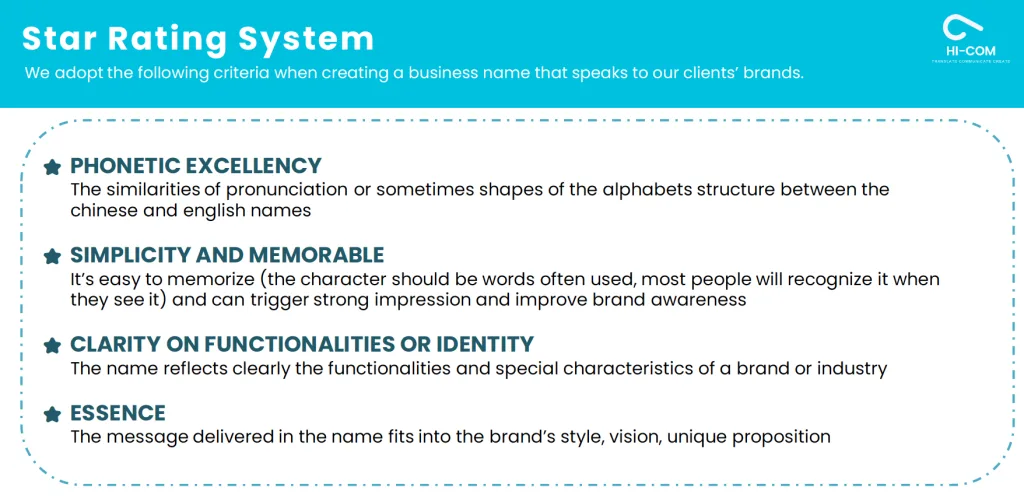
The PSCE Rating System
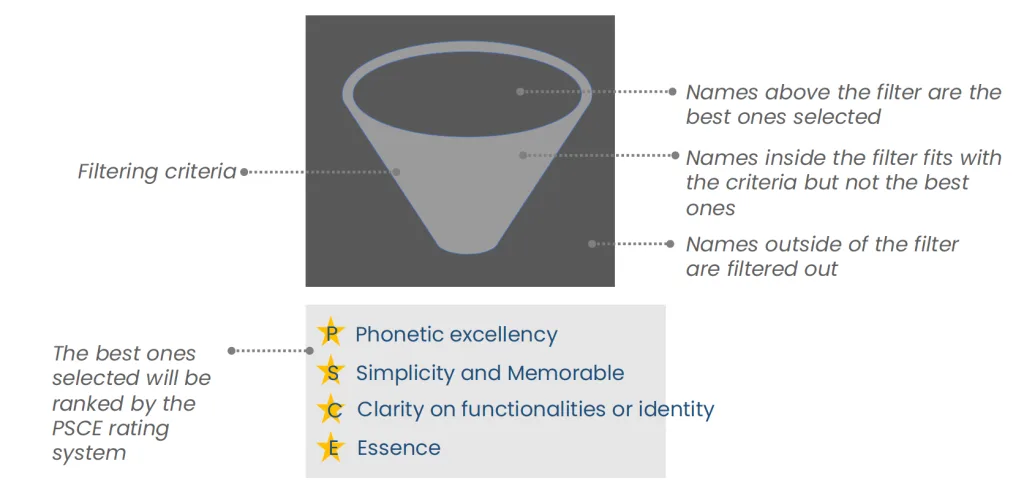
HI-COM evaluates Chinese brand name proposals through four key criteria: Phonetic Excellency, Simplicity and Memorability, Clarity, and Essence.
Phonetic Excellency
The Chinese name should maintain a clear connection with the original brand pronunciation when relevant. Therefore, consumers can better recognize the link between the international name and its Chinese version.
Simplicity and Memorability
The chosen characters should be easy to read and common enough to recognize. As a result, the brand becomes easier to recall across online and offline channels.
Clarity of Function or Identity
A strong Chinese name can communicate something about the product, service, industry, or brand promise. This gives the name more marketing value.
Essence
The name should reflect the brand’s style, positioning, values, and emotional promise. This is what turns a translation into a real branding asset.
The Role of Pinyin and Pronunciation in Chinese Brand Naming
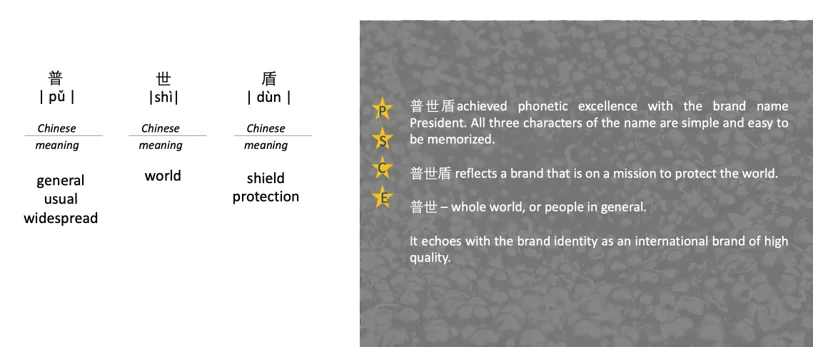
Pronunciation is one of the most important elements of Chinese brand naming. A name can look attractive, but it may fail if it is hard to pronounce or remember.
This is why pinyin analysis is useful during the naming process. Pinyin is the standard system used to represent Mandarin Chinese pronunciation with the Latin alphabet. It helps evaluate sound, rhythm, tone, and phonetic proximity.
For brands entering China, pinyin is especially important when the goal is to preserve a link between the international name and the localized Chinese name.
Brands can explore pronunciation patterns using resources such as the Mandarin Chinese pinyin chart. This resource helps illustrate how Chinese sounds and tones work.
The Role of Trademark Validation
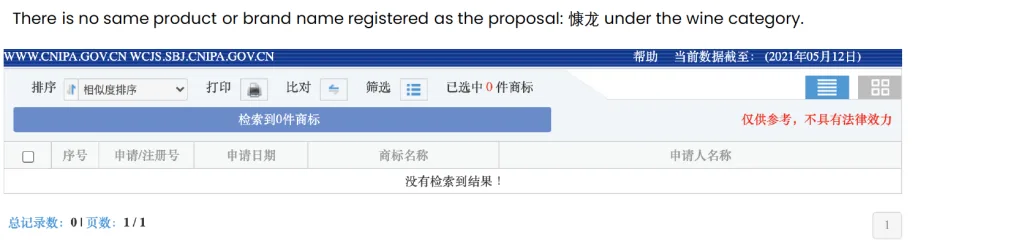
Trademark availability is an important part of Chinese brand naming. A name may sound strong and culturally relevant. However, it still needs to be checked for uniqueness within the right product or service category.
At HI-COM, trademark awareness is integrated into the naming process. This helps brands reduce risk before launching communication, packaging, digital campaigns, or market entry initiatives.
Trademark and Name Protection in China
Once a Chinese brand name has been selected, trademark validation becomes essential. The name may be relevant, memorable, and culturally strong. Nevertheless, it must still be checked within the correct product or service category.
In China, trademark research should be part of the naming process before market launch, packaging design, ecommerce registration, and digital campaign activation.
Brands can refer to the official China National Intellectual Property Administration, also known as CNIPA, for information related to intellectual property and trademark procedures in China.
At HI-COM, trademark awareness is integrated into our naming methodology. This helps reduce naming risks and supports a stronger long-term localization strategy.
Chinese Brand Naming and Digital Visibility
A localized Chinese name also plays an important role in SEO and GEO visibility. In China, consumers often search for brands using Chinese characters rather than foreign names.
As a result, a strong Chinese brand name can improve visibility across Baidu, WeChat, Xiaohongshu, Douyin, Tmall, and other Chinese digital platforms.
For international companies, this means that Chinese naming directly affects searchability, brand recall, social media mentions, and campaign performance.
Why Cultural Intelligence Matters
Literal translation is rarely enough. A successful Chinese name must balance pronunciation, meaning, emotion, cultural relevance, and business strategy.
This is why HI-COM combines localization expertise with marketing thinking. We help brands avoid cultural mistakes and create names that feel credible, attractive, and relevant for Chinese consumers.
Building Long-Term Brand Equity in China
A Chinese brand name becomes part of a company’s long-term identity in the market. It can support storytelling, trust, differentiation, and digital recognition.
For international brands, investing in professional Chinese brand naming is a strategic decision. It creates a stronger foundation for market entry, communication, and growth.
For detailed naming examples and project references, discover our case study here: HI-COM Brand Naming Case Study – Château Canon Chaigneau.
HI-COM Brand Naming Case Studies
HI-COM has supported international and Chinese companies with brand naming projects across different industries. These include wine, oral care, industrial equipment, and technology.
For President Oral Care, an Italian oral care brand entering China, HI-COM worked on localized naming. The goal was to reflect the brand image, remain easy to recognize, and connect with local consumers.
These projects show how Chinese brand naming must adapt to the industry, target audience, product category, and long-term market strategy.
Conclusion
Ultimately, brand naming in China is both a linguistic and strategic process. A strong localized name can influence consumer trust, search visibility, brand recognition, and long-term market performance.
At HI-COM, we help international companies create Chinese brand names through market analysis, benchmarking, cultural intelligence, and structured localization methodology. In addition, our approach supports multilingual branding, Chinese SEO visibility, and cross-cultural communication strategies.
Need support with Chinese brand naming or localization? Contact HI-COM to build a name that speaks directly to your audience in China.