


How to Notarize, Translate and Apostille a Chinese Employment or Resignation Certificate After Leaving China

Foreigners who previously worked in China may need a Chinese Certificate of Employment, Resignation Certificate or related employment record for overseas employment, immigration or residence applications, employment visas, professional qualification recognition, pension, tax or social-security matters, or other legal and administrative procedures abroad.
After leaving China, many former employees find it difficult to obtain and authenticate these documents because they can no longer visit the relevant authorities or notary offices in person. However, leaving China does not necessarily prevent them from completing the process.
Depending on the document, city of issue and destination country, an authorised representative in China may be able to coordinate document preparation, notarization, translation and Apostille or consular legalization without the former employee returning to China.
Can a Chinese Employment or Resignation Certificate Be Apostilled After You Leave China?
In many cases, yes. A former employee who is already overseas can often authorise a representative in China through a Power of Attorney. The representative can then submit the available employment certificate and supporting evidence for review and coordinate the required notarial and authentication procedures.
A company-issued certificate is not automatically eligible to receive an Apostille in its original private form. A Chinese notary office may first need to issue an eligible notarial certificate. The exact route must be confirmed with the receiving authority, the relevant notary office and the competent Apostille or legalization authority before submission.
Process at a Glance
- Confirm what the receiving authority abroad requires.
- Prepare the employment certificate, passport records, Power of Attorney and supporting evidence.
- Have an authorised representative submit the file for notarial review in China.
- Arrange the required translation and obtain the notarial certificate.
- Apply for an Apostille or consular legalization, depending on the destination country.
1. Who May Need a Chinese Certificate of Employment or Resignation?
Foreigners who previously worked legally in China may be asked to provide evidence of their employment for:
- overseas employment or background verification;
- immigration or residence applications;
- employment visa applications in other countries;
- professional qualification or licensing assessments;
- pension, individual income tax or social-security procedures;
- court, insurance, banking or other administrative matters; or
- confirmation of a previous position, employment period or termination of employment.
Typical applicants include:
- former foreign employees of companies in China;
- foreign professionals who previously held a Chinese Foreigner’s Work Permit;
- expatriates who completed employment contracts in China; and
- foreign managers, engineers, teachers and technical specialists who worked in China.
Even after leaving China, former employees may still be able to complete the certification and legalization process through an authorised representative in China.
2. How Can Applicants Apply After Leaving China?
Applicants living abroad may be unable to visit a Chinese notary office or other relevant authority in person. A remote application will therefore usually involve:
- preparing and checking the available documents overseas;
- signing a Power of Attorney in the required form;
- sending original documents when originals are required; and
- authorising a representative in China to coordinate the application.
Whether remote representation is accepted, and whether the Power of Attorney itself must be notarized or apostilled in the applicant’s current country, depends on the notary office, location, document and intended use.
The representative submits the documents and communicates with the relevant authorities or notary office on behalf of the applicant.
3. Documents Commonly Required
The checklist below is practical guidance rather than a universal filing list. A notary office or receiving institution may request additional or different materials after reviewing the case.

1. Original Certificate of Employment or Resignation Certificate
The original company-issued employment or resignation certificate is normally required. Ordinary copies are generally not accepted unless the notary office or relevant authority has explicitly confirmed otherwise.
Information the Certificate Should Normally Show
- employee’s full name;
- employer’s full legal name;
- employment period;
- position or job title; and
- confirmation of the employment relationship or its termination.
2. Passport Used During the Employment Period
Applicants may be asked for a copy of the passport that was valid while they worked in China. Relevant pages can include:
- the personal-information page;
- Chinese visa or residence-permit pages;
- work-visa pages, where applicable; and
- relevant entry and exit stamps.
These passport records help the reviewing authority verify the applicant’s identity and the period of employment in China. If the applicant has since renewed the passport or changed their name, the connection between the old and current identity records should be documented clearly.
3. Original Power of Attorney
A properly drafted and signed Power of Attorney authorises a representative in China to act within a defined scope. Depending on the case, that scope may include submitting an application, answering document queries, arranging translation, collecting the notarial certificate and coordinating the Apostille or legalization stage.
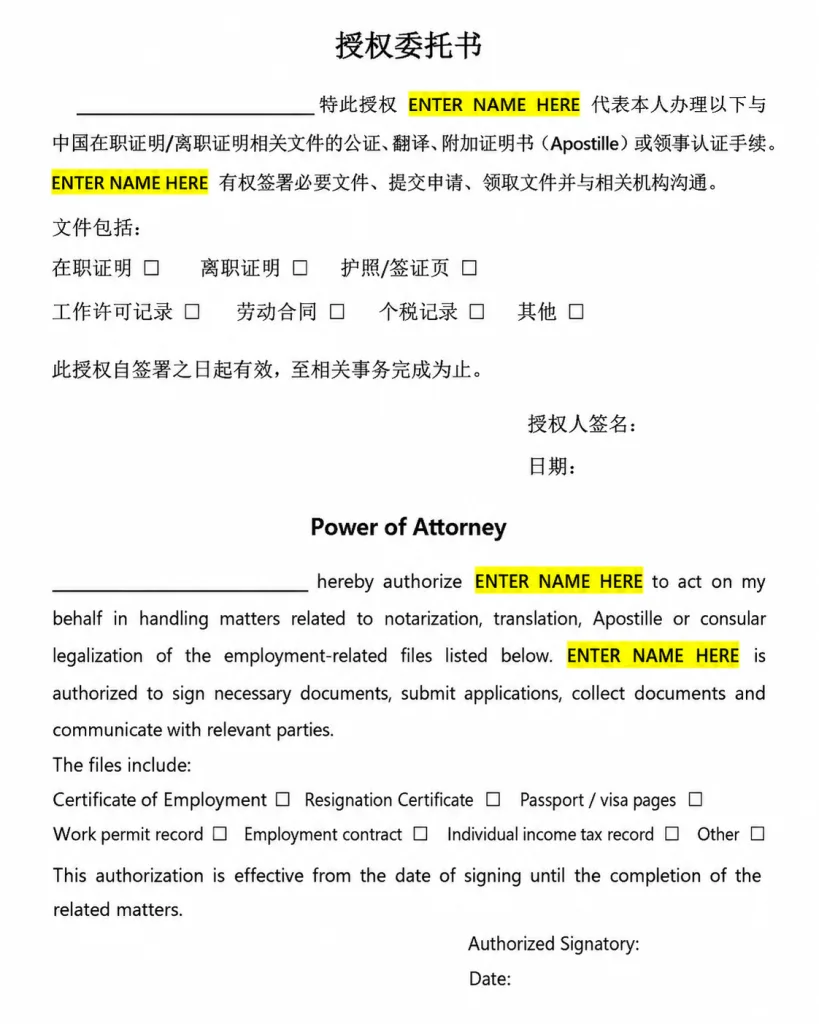
Does the Power of Attorney Need Its Own Apostille?
It may. If a Power of Attorney signed abroad must be used before a Chinese authority or notary office, the receiving body may require notarization and an Apostille or consular legalization in the country where it was signed. Confirm the required wording, form and authentication route before signing it. Contact HI-COM if you are unsure whether this additional procedure is required.
4. Supporting Evidence of Employment in China
Supporting records can help the notary office assess the relationship between the applicant, the former employer and the company-issued certificate.
Foreigner’s Work Permit Records
Relevant evidence may include a Notification Letter of Foreigner’s Work Permit, a Foreigner’s Work Permit card or other approval records showing the employer, validity period and applicant’s work-permit information.
Employment Contract
A complete electronic or paper copy of the employment contract may help confirm the employer, role and employment dates.
Individual Income Tax Payment Record
An individual income tax payment record covering the entire relevant employment period may provide additional evidence that the applicant worked and received taxable income in China.
5. Application Procedure Step by Step
Step 1: Prepare Documents Overseas
The applicant prepares:
- the original employment or resignation certificate;
- copies of the passport corresponding to the employment period;
- available supporting employment documents; and
- the original signed Power of Attorney.
The file should be pre-checked carefully to ensure that names, dates, employer details, passport information and employment records are consistent.
Step 2: Appoint a Representative in China
The applicant authorises a representative located in China and sends the necessary originals or certified copies, depending on the instructions received. The representative submits the documents to the relevant authority or notary office, depending on the intended use and required format, and responds to procedural requests on the applicant’s behalf.

6. Notarization and Translation in China
For overseas use, a Chinese company-issued employment or resignation certificate may first need to be converted into an eligible notarial certificate. The notary office determines what it can notarize and which evidence it requires.
Typical Notarial Workflow
- The original certificate and supporting records are submitted for review.
- The notary office reviews document authenticity and completeness, verifies the applicant’s identity and assesses the facts it is being asked to notarize.
- Additional records or verification may be requested if the file is incomplete or inconsistent.
- The required translation is prepared by a translation provider accepted for the procedure.
- The notary office issues a completed notarial document containing the Chinese source document and the translated version.
The completed document is normally prepared in a sealed notarial format. Processing time depends on the notary office, the complexity of the file and whether an expedited service is available.
Translation language, format and provider requirements can differ between notary offices and destination authorities. HI-COM provides certified Chinese translation services for official documents and can help clients prepare multilingual employment, tax and supporting records for use abroad.
7. Apostille or Consular Legalization for International Use
The Apostille Convention entered into force for China on 7 November 2023. When the Convention applies between China and the destination country, an eligible Chinese public or notarial document can generally receive an Apostille instead of going through the traditional chain of consular legalization.
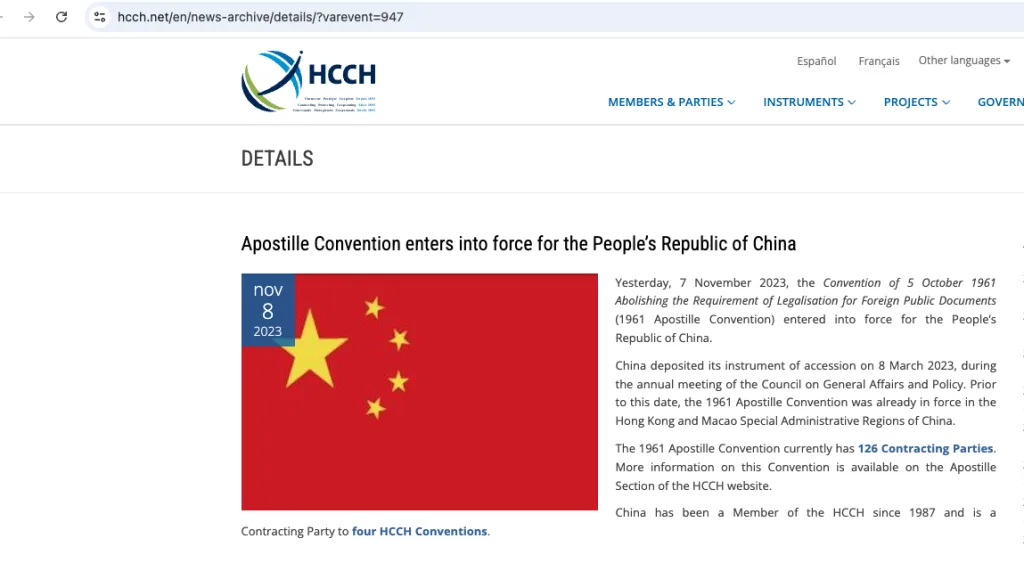
China’s Ministry of Foreign Affairs is the national competent authority. Authorised Foreign Affairs Offices of provinces, autonomous regions and municipalities can also issue Apostilles for eligible public documents originating within their respective administrative areas.
The HCCH maintains a current list of competent Apostille authorities for China.

Which Route Applies?
China’s official guidance explains the Apostille and consular legalization routes for documents used internationally and identifies the authorities responsible for handling these procedures.
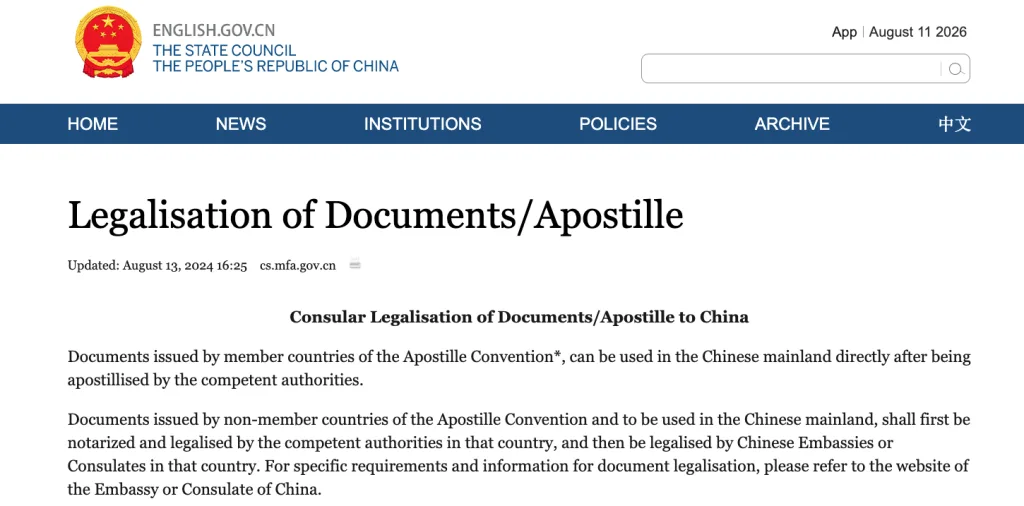
What Does an Apostille Confirm?

An Apostille authenticates the origin of the public document, including the signature, the capacity of the person signing and, where applicable, the seal or stamp. It does not certify the truth of the document’s contents, replace a required translation or guarantee acceptance by the destination institution.
How Can a Chinese Apostille Be Verified?
Apostilles issued in China can be checked through the official online verification system of China’s Ministry of Foreign Affairs.
8. Practical Tips Before Starting
Keep Names and Dates Consistent
The name shown on the passport, employment certificate, work-permit record, employment contract and tax record should match as closely as possible. Prepare evidence of any passport renewal, transliteration difference or legal name change.
Keep Employment Evidence Before Leaving China
Whenever possible, retain the original resignation or employment certificate, employment contract, work-permit records and tax-payment records. Replacing them after leaving China can require cooperation from the former employer or access to accounts and systems that may no longer be available.
Confirm the Required Language and Format
The destination authority may require a specific translation language, notarial format, certification statement, Apostille or legalization route, or validity period. Request written instructions before paying for notarization or shipping original documents.
Do Not Send Originals Before a Pre-Check
Ask the representative or service provider to review clear scans first. This reduces the risk of sending an incomplete file internationally or preparing a Power of Attorney in the wrong form.
Conclusion
Foreigners who have left China may still be able to obtain and Apostille a Chinese employment or resignation certificate through an authorised representative.
The principal steps are:
- prepare the original employment-related documents and passport records;
- provide a properly signed Power of Attorney;
- complete notarization and translation in China; and
- apply for an Apostille or consular legalization according to the destination country.
With proper preparation and advance verification of the requirements, former China-based employees can complete the process remotely without returning to China.
How HI-COM Can Support Former Employees Outside China
HI-COM Asia provides end-to-end support for clients in China and abroad, combining certified Chinese translation services with official-document preparation in more than 40 languages. Depending on the case, our team can help with:
- reviewing the document type, language pair, destination country and intended use;
- translating employment certificates, resignation certificates, contracts, tax records and related evidence;
- preparing certified translations in the required multilingual format;
- clarifying the likely notarization, Apostille or legalization workflow;
- coordinating the process in China through an authorised representative where available; and
- arranging delivery of completed documents.
For a broader explanation, see our guide to preparing Chinese official documents for use abroad.
Related Chinese Document Guides
Applicants dealing with other official records may also find the following HI-COM guides useful:
- How to obtain and Apostille a Chinese non-criminal record while living in China
- How to obtain, translate and Apostille a Chinese non-criminal record after leaving China
- How to get a diploma Apostilled in China
Frequently Asked Questions
Can I Apostille a Chinese Employment or Resignation Certificate Without Returning to China?
It may be possible through an authorised representative. Acceptance of remote representation and the required Power of Attorney depends on the notary office, the document and the city where the process is handled.
Can the Company-Issued Certificate Be Apostilled Directly?
Not necessarily. An Apostille applies to eligible public documents. A private certificate issued by an employer may first need to be used as evidence for a Chinese notarial certificate. The competent authority then issues the Apostille for the eligible public or notarial document.
Is a Chinese Tax-Payment Record Enough to Prove Employment?
A tax-payment record can be useful supporting evidence, but it may not replace the employment or resignation certificate. The notary office decides which combination of records is sufficient for the requested notarial act.
Does an Apostille Include Translation?
No. An Apostille authenticates the origin of an eligible public document. Translation is a separate requirement determined by the receiving authority, institution or destination country.
How Long Does the Process Take?
Timing depends on document availability, employer cooperation, notary-office review, translation requirements, the competent Apostille or legalization authority, international shipping and whether corrections are requested. A case-specific timeline should only be confirmed after the file has been reviewed.
What Should I Send HI-COM for an Initial Review?
Send clear scans of the employment or resignation certificate, relevant passport pages and available supporting records. Also state the city where the document was issued, destination country, receiving institution, required language and deadline. Do not send unnecessary personal data before confirming the secure submission method.
Need Help Preparing Chinese Employment or Resignation Documents for Use Abroad?
If you need a representative based in China to coordinate the legalization, translation and Apostille of Chinese employment-related documents, send HI-COM your document type, city of issue, destination country, target language and deadline. Our team will review the available information and explain the next practical step.
Contact HI-COM Asia for free initial guidance and a free quotation