


HI-COM · Business consulting in China
China business consulting. A clearer route to market.
HI-COM helps international companies assess the Chinese market and put their plans into practice. Our Shanghai team connects market research and entry strategy with distributor search, local marketing, translation and interpreting. Start with one business question or bring us in to help carry out the plan.
Free initial consultation with our Shanghai team

Start with the decision you need to make
Where is your business today?
Choose a focused starting point. You can engage one service or connect several as your project develops.
Still evaluating China?
Clarify demand, competition, pricing and routes to customers before committing resources.
Explore market research →02Ready to enter the market?
Turn your market understanding into a positioning, entry-model and go-to-market plan.
Explore entry strategy →03Need the right local partner?
Identify and approach relevant distributors, importers or other commercial partners.
Explore partner search →04Need stronger local execution?
Connect a defined strategy with Chinese-language messaging, channels and campaign delivery.
Explore implementation →RUBY Global Solutions · Business matchmaking
Finding soybean protein manufacturers in China
RUBY wanted to reach relevant manufacturers beyond the industry’s largest suppliers.
Read the RUBY case study →- What HI-COM did
- Mapped the supplier landscape and used chamber networks and trade-show contacts to find manufacturers worth approaching.
- Documented outcome
- An invitation to visit a candidate’s Beijing headquarters for further business discussions.
Four connected services
Build the right scope for your China objective.
Each offer can stand on its own. Where the brief requires more, research informs strategy, strategy informs partner selection, and market-facing activity follows the same positioning.

China market research
Establish a category-specific view of the market before choosing where to invest. Research focuses on the questions your team needs to answer.
- Competitor and positioning analysis
- Pricing and audience insights
- Distribution and channel mapping
What the work should clarify:
A comparison of competitors, pricing and channels, with implications for your category.

China market entry strategy
Translate market understanding into a practical entry or growth plan. Compare routes to customers and define the sequence of priorities.
- Entry models, positioning and company setup considerations
- Go-to-market planning
- Partner and execution requirements
What the work should clarify:
A recommended entry route and a roadmap that sequences the first commercial decisions.

Partner search & distribution
Find partners suited to your product, channel and scale. The work assesses candidates and supports introductions around your commercial criteria.
- Distributor, importer and channel search
- Candidate assessment and shortlisting
- Introductions and early negotiation support
What the work should clarify:
A shortlist with the rationale for each candidate and suggested next steps.
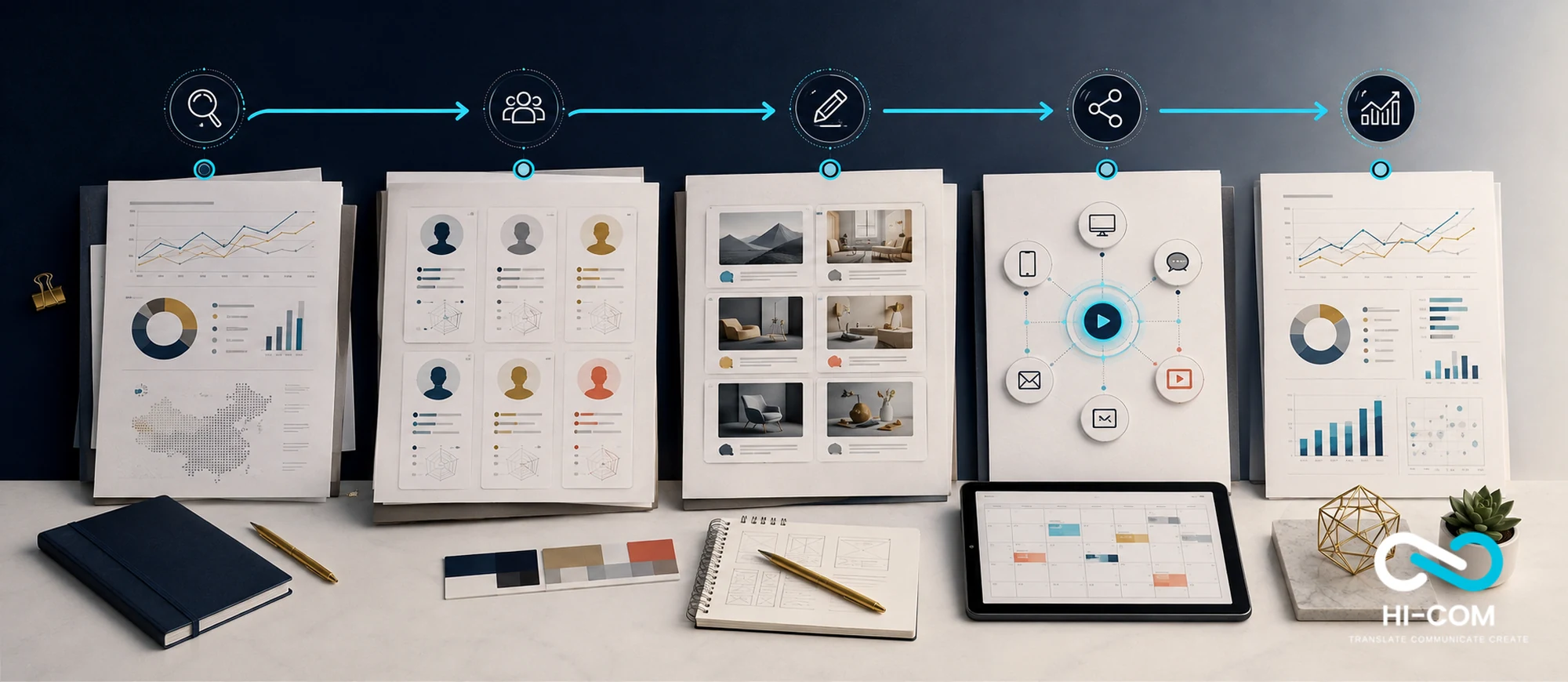
Marketing implementation
Put the agreed strategy into market-facing activity. Connect localised messaging with the channels and actions that fit your audience.
- Chinese-language content and positioning
- WeChat, Douyin, RED and KOL activity
- PR, campaign coordination and reporting
- Translation for launch materials and business interpreting for meetings and site visits
What the work should clarify:
An activation plan that defines channels, responsibilities and how progress will be measured.
The people behind the work
Meet your China consulting team
Our Shanghai team brings together market entry, local marketing and multilingual communication. We match the people involved to your decision and the work you need.

Kate Chernavina
Business Consultant, China Market Entry
Kate brings a background in Chinese digital marketing to her work with companies assessing opportunities in China.
Meet the HI-COM team →Already have a shortlist?
Check the company before you commit.
If you already have a distributor or supplier in mind, start by checking its registered identity and business status against official Chinese records.
Explore Chinese Company Check →Where market strategy meets communication
Make your China positioning work in practice.
A commercial plan also needs language and identity that customers and partners can understand. HI-COM’s published naming and localisation projects show this connected capability.
Oral care · President
Four Chinese naming proposals
For President Oral Care, HI-COM benchmarked competitor names and assessed character meanings and distinctiveness before presenting four final proposals. The published scope also included trademark registration.
View the President project →Dairy · COLUN
Localisation across three languages.
For the Chilean dairy cooperative, brand name localisation formed part of a wider website project covering Spanish, English and Chinese, alongside hosting and domain registration.
View the COLUN project →For a dedicated naming brief, explore our Chinese brand naming service. Naming and registration support are agreed within the project scope.
Local relationships and practical coordination
Work that takes place in the market.
HI-COM’s wider on-the-ground work includes delegation visits, industry events and trade exhibitions. These settings support local understanding and cross-border communication.

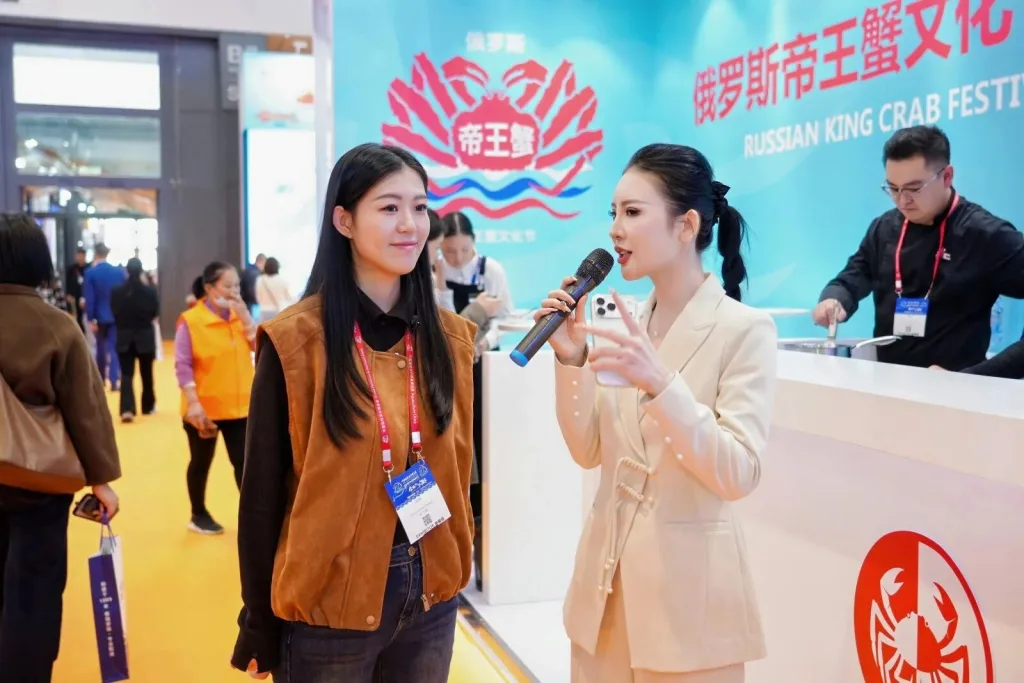
See the Qingdao activation case
Our Shanghai-based team scopes research, visits and partner outreach around the locations and channels relevant to your project.
Explore the China trade fair calendar →Deliverables that support the next decision
What can you expect to receive?
Start with the decision you need to make. The proposal defines the evidence, deliverables and responsibilities for that scope.
- Is there demand for our offer?
- A comparison of competitors, prices and channels, with implications for your category.
- How should we enter the market?
- A recommended entry route with priorities, trade-offs and a sequence of decisions.
- Who could we work with?
- A shortlist of distributors or other partners, with selection criteria and suggested next steps.
- How do we put the plan to work?
- An implementation plan with channels, responsibilities and success measures. We can also scope Chinese-language content or support for local meetings.
Tell us your launch date and decision deadline. We’ll agree what can be covered and identify any work that needs legal, tax or product compliance specialists.
See how we work →From first conversation to delivery
How we work on a China consulting project
-
Define the decision
Agree on the product, audience, target regions and business decision. The written scope sets out the evidence needed, deliverables and responsibilities.
-
Gather the evidence
Depending on the scope, we compare competitors, pricing and channels, map prospective partners or add agreed interviews, outreach and visits.
-
Review options and next steps
Review the findings and trade-offs with the Shanghai team. Agree on next steps, including introductions or implementation when those are part of the engagement.
Company and project information is treated as confidential. If your brief includes sensitive material, discuss confidentiality arrangements before sharing it.
Before you start
China business consulting: your questions answered.
What does a China business consultant do?
A consultant helps a business understand the market, evaluate commercial options and plan the next steps. HI-COM connects market research, entry strategy, partner search and marketing implementation, with the scope set around the decision you need to make.
What is the difference between market research and market entry strategy?
Research builds the evidence: competitors, pricing, audiences and channels. Entry strategy uses the available evidence to assess positioning, entry models and go-to-market priorities. They can be commissioned separately or connected.
Can I engage only one consulting service?
Yes. A partner search, research brief or implementation project can stand on its own. We recommend combining services when the business question requires it, rather than assuming every company needs a full programme.
Can you help if we already have a distributor or a China entity?
Yes. The starting point may be a focused review of market positioning, channels, partners or implementation. If the current entry plan is sound, a targeted scope may be more useful than rebuilding it.
Does HI-COM work with businesses that have no China presence?
Yes. A first engagement can assess the opportunity before an investment decision or define an entry approach when the market is already understood. The scope depends on your product, objectives and readiness.
Do you provide company registration, legal or tax services?
During a market-entry engagement, we can discuss company setup and coordinate registration and filing steps where they are in scope. The proposal sets out what HI-COM can handle and where qualified legal, tax or other specialists need to advise.
How much does business consulting in China cost?
Fees depend on the questions, services, research depth, locations and implementation support required. Share your objective, timing and budget range for a scoped proposal. There is no single package suitable for every company.
How long does a consulting engagement take?
Timing depends on the scope, information available, fieldwork or outreach needed and review process. A focused brief and a wider market-entry engagement will have different schedules. Agree milestones against your decision deadline before work starts.
Can you also support Chinese brand positioning and localisation?
Yes. Naming, localised messaging and marketing can connect to the consulting brief through an agreed additional scope. See our Chinese brand naming service or marketing implementation service for the relevant scope.
Is company information kept confidential?
Yes. Company and project information shared with the team is treated as confidential and used for the engagement. Discuss any NDA or specific handling requirements before sending sensitive material.
Where is the consulting team based?
HI-COM’s consulting team is based in Shanghai. Research, visits and partner outreach can be scoped to relevant locations in China. A project-support location is not a claim of a permanent office there.
What should I send for a first consultation?
Your company website, product or service, current China presence, priority business question, target audience and timing. Add any existing partner arrangements and budget range. You do not need a completed market-entry plan to start the conversation.
Your next decision in China
Tell us what your business needs to move forward.
Tell our Shanghai team what you need to decide or deliver. We’ll review your brief and discuss which work is useful, what it would produce and what happens next.
- Your company and product or service
- Your current China presence and objective
- Your timing and budget range, if available
Free initial consultation · A personal reply from our Shanghai team

Scan to discuss your project.
Open the contact page →