

618 Shopping Festival in China: What Foreign Brands Should Learn from the Mid-Year Retail Battle
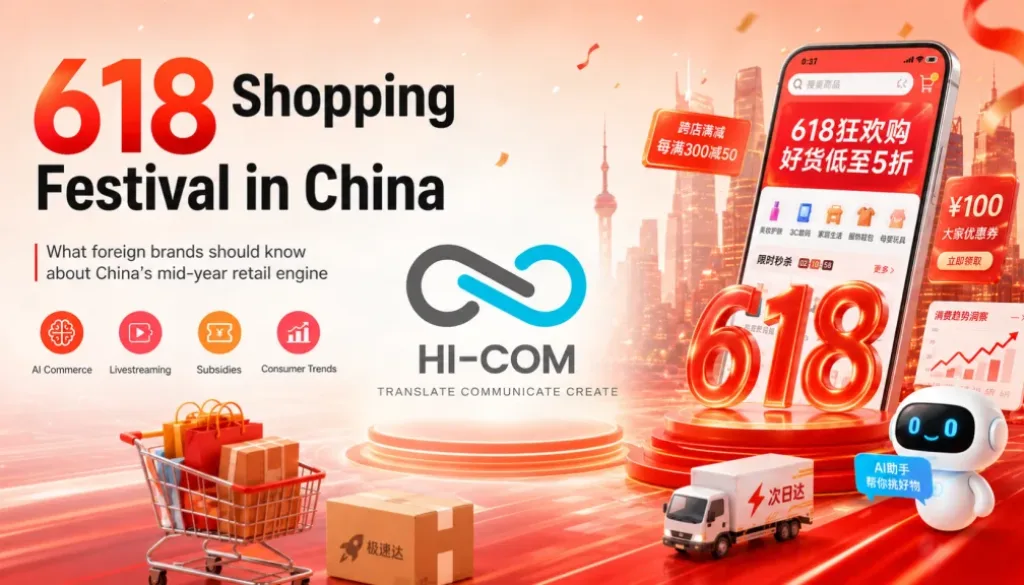
Every year, while the rest of the world is still trying to understand Singles’ Day, China is already running another huge retail moment: the 618 Shopping Festival in China.
At first glance, 618 looks like a giant discount campaign. However, it is much more than that. It is a mid-year test for China’s consumer mood, platform competition, livestreaming power, AI commerce, logistics capacity and brand strategy.
For foreign brands, 618 is not only a sales event. It is a live market signal.
From JD.com’s birthday to China’s mid-year shopping season
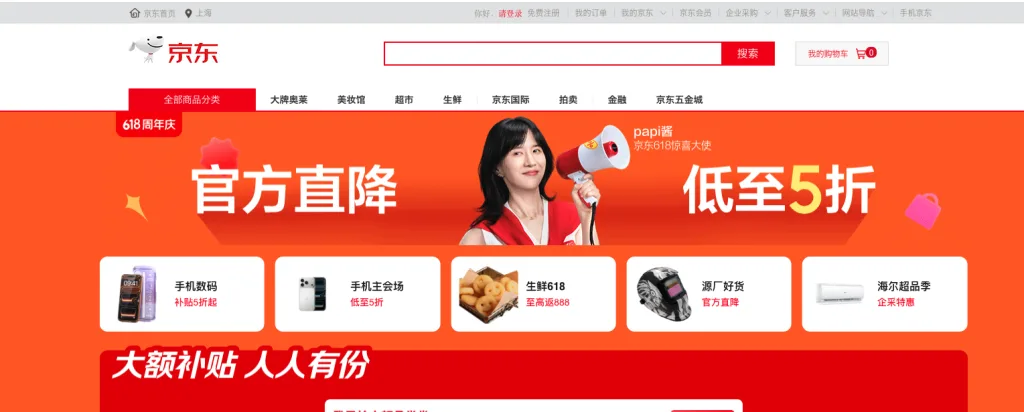
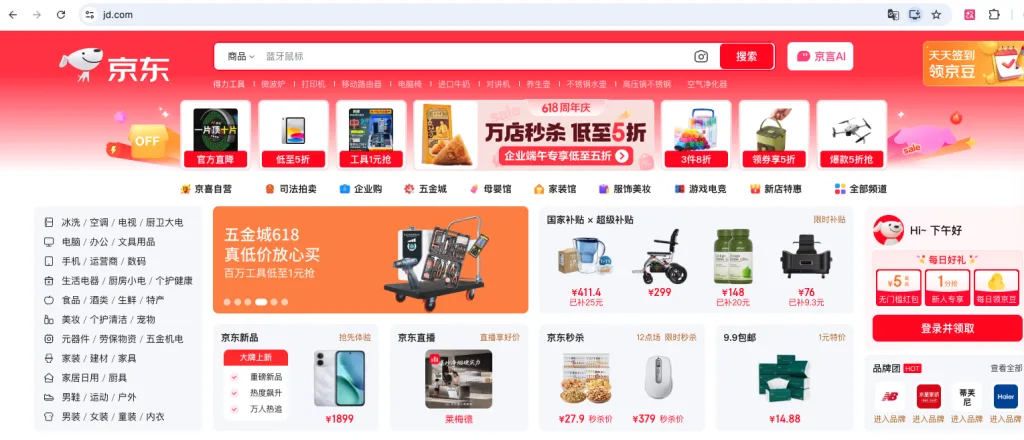
The story of 618 begins with JD.com. The date refers to June 18, JD’s founding anniversary. What started as a company promotion later became China’s largest mid-year shopping festival, joined by platforms, offline retailers, logistics companies and brands across categories.
Today, 618 is no longer a one-day sale. It often begins in May with warm-up campaigns, pre-sale periods, livestreaming sessions, price guarantees and platform-specific discounts. By June 18, consumers have already seen weeks of offers.
That is both the strength and the weakness of the festival.
The 618 Shopping Festival in China is an economic signal
618 matters because China is still the world’s largest online retail market. In 2025, China’s online retail sales reached 15.97 trillion yuan, up 8.6%. Online retail sales of physical goods reached 13.09 trillion yuan, accounting for 26.1% of total retail sales of consumer goods.
This makes 618 more than a platform campaign. It is a stress test for consumer confidence, delivery networks, merchant margins and inventory cycles.
In 2025, the festival reached a record 855.6 billion yuan in GMV, up 15.2% from 2024. However, average daily spending fell because the festival lasted longer. In other words, total sales grew, but urgency weakened.
This is the key lesson: a record GMV number does not always mean stronger excitement.
Consumers are still buying, but they are harder to convince
Chinese consumers have not stopped spending. They have become more rational.
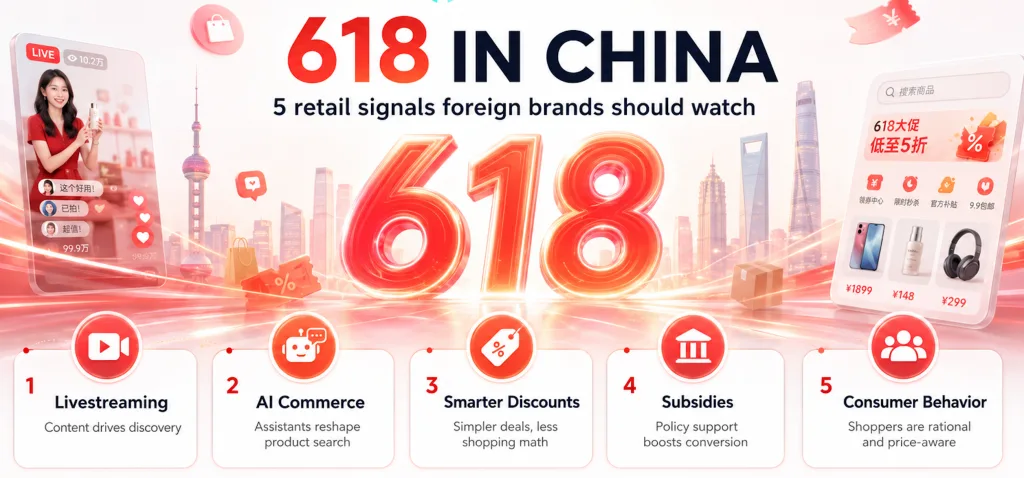
During 618, shoppers compare prices, check reviews, follow livestreams, wait for coupons, calculate subsidies and look for after-sales guarantees. Many no longer wait for one big sales day, because discounts now appear all year.
This changes the role of 618. It is less about impulse buying and more about planned purchases. Consumers often use it for electronics, home appliances, beauty, sports products, health items, baby products and higher-ticket goods where the final price, warranty and delivery service matter.
For brands, this means that “cheap” is not enough. The offer must feel useful, trustworthy and easy to understand.
The end of complicated shopping math
One of the most important changes in recent years is the move away from complex promotion rules.
Chinese consumers used to deal with cross-store coupons, deposit systems, full-reduction discounts, red envelopes, VIP benefits and livestream-only vouchers. In Chinese social media, many users joked that shopping festivals had become a kind of “math exam”.
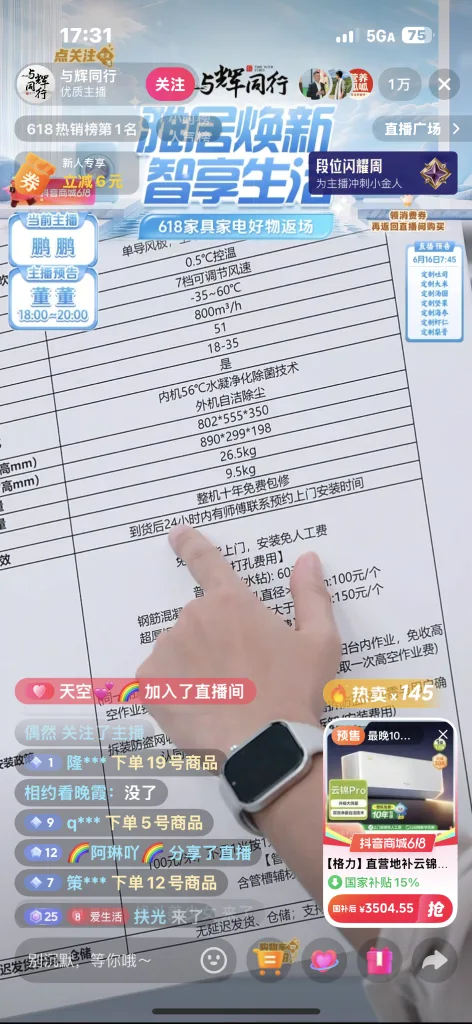
Platforms have started to simplify. In 2025, Tmall and other platforms moved toward clearer discounts, stronger price guarantees and lower-friction purchase rules.
This is not just a user experience detail. It shows that Chinese platforms know consumers are tired. The next phase of 618 is not about making discounts louder. It is about making the purchase decision easier.
AI is becoming the new shopping assistant
The 2026 edition of 618 is especially important because it shows how fast AI is entering Chinese e-commerce.
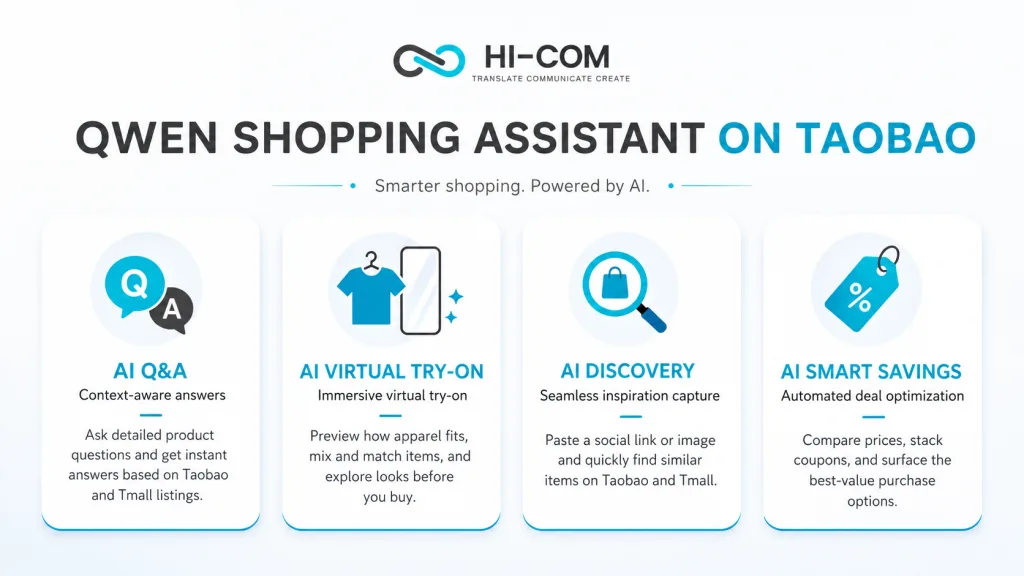
Alibaba has integrated its Qwen AI model with Taobao, allowing users to browse, compare and buy products through AI-powered conversations. The system supports shopping recommendations, virtual try-ons and price tracking.
China Daily also reported that ByteDance began testing Doubao integration with Douyin e-commerce, allowing users to complete purchases and payments through an AI chatbot.
This matters for brands because product discovery may no longer start only with search keywords or KOL content. It may start with an AI assistant comparing products, prices, reviews and delivery options.
For foreign brands, this raises a new question: is your product content ready to be understood by AI?
Livestreaming is no longer optional
618 also shows the power of content commerce in China.
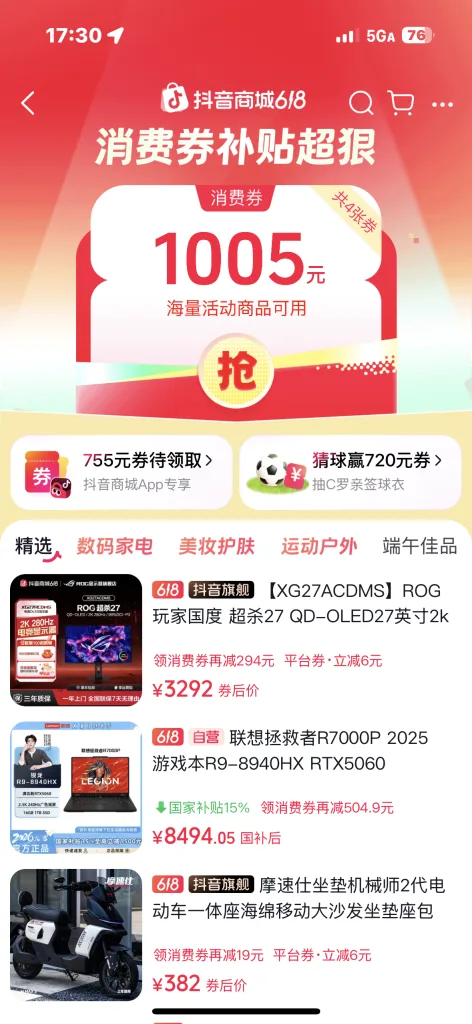
Traditional e-commerce platforms remain strong, but Douyin, Kuaishou and Xiaohongshu have changed the way consumers discover products. Many shoppers do not arrive directly with a shopping list. They are influenced by short videos, KOL recommendations, KOC reviews, livestream demonstrations and community discussions.
This is why brands should not treat 618 as a discount calendar only. They need content before the sale, not just promotions during the sale.
A strong 618 strategy may include Xiaohongshu seeding, Douyin short videos, livestream slots, search optimization, product-page localization, clear review management and strong customer service.
At HI-COM, this is where China social media and digital marketing expertise becomes critical. Campaigns need to fit the language, platform culture and local consumer expectations. A simple translation of a global campaign is rarely enough.
Government subsidies are changing the game
Another major force behind 618 is policy.
China has used consumer trade-in programs to support demand, especially for home appliances, electronics, smart devices and vehicles. For 2026, China allocated an initial 62.5 billion yuan in ultra-long treasury bond funds for its consumer goods trade-in scheme.
This means that 618 performance can depend heavily on the overlap between platform discounts and government-backed subsidies.
For categories such as home appliances, smartphones, electronics, furniture, sports equipment and smart home products, subsidy eligibility can become a real conversion driver.
Regulation is also part of the 618 story
The 2026 festival also shows that regulators are watching closely.
Beijing’s market regulator summoned major platforms including Taobao/Tmall, JD.com, Pinduoduo, Douyin and Xiaohongshu over issues such as misleading promotions and “rat race” competition.
This is an important signal. China does not want e-commerce growth to rely only on price wars, unclear subsidies or pressure on merchants. Platforms are being pushed toward better service, clearer rules and healthier competition.
For brands, this means 618 should not be approached as a race to the lowest price. It should be used carefully, with a clear promotional logic and strong brand protection.
What foreign brands should do before joining 618
Foreign brands often ask whether they should participate in 618. The better question is: are they ready?
A strong 618 plan should start months before June. Brands need to decide which hero products to push, which platforms to prioritize, what price logic to use and how to localize the campaign message.
They also need to prepare Chinese product pages, short-video scripts, livestream talking points, KOL briefs, customer service answers, review strategy and stock levels.
For premium brands, the challenge is even sharper. Heavy discounts can create short-term sales but weaken long-term value. In that case, brands may use 618 to launch limited bundles, exclusive sets, membership benefits, content campaigns or service-driven offers instead of aggressive markdowns.
Why 618 matters beyond China
618 is useful for foreign companies even if they are not selling in China yet.
It shows where Chinese consumer behavior is heading. It reveals how platforms test AI commerce. It shows how livestreaming, instant retail, subsidies and content influence purchases. It also gives global brands a preview of retail models that may spread elsewhere.
In this sense, 618 is not only a Chinese shopping festival. It is a retail laboratory.
This logic connects with other moments in China’s consumer calendar, from Children’s Day and the kidult economy to Singles’ Day, Qixi and Golden Week.
Turning 618 into a smarter China marketing opportunity
The 618 Shopping Festival in China has evolved from JD.com’s birthday sale into a national mid-year retail engine.
It is no longer only about discounts. It is about timing, trust, platform fluency, content, AI visibility, subsidies, service quality and cultural understanding.
For international brands, the opportunity is real. However, success requires more than joining the discount war. It requires a localized strategy, strong Chinese content, platform knowledge and a clear understanding of what consumers actually value.
HI-COM helps international companies plan and localize China marketing campaigns across social media, e-commerce content, KOL strategy, digital marketing and cross-cultural communication.
To prepare your next campaign for China’s retail calendar, contact HI-COM and build a strategy that fits the market before the campaign goes live.