

Simultaneous Interpreting in Beijing for a High-Stakes Energy Market Briefing

When an energy market briefing moves from crude oil to LNG, from AI power demand to China’s 15th Five-Year Plan, every word matters.
That was the context of the Beijing Energy Briefing 2026, a one-day, in-person event hosted by S&P Global Energy at the Park Hyatt Beijing Hotel on June 9, 2026. The event brought together energy leaders, policymakers, traders and analysts to discuss the forces shaping China’s energy and commodity markets.
For this mission in Beijing, HI-COM provided English–Chinese simultaneous interpreting and the full interpreting equipment setup required to support real-time communication throughout the event.
A Beijing energy briefing shaped by global disruption
The Beijing Energy Briefing focused on major questions affecting China and the wider Asia-Pacific energy landscape. The official event page highlighted geopolitical disruption, oil supply, LNG security, trade route stability, market direction, trading behavior, energy strategy and decarbonization.
This was not a general business conference. It was a technical, fast-moving market briefing. Speakers covered topics such as the Strait of Hormuz, Platts benchmarks, crude oil flows, global LNG disruption, AI and power demand, China’s 15th Five-Year Plan, petrochemicals, shipping, coal, renewable energy and CCUS.
The event agenda also included three afternoon breakout rooms covering Power, Gas & LNG, Crude, Refined & Shipping, and Petrochemicals.
For interpreters, this type of event requires more than language fluency. It requires preparation, terminology control and the ability to follow dense market analysis in real time.
HI-COM’s role: interpreting, equipment and on-site coordination
HI-COM supported the event with a complete simultaneous interpreting setup for the Beijing briefing.
- professional English–Chinese simultaneous interpreters;
- interpreting equipment for the conference setup;
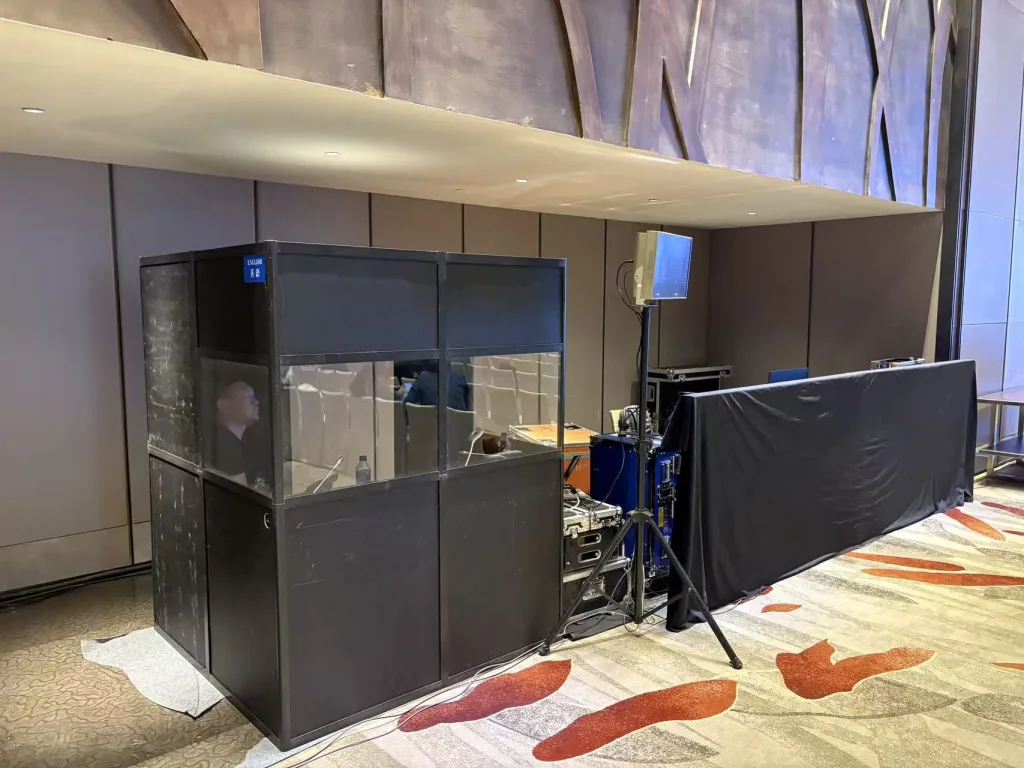
- interpreter booth and technical system coordination;
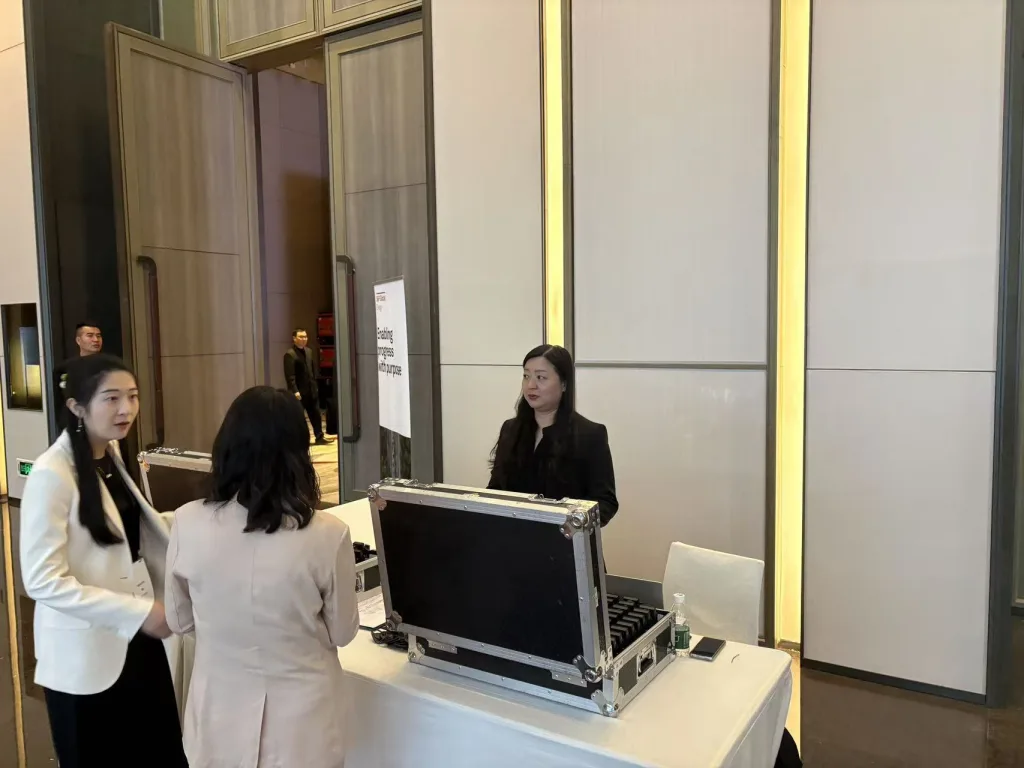
- headset and receiver support for attendees requiring interpretation;
- on-site technical assistance to ensure stable sound and transmission;
- event language coordination before and during the briefing.
The official event information stated that on-site translation would be available, confirming the importance of language access for participants attending the Beijing briefing.
For a multilingual energy event, interpreting is not a side service. It is part of the event infrastructure. If the audio fails, the content fails. If the terminology is wrong, the message loses value. Therefore, the interpreting setup must be planned with the same attention as the stage, agenda and speaker flow.
Why simultaneous interpreting was the right format
Simultaneous interpreting allows participants to follow speeches and panels in real time, without stopping the speaker after every sentence. This format is especially useful for conferences, market briefings, panel discussions and technical presentations where the flow of ideas must remain uninterrupted.
For the Beijing Energy Briefing, this format was essential. Presentations moved quickly between geopolitical risks, supply chain scenarios, LNG pricing, power demand, chemicals, shipping and market forecasts. Consecutive interpreting would have slowed the program and disrupted the rhythm of the sessions.
Simultaneous interpreting helped participants stay focused on the analysis, not the language barrier.
Interpreting energy terminology requires preparation
Energy market interpreting is highly specialized. The interpreter must understand the difference between LNG and NGL, know how to handle terms such as JKM, MOC, CCUS, refining margins, arbitrage flows, crude supply disruption and feedstock insecurity, and follow speaker logic under time pressure.
The Beijing agenda included sessions on the Strait of Hormuz, Platts price benchmarks, global LNG, AI and power, and China’s 15th Five-Year Plan. These topics are technical, but also strategic. A small mistranslation can change how the audience understands market risk, policy direction or investment timing.
Before this kind of mission, HI-COM prepares terminology, reviews the event structure and checks the technical setup with the event team. This preparation helps interpreters work with speed, precision and consistency throughout the day.

Equipment matters as much as interpreter quality
A strong interpreter cannot perform well with weak equipment.
For simultaneous interpreting, the technical chain must be stable from start to finish. The speaker’s audio must reach the interpreter clearly. The interpreter’s output must reach attendees without delay or interruption. The booth must allow focus. The receivers and headsets must be ready before the room fills.
HI-COM’s simultaneous interpreting service includes equipment such as interpreter booths, technicians, headsets, microphones, receivers and other setup elements required by the event or venue.
For the Beijing Energy Briefing, HI-COM’s mission combined language expertise and technical coordination. This ensured that the interpreting was not only accurate, but also accessible to the audience in real time.
Building on HI-COM’s experience with high-level business events
This Beijing mission also reflects a wider pattern in HI-COM’s event interpreting work in China.
Earlier in 2026, HI-COM supported the Mongolia Investment Forum in Shanghai with English–Chinese simultaneous interpreting, consecutive interpreting for B2B meetings, interpreting equipment, headsets, receivers, booth setup and on-site technical support.
These missions show the same core principle: successful event interpreting requires three elements working together.
First, the interpreters must understand the subject matter. Second, the equipment must be reliable. Third, the event team must coordinate timing, rooms, speakers and audience needs before the event starts.

For international conferences in China, this combination is what protects the quality of communication.
What this mission says about multilingual events in China
China continues to host more international briefings, business forums, investor meetings and technical events. Many of them bring together global experts and Chinese-speaking audiences. In this context, English–Chinese simultaneous interpreting is not only a convenience. It is a conversion tool.
It helps attendees understand complex content. It allows speakers to present naturally. It gives organizers a smoother program. Moreover, it supports audience trust, because participants can follow the event without missing key details.
For sectors such as energy, finance, technology, manufacturing, healthcare and government affairs, professional interpreting can directly affect the business value of an event.
Need simultaneous interpreting in Beijing or elsewhere in China?
HI-COM provides simultaneous interpreting in Beijing, Shanghai and across China for international conferences, corporate briefings, technical seminars, investor meetings, trade events and high-level business forums.
Our team can support your event with professional interpreters, conference interpreting booths, headsets, receivers, microphones, on-site technicians and multilingual event coordination.
Whether you are planning an energy market briefing, a business summit, a technical workshop or a B2B meeting program, HI-COM helps you make your content accessible, accurate and effective.
Need interpreting support in China? Contact HI-COM to discuss your event requirements.