

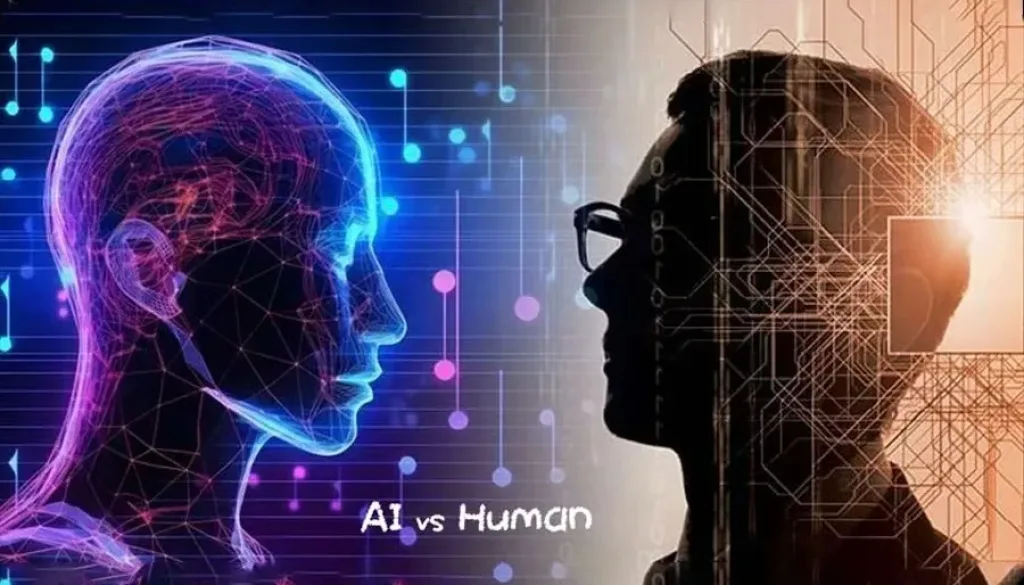
Translation AI vs Human Translators: What You Need to Know in 2025
Translation AI has altered the map of multilingual content management in businesses. Latest data shows 44% of companies plan to implement generative AI for creating content in multiple languages . Smith+Nephew’s experience showed a 70% drop in editing tasks . Many organizations still face challenges in choosing between machine and human expertise.
Speed versus accuracy remains the key factor in picking between AI and traditional human translation. AI translation tools can produce results almost instantly . This marks a huge improvement from the previous 10-day average turnaround time . The trade-off lies in accuracy rates. Modern AI solutions achieve 70-85% accuracy , while professional human translators deliver 95-100% accurate results . Cost plays a major role too. Human translation services for common language pairs like English-Spanish can range from $0.10 to $0.25 per word .
Companies need a clear understanding of which option matches their content requirements. AI translation’s ability to process legal documents has improved substantially . Yet sensitive materials such as legal, certified, or sworn translations need human translators’ cultural knowledge and subtle understanding. This piece explores both approaches in 2025 and helps decision-makers create translation strategies that match their needs.
When to Use AI Translation vs Human Translators

The choice between AI translation and human translators comes down to your content requirements, risk tolerance, and budget limits. Businesses can make better decisions by knowing the best uses for each method.
AI translation works best with large volumes of time-sensitive content that doesn’t need perfect accuracy. Support teams can use AI to answer in dozens of languages immediately. This provides faster customer service without hiring native speakers for every market [1]. AI handles technical documentation, product descriptions, and content with standard terminology efficiently [2]. The technology works great with straightforward, factual content that doesn’t just need cultural adaptation [3].
Human translators play a crucial role with sensitive materials where accuracy matters most. Professional translators achieve 95-100% accuracy [4]. They become essential for:
- Legal documents: AI mistakes have caused critical errors in legal contexts [2]
- Medical/pharmaceutical content: Precision directly affects patient safety [2]
- Marketing materials: Cultural adaptation and understanding of local idioms are vital [2]
- Certified/sworn translations: Immigration, court proceedings, and government-issued certificates need these [5]
Cultural understanding becomes critical with certified translations for official purposes. Sworn translations in many countries must come from translators who take an oath before court officers. They give their word that translations match original documents accurately [6]. This process will give a legal equivalence and builds confidence in translation accuracy.
Cost plays a big role in these decisions. Professional translations usually cost between $0.11 to $0.35 per word [2]. AI solutions offer big savings. AI can translate thousands of words in minutes [7]. This makes it perfect for time-sensitive projects.
Many organizations now use hybrid approaches that blend AI’s speed with human expertise. Through collaboration with AI for the original translation and human review—especially for high-stakes documents—companies get both speed and accuracy [8].
Evaluating Translation Quality and Risk
Quality assessment of translated content needs an understanding of both objective errors like spelling and grammar and subjective elements like style and cultural fit. AI translation tools have come a long way but they’re nowhere near perfect when they don’t deal very well with complex language features.
Research shows machine-translated legal documents contain critical errors in 38% of reviewed samples [9]. These errors range from wrong clause translations to missing obligations. Small mistakes in document translation can create serious legal problems, financial risks, or disputes [9]. AI translation tools don’t handle context well. They might produce grammatically perfect translations that miss the original message completely [10].
Major risk areas in AI translation include:
- Cultural insensitivity: AI doesn’t understand cultural nuances. This leads to translations that hurt brand image or relationships [10]
- Legal terminology: AI doesn’t deal very well with region-specific legal concepts and intentional contract ambiguity [9]
- Medical accuracy: Wrong translations in healthcare can result in life-threatening situations [10]
- Data security: AI translation services often use input data to train shared models. This creates privacy risks [11]
Legal translation research proves human translators showed better skills at figuring out accurate meanings of missing words. They also maintained correct legal terminology [12]. AI translation is like thinking “power tools could replace carpenters” [13]. It helps with speed but becomes dangerous without expert guidance.
Human translators remain essential for certified translations that need legal equivalence. They bring cultural awareness – knowing how to spot and handle cultural differences [14]. Their emotional intelligence helps with sensitive content [15]. Courts in Germany, France, and Argentina often reject machine-translated documents unless certified professionals approve them [16].
Organizations should set up thorough double-checking processes to evaluate translation quality. This includes back-translation and peer reviews [17]. The best approach in 2025 combines AI’s speed with human oversight, especially for critical documents that need precision [18].
Choosing the Right Translation Strategy in 2025
Smart translation strategies in 2025 need a content-tiering approach that aligns translation methods with content importance. Translation programs don’t try to achieve perfection for every piece of content. They set quality targets based on business value instead.
A tiered strategy becomes more effective by dividing content into three levels:
- High-stakes content: Safety instructions, legal documents, marketing materials, and landing pages need deep expertise and human review. This tier costs more because the value justifies the investment [19].
- Medium-stakes content: Help articles, onboarding flows, and UI strings work well with AI translation plus light human review, especially with clear context [19].
- Low-stakes content: User-generated content and backend code usually need just raw AI translation to communicate meaning [19].
Cost plays a significant role in strategy development. Human translation prices range from CAD 0.14 to CAD 0.35 per word for common languages. Specialized language pairs like English-Japanese cost CAD 0.21 to CAD 0.56 per word [4]. A 10,000-word document could cost anywhere between CAD 696.68 to CAD 5573.44 [4].
Hybrid workflows provide the best balanced approach in 2025. This model blends AI’s speed with human refinement through three stages: automated draft generation, guided post-editing by certified linguists, and final native-speaker quality assurance [20]. Post-editing adds CAD 0.04 to CAD 0.07 per word to the base machine translation cost [20].
Professional associations like CIOL or ITI help verify translator credentials [21]. These associations maintain online directories that show translators’ ISO 17100 compliance status quickly [21].
The future combines human expertise with AI capabilities. Businesses that blend both approaches smartly will lead in speed, quality, and cost-effectiveness [4].
Conclusion
The translation landscape in 2025 brings new possibilities and hurdles for businesses. AI translation tools are a game-changer. They cut down translation time from days to minutes and save money by a lot. Notwithstanding that, their 70-85% accuracy can’t match what human translators deliver.
Businesses just need to be smart about translation instead of picking sides. Content-tiering is the quickest way to match translation methods with content value and business effect. Critical content like legal papers and marketing campaigns still needs human expertise. AI works great for high-volume, time-sensitive materials.
Human involvement is crucial for certified and sworn translations because of legal requirements. Human translators’ cultural expertise and context understanding are something AI can’t copy. Many courts won’t accept machine-translated documents without professional certification. This shows why human oversight remains essential for legal materials.
Machine translation mistakes can hurt a company’s reputation and create legal problems. These risks are nowhere near acceptable. Technology still can’t handle cultural subtleties, legal terms, and intentional ambiguities the way humans do.
The future lies in hybrid workflows where AI speed meets human expertise. This combination helps businesses excel in speed, quality, and cost. Smart companies will evaluate each translation project on its own merit. They’ll use the right resources based on how critical the content is rather than using one solution for everything.
Key Takeaways
The translation landscape in 2025 requires strategic thinking rather than choosing between AI and human translators. Here’s what businesses need to know to make informed decisions:
• Use a content-tiering approach: Match translation methods to content importance—AI for high-volume, low-stakes content; humans for legal, medical, and marketing materials where accuracy is critical.
• AI achieves 70-85% accuracy vs 95-100% for humans: While AI offers speed and cost savings, human translators remain essential for certified translations, legal documents, and culturally sensitive content.
• Hybrid workflows deliver optimal results: Combine AI’s efficiency for initial drafts with human review and refinement to balance speed, quality, and cost-effectiveness.
• Legal and certified translations require human expertise: Courts in many jurisdictions reject machine-translated documents without professional certification, making human oversight legally necessary.
• Cultural nuance remains AI’s biggest weakness: Machine translation struggles with idioms, cultural context, and jurisdiction-specific terminology that can lead to costly misunderstandings or legal liabilities.
The future isn’t about AI replacing human translators—it’s about intelligent collaboration that leverages each approach’s strengths based on specific content needs and business impact.
About us
At HI-COM, we help businesses build smart, customized translation solutions—blending the speed of AI with the precision of human expertise where it matters most.
Whether you need certified translations, marketing content, or technical documentation, our team will help you meet your goals with confidence and clarity.
Get in touch to discuss your project.
References
[1] – https://www.providesupport.com/blog/how-to-use-real-time-translation-to-chat-with-customers/[2] – https://www.weglot.com/blog/ai-translation-vs-human-translation
[3] – https://infomineo.com/blog/language-ai-wont-replace-human-translators-just-yet/
[4] – https://lokalise.com/blog/ai-translation-vs-human-translation/
[5] – https://www.motaword.com/blog/sworn-and-certified-translations-explained-key-differences-uses
[6] – https://www.espressotranslations.com/sworn-translation-who-can-do/
[7] – https://lokalise.com/blog/applications-of-ai-translation/
[8] – https://dev.to/shruti_saraswat_c258d5934/ai-vs-human-which-is-better-for-translating-technical-documents-3gb2
[9] – https://www.polilingua.com/blog/post/ai-legal-translation-risks.htm
[10] – https://metaphrasislcs.com/the-limitations-of-ai-in-translation-and-interpretation-services/
[11] – https://www.science.co.jp/en/nmt/blog/38979/
[12] – https://pmc.ncbi.nlm.nih.gov/articles/PMC10958410/
[13] – https://dialogos.ca/2012/12/the-translators-subjectivity/
[14] – https://www.researchgate.net/publication/363432565_A_Perspective_on_the_Translator’s_Subjectivity_and_Its_Constraints_in_Literary_Translation_A_Critical_Analysis
[15] – https://www.researchgate.net/publication/391050023_Cultural_Nuances_in_Translation_AI_vs_Human_Translators
[16] – https://www.jktranslate.com/en/the-risks-of-machine-translation-in-high-stakes-legal-documents-why-human-certification-matters/
[17] – https://www.legaltranslations.com/blog/importance-legal-translation-law-firms
[18] – https://www.translata.eu/blog/the-cultural-nuances-ai-cant-capture-why-human-translators-are-irreplaceable
[19] – https://www.acclaro.com/blog/fit-for-purpose-a-new-better-way-to-think-about-translation-quality-in-2025/
[20] – https://www.translators.com/post/the-ai-revolution-in-translation-human-expertise-vs-machine-translation-in-2025
[21] – https://atccertification.com/vetting-an-iso-17100-qualified-translator/