Prevailing Language Clause in China: Which Version of Your Contract Controls?
Last checked: 28 October 2026. Prepared by HI-COM Asia’s translation team.
Quick answer
A prevailing language clause states which language version of a contract should control if the texts disagree. In an English–Chinese agreement, it makes the intended hierarchy clear. It does not make an inaccurate translation harmless, and it should be considered alongside the governing law and dispute-resolution provisions.
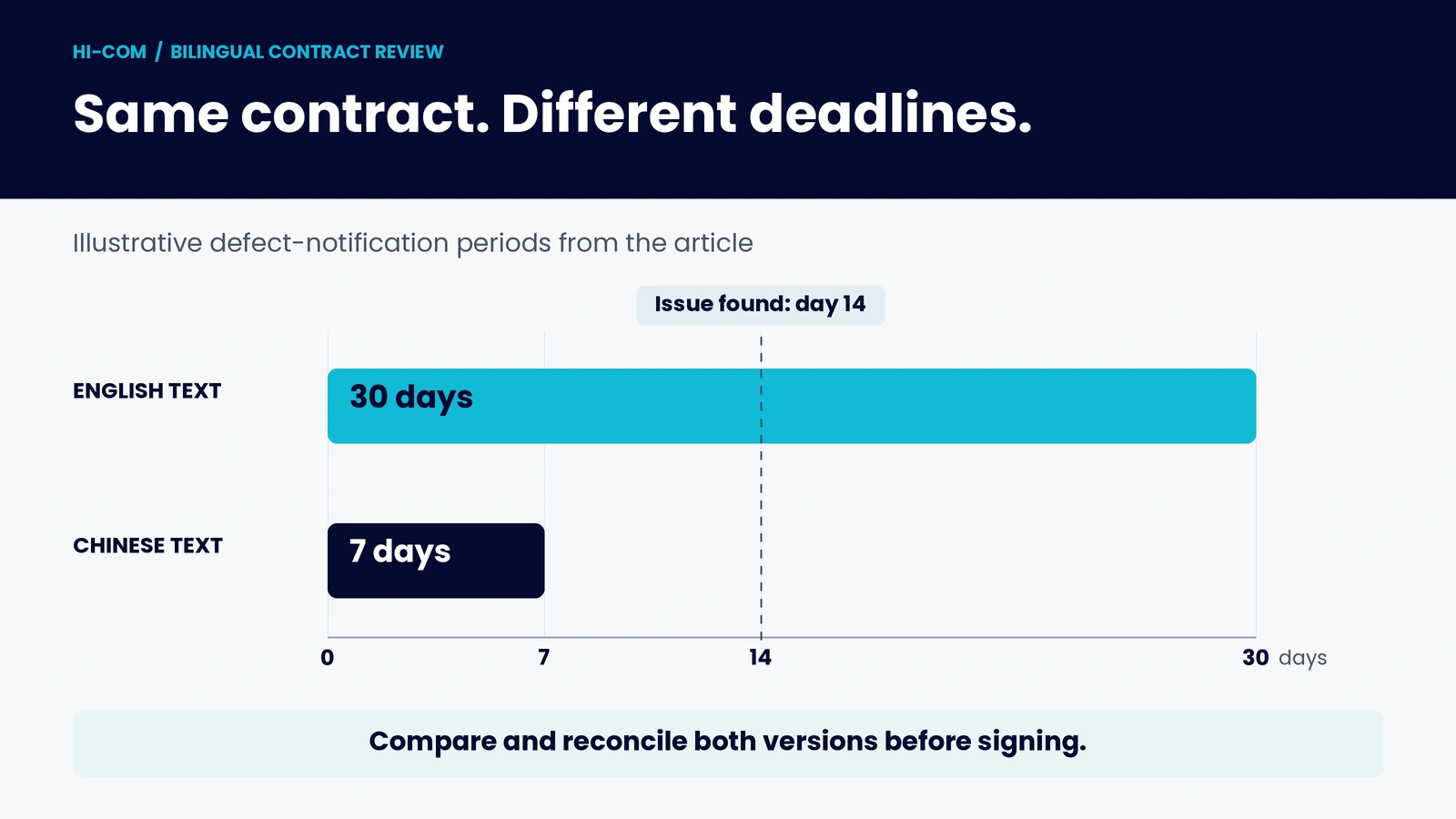
Imagine that your English supply agreement gives the buyer 30 days to report a defect. The Chinese text says seven days. The contract is signed, the goods arrive, and a quality problem appears two weeks later.
The disagreement is now about much more than translation. The two teams may have approved different commercial obligations without realising it.
For international businesses working with Chinese suppliers, distributors or partners, the useful question is therefore broader than “Which language wins?” It is: do both versions say what we actually negotiated, and have we agreed how any difference will be handled?
This guide explains the wording, the relevant Chinese rules and the checks to make before signing.
General business information, not legal advice. Have a lawyer qualified in the relevant law review the contract and any sample wording before use.
What Is a Prevailing Language Clause?
Also called a governing language clause or controlling language clause, it identifies the text that takes priority when versions differ.
For example, the parties might agree that the Chinese text prevails over the English text. They might choose English instead, or deliberately give both texts equal authority.
Those choices should be explicit and consistent across the documents. A clause in the English version cannot solve the problem if the Chinese version says the opposite.
Three language choices that should be discussed separately
| Decision | Question it answers | Example |
|---|---|---|
| Prevailing contract language | Which text controls a discrepancy? | Chinese prevails over English. |
| Governing law | Which legal system governs the agreement? | PRC law, where appropriately agreed and applicable. |
| Language of arbitration | Which language will the proceedings use? | English in a specified institutional arbitration. |
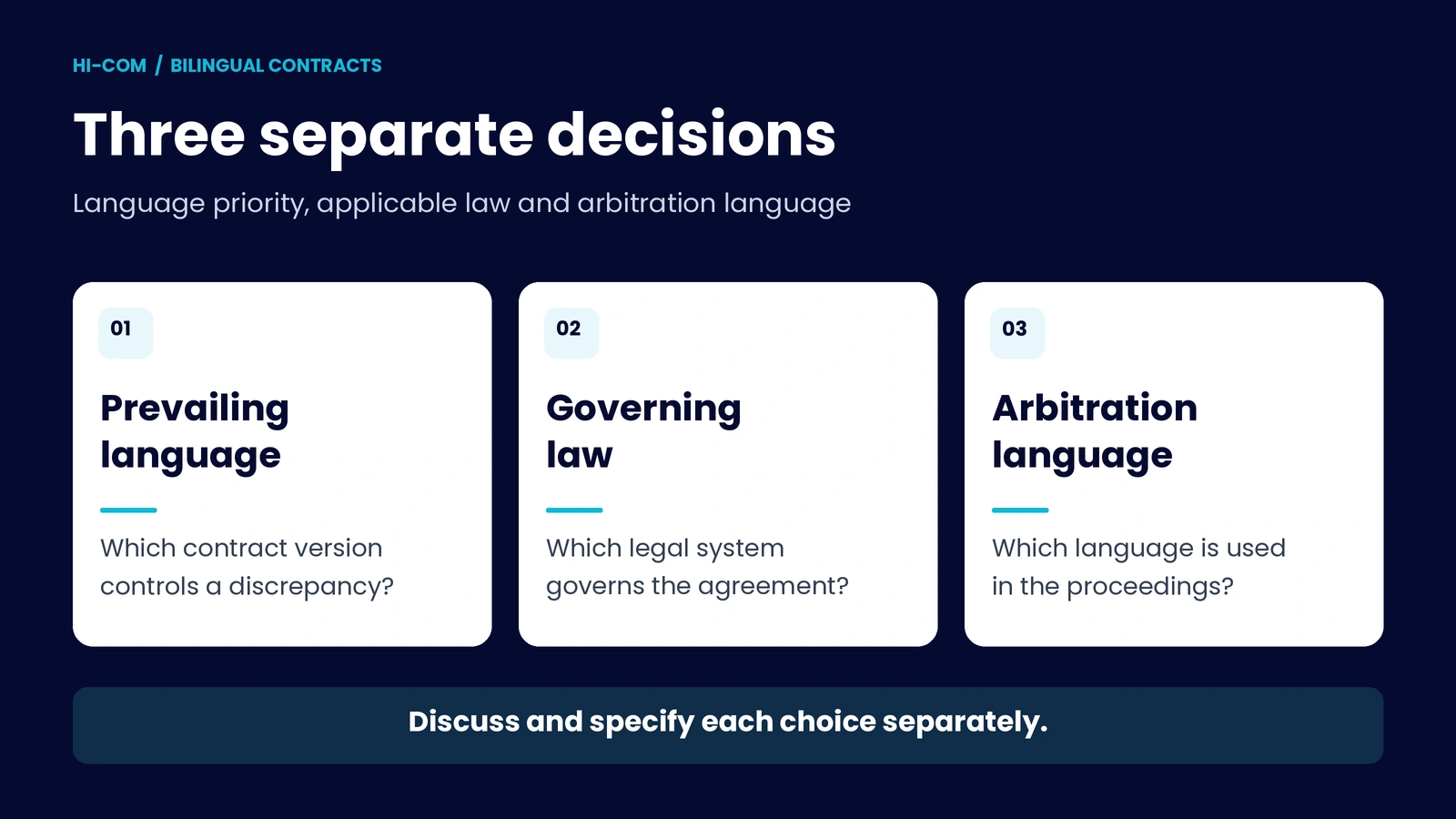
A contract can combine different choices. The important point is to make each one deliberately, with legal advice, rather than assume that selecting a language also selects the law or the forum.
What Does Chinese Law Say About Bilingual Contracts?
Article 466 of China’s Civil Code addresses contracts made in multiple languages and agreed to be equally authentic. It presumes corresponding wording has the same meaning. Where wording diverges, interpretation considers related terms, the contract’s nature and purpose, good faith and other relevant factors. Article 466 also refers general interpretation disputes to Article 142(1).[1]
The equal-authenticity condition matters: Article 466 does not say that every bilingual contract without a precedence clause automatically has equally authoritative versions. Nor does it establish a blanket Chinese-always-prevails rule.[1]
In practical terms, have counsel assess the signed documents, their language provisions and the applicable legal framework. Do not build your signing process around an assumed automatic result.
Should Chinese or English Prevail?
Start with the transaction: who must understand and perform the obligations, where disputes are likely to be handled, and who will review the final text?
| Intended arrangement | Practical reason to consider it | Preparation needed |
|---|---|---|
| Chinese version prevails | Chinese-speaking operational teams can work from the controlling text. | The international team needs a reliable understanding of the Chinese obligations before approval. |
| English version prevails | The international team can review the controlling wording directly. | The Chinese translation still needs careful checking for implementation and possible later use. |
| Both versions equally authentic | Both teams work from authoritative texts. | Resolve discrepancies before signature and ask counsel how interpretive uncertainty will be managed. |
There is no useful shortcut in choosing a language your own team cannot properly review. If Chinese will prevail, budget time to understand the Chinese text. If English will prevail, make sure the Chinese operational version does not quietly change payment triggers, inspection deadlines or remedies.
Prevailing Language Clause Examples in English and Chinese
The following are original drafting illustrations, not official model clauses or ready-to-use legal advice. They address language priority only. Counsel should adapt their scope to the agreement, its annexes, governing law and dispute mechanism.
Example 1: Chinese version prevails
English: This Agreement is executed in Chinese and English. In the event of any inconsistency between the two language versions, the Chinese-language version shall prevail.
Chinese: 本协议以中文和英文签署。如两种语言版本之间存在任何不一致之处,应以中文版本为准。
Example 2: English version prevails
English: This Agreement is executed in Chinese and English. In the event of any inconsistency between the two language versions, the English-language version shall prevail.
Chinese: 本协议以中文和英文签署。如两种语言版本之间存在任何不一致之处,应以英文版本为准。
Before inserting either example
Decide whether the language provision covers schedules, specifications, purchase orders and later amendments. Separately decide which document takes priority if an annex conflicts with the main agreement: language priority and document priority are different issues.
Avoid adding a sentence that gives both texts equal authority without checking how it interacts with a sentence choosing one controlling text.
An English Controlling Text May Still Need a Chinese Translation for Court
Article 17 of the Supreme People’s Court’s provisions on evidence in civil litigation requires a Chinese translation alongside foreign-language documentary evidence or explanatory materials submitted to a people’s court. That procedural requirement is separate from the contract’s language-priority arrangement.[2]
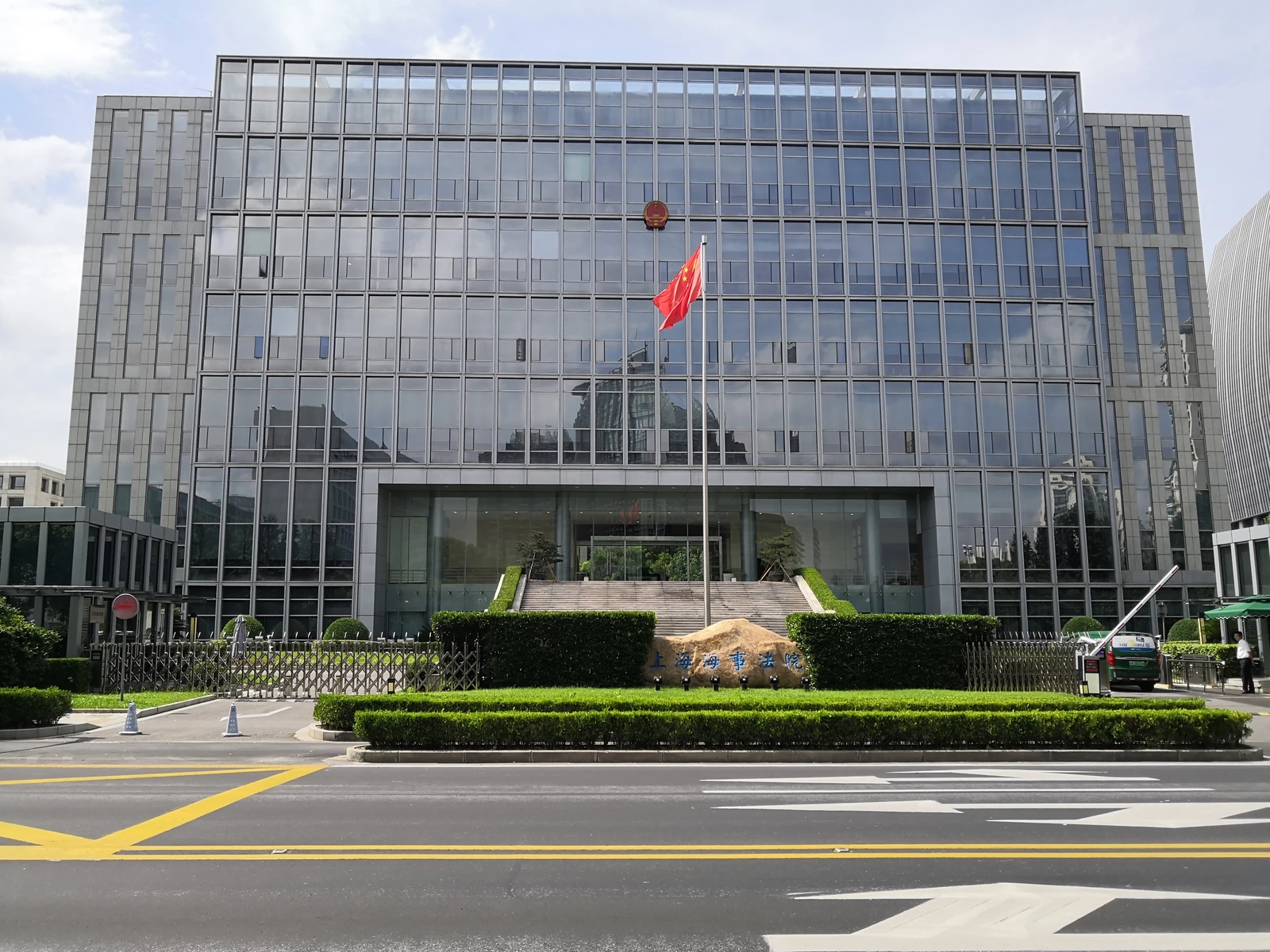
Article 17 itself does not prescribe a universal translation-company seal or certification format. Confirm the receiving court’s requirements with your lawyer before commissioning the submission.[2]
If a specific certification format is requested, HI-COM’s certified Chinese translation service is the relevant starting point for discussing the document, intended use and delivery requirements.
Contract Language and Arbitration Language: CIETAC and SHIAC
An English-prevails clause should not be treated as a substitute for an express agreement on the language of arbitration.
CIETAC: understand the default and its exceptions
Article 84 of the CIETAC Arbitration Rules 2024 respects the parties’ agreed arbitration language. Without an agreement, Chinese is the default, but CIETAC can designate another language or languages after considering the circumstances, including the contract language. The tribunal can reconsider that decision once constituted.[3]
SHIAC: a different approach when the clause is silent
Under Article 84 of the SHIAC Arbitration Rules 2024, the parties’ agreement also takes priority. Without one, the Secretariat may set a preliminary language before the tribunal is constituted, considering factors including the contract language. The tribunal then determines the final language.[4]
Make the dispute-resolution provisions work together
Ask counsel to check the institution’s exact name, the seat, the governing law, the arbitration language and any relevant law governing the arbitration agreement. Those choices should fit the transaction and the parties’ enforcement needs.
China’s revised Arbitration Law took effect on 1 March 2026. For a new agreement, use current law and the selected institution’s applicable rules rather than copying an old clause without review.[5]
When searching for templates, keep the two acronyms apart: SHIAC is the Shanghai International Arbitration Center; SIAC is the Singapore International Arbitration Centre.
Where Bilingual Contract Problems Often Begin
The examples below are illustrative checks, not reported HI-COM client cases.
The precedence clauses contradict each other
The English text says English controls. The Chinese text says Chinese controls. Check this provision in both texts, even if it looks like standard boilerplate.
The annexes have not followed the same review process
A polished main agreement can sit beside an outdated specification sheet. List every annex, its language, version and date. Check that the contract refers to the intended document.
Commercial details shift during translation
Compare numbers and triggers as carefully as terminology:
- Is payment due after shipment, delivery, inspection or acceptance?
- Are notice periods measured in calendar days or business days?
- Do minimum purchase commitments apply monthly or annually?
- Do warranty periods start on delivery or installation?
- Do the currency, quantities and percentage thresholds match?
Legal terms are treated as interchangeable labels
Terms such as indemnity, warranty, termination and liquidated damages need contextual treatment. Give the translator the full clause and ask counsel to settle the intended legal effect. A glossary helps consistency, but it cannot replace that decision.
Only one version receives the final amendment
A late change to the English limitation-of-liability clause can leave the Chinese text behind. Keep a single version register and check both texts after the last negotiation round, not only after the first translation.
An AI draft is approved without checking the source
If AI is used during preparation, require a bilingual comparison against the final source. Fluent wording can conceal a missing exception, a changed obligation or a different deadline. Agree how confidential files may be processed before putting them into any tool.
A Bilingual Contract Checklist Before You Sign
Use this as a coordination checklist for your commercial team, lawyer and translation provider.

Language review is one part of a wider supplier-risk process. HI-COM’s guide to legal safeguards when working with Chinese suppliers covers the broader questions around counterparties, contracts and payments.
For the execution stage, see how to sign a contract with a Chinese company. If you are still confirming who the counterparty is, start with checking a Chinese company through NECIPS.
How HI-COM Can Support Your Contract Translation Project
HI-COM provides legal and contract translation for the Chinese market, supporting companies working across Chinese and international business environments.
Ask the team to confirm the scope of translation and any comparison of existing versions. Your lawyer should approve legal drafting, the choice of controlling language and enforceability questions; the translation brief should reflect those decisions accurately.
Preparing an English–Chinese contract? Send us:
- The latest source document and any existing translation.
- All annexes, with their versions.
- The stage: negotiation, preparation for signature or submission to an institution.
- Your deadline.
- Any terminology or certification format approved by your counsel.
HI-COM will confirm the appropriate scope and quotation. For sensitive material, ask about the agreed file-transfer process before sending the full contract. Prefer WeChat? Use the direct team contact on our contact page.
Add HI-COM as a preferred source on Google
Frequently Asked Questions
What is another name for a prevailing language clause?
You may see governing language clause, controlling language clause or language precedence clause. Check the wording itself: the heading alone does not tell you how the provision works.
Should the Chinese version of my contract prevail?
Discuss that choice with counsel in the context of the transaction, your review resources and the proposed dispute forum. Whichever text is chosen, make sure your team understands its obligations before approval.
What if my bilingual contract has no language clause?
Ask counsel to assess the documents and applicable interpretation rules. Do not assume an automatic language hierarchy: Article 466 of China’s Civil Code applies to versions the parties agreed are equally authentic and does not create a rule that Chinese always prevails.
Does an English-prevails clause make arbitration English-language?
Not automatically. Specify the arbitration language separately. Under the CIETAC and SHIAC 2024 rules, the parties’ agreement on language comes first; without one, the institution or tribunal decides, and CIETAC’s default is Chinese.
Does a translation stamp resolve differences between two texts?
A stamp is not a substitute for checking the content. Compare the obligations and resolve discrepancies before approval; separately confirm any certification requirements for the intended submission.
Can HI-COM choose or draft the legal clause for us?
Ask a qualified lawyer to make the legal drafting decisions. HI-COM’s role here is translation support within the agreed scope, using the instructions and terminology approved for your project.
Sources and Verification
Chinese-language sources have been summarised in English. Institutional rules and filing requirements should be checked again for the particular matter.
- Civil Code of the People’s Republic of China, Articles 142 and 466. Official Chinese text, State Administration for Market Regulation.
- Supreme People’s Court, Several Provisions on Evidence in Civil Litigation (2019 revision), Article 17. Official Chinese text.
- CIETAC Arbitration Rules 2024, Article 84. Official institutional text.
- SHIAC Arbitration Rules 2024, Article 84. Official institutional PDF, printed pages 51–52.
- Presidential Order No. 54 (12 September 2025), confirming the revised Arbitration Law’s commencement on 1 March 2026. Official government publication.
Cover image: photographic source Blogtrepreneur / Wikimedia Commons, CC BY 2.0. Contract images are illustrative and do not show a HI-COM client document.