AI Interpreting in Shanghai: How HI-COM Supported Britannica’s Parent Workshop
Event date: 22 October 2026. Prepared by HI-COM Asia’s interpreting team.
A parent workshop is most useful when families can follow the discussion, understand the detail and connect it with their child’s learning.
On 22 October 2026, HI-COM supported a parent workshop at Britannica International School, Shanghai with AI interpreting and live captioning involving English, Chinese and Korean. Our technical team coordinated the setup, adapted it to the venue’s connections and carried out audio testing before the session.
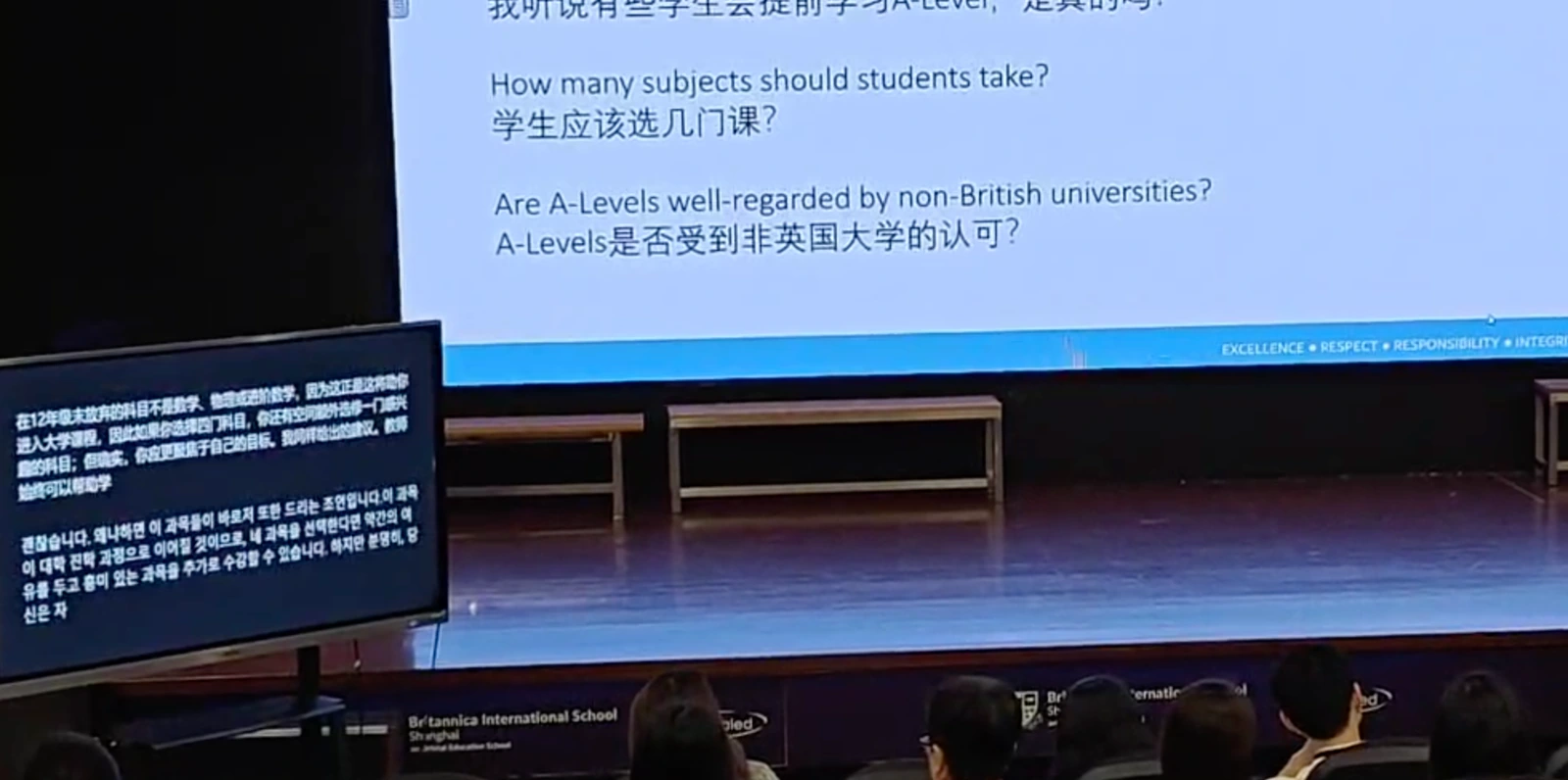
The visible result was practical: Chinese and Korean captions on a dedicated screen, alongside the main presentation. The school’s feedback was equally clear: the setup helped make the workshop accessible to more parents.
This project shows how HI-COM’s AI interpreting and live captioning service in China brings language technology into a real event environment.
Project at a Glance
| Client | Britannica International School, Shanghai |
| Event | Parent workshop |
| Date | 22 October 2026 |
| Languages involved | English, Chinese and Korean |
| Audience output | Chinese and Korean live captions on a dedicated display |
| HI-COM’s role | Planning, technical coordination, setup, connection testing and pre-event audio checks |
| Reported outcome | Positive feedback from the school on helping more parents follow the session |
The Brief: Make a Parent Workshop Easier to Follow
Britannica’s published autumn parent workshop programme is built around helping families support their children’s learning and engage with the school’s teachers. [1] Language access matters in that setting: parents need to follow the explanation while looking at the presentation and thinking about what it means for their own family.
HI-COM’s brief brought together two requirements: multilingual support, and a setup that would work with the venue’s technical environment. The dedicated caption display provided Chinese and Korean text alongside the presentation, giving parents another way to follow the spoken content. The goal was simple: help more of the audience stay connected to the session.
Adapting the AI Interpreting Setup to the Venue
The technical work began before the workshop. HI-COM coordinated the setup around the connections and equipment available on site, including testing Bluetooth and cabled audio options.
That preparation matters because the sound heard by the audience and the sound received by the translation system are separate parts of the setup. Both need to be checked.
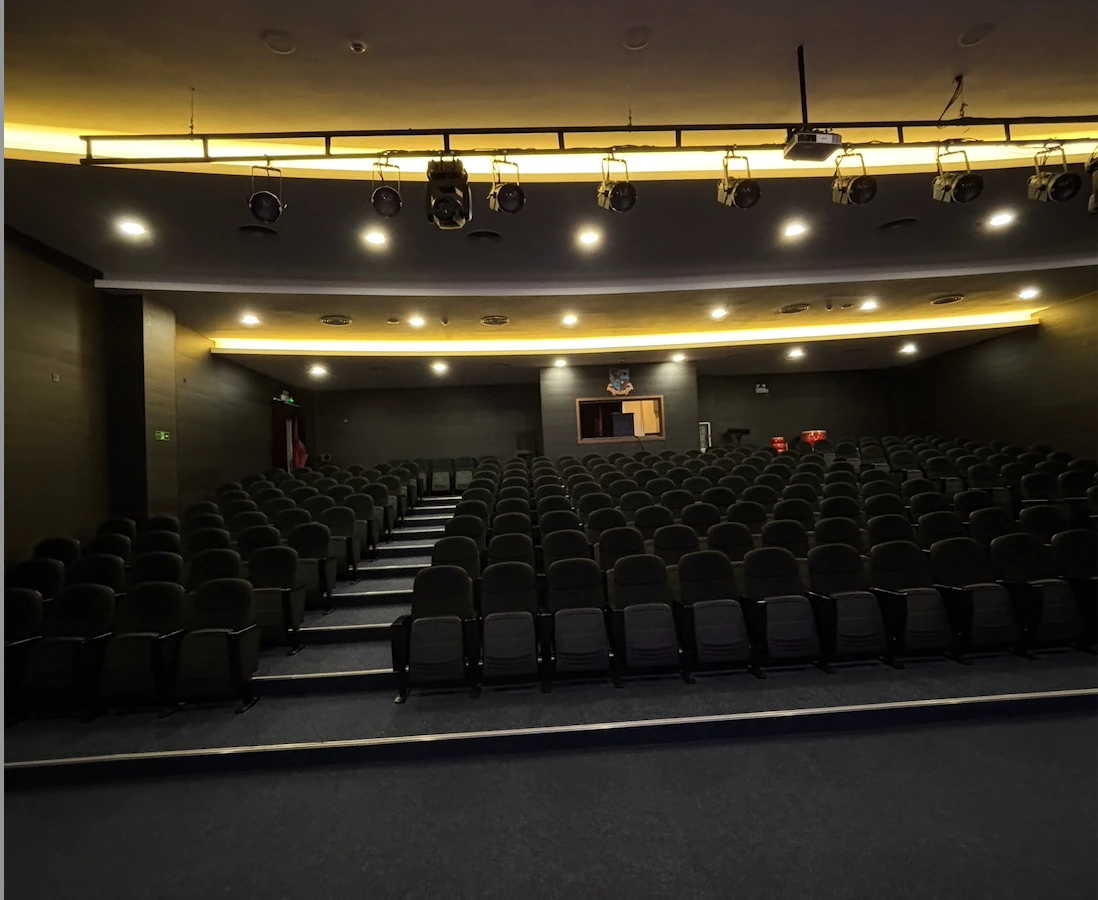
Planning the connections before the session
For an organiser, this means resolving practical questions early: where the sound will come from, how it reaches the processing system, where the translated text will appear and how those elements fit around the presentation.
At Britannica, the presentation stayed on the main screen while Chinese and Korean text appeared on an additional monitor prepared from a laptop-based setup.
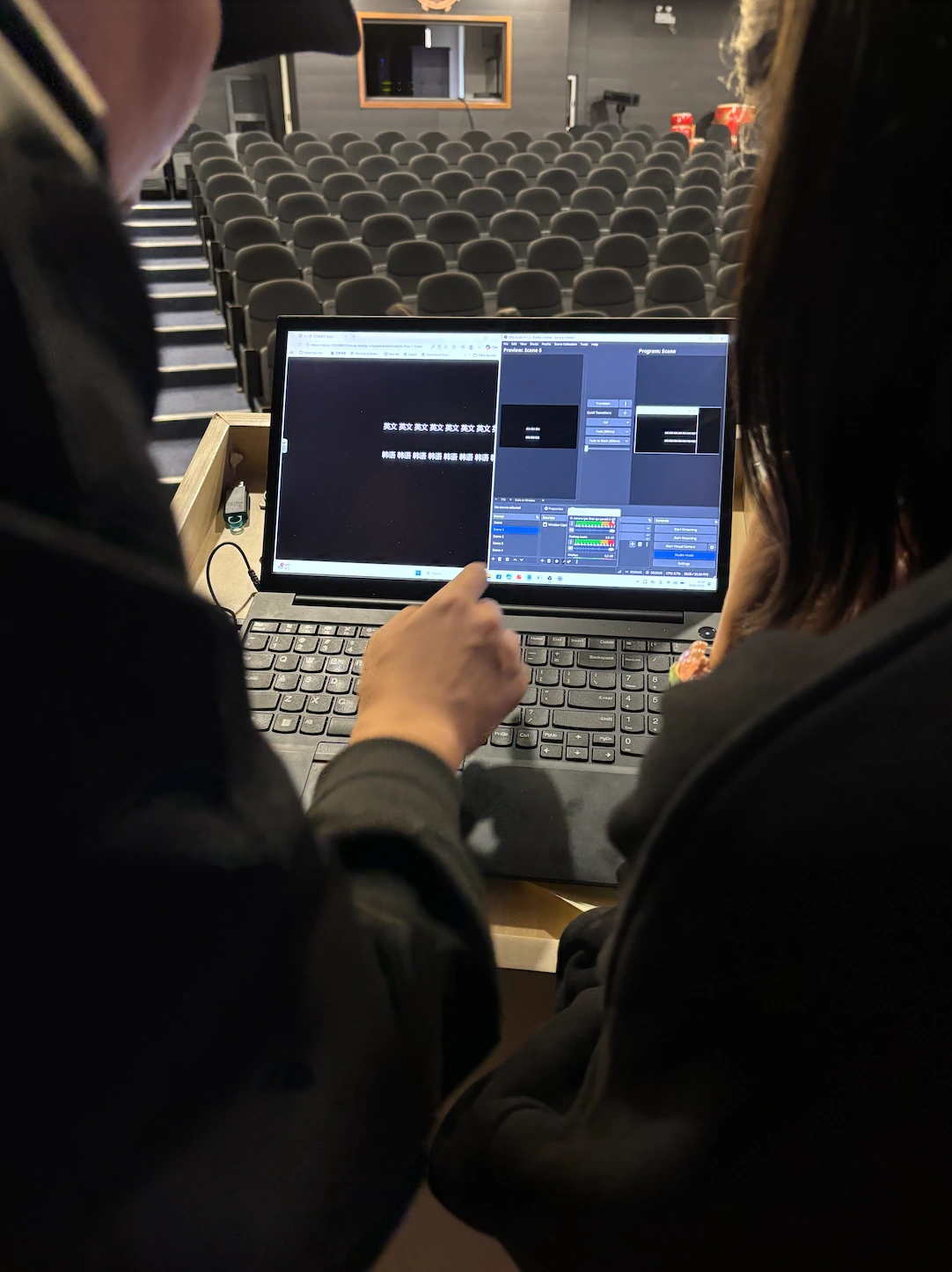
Testing Bluetooth and cabled audio options
Bluetooth and cabling were both part of the technical testing for this project, to establish a workable connection for the venue.
Connection testing needs to go beyond whether a device pairs or a cable fits. The relevant check is whether the intended audio reaches the system through the chosen route and remains usable in the event configuration. Test the complete audio path with the equipment that will actually be used, rather than relying on a demonstration on a separate device.
Giving the captions their own place in the room
A dedicated caption display is useful when the main screen is needed for slides. Here, the separate monitor gave the audience both the prepared visual material and the live language support. For future deployments, review display position, text size, contrast and sightlines from the audience’s seats.
How AI Interpreting and Live Captioning Work
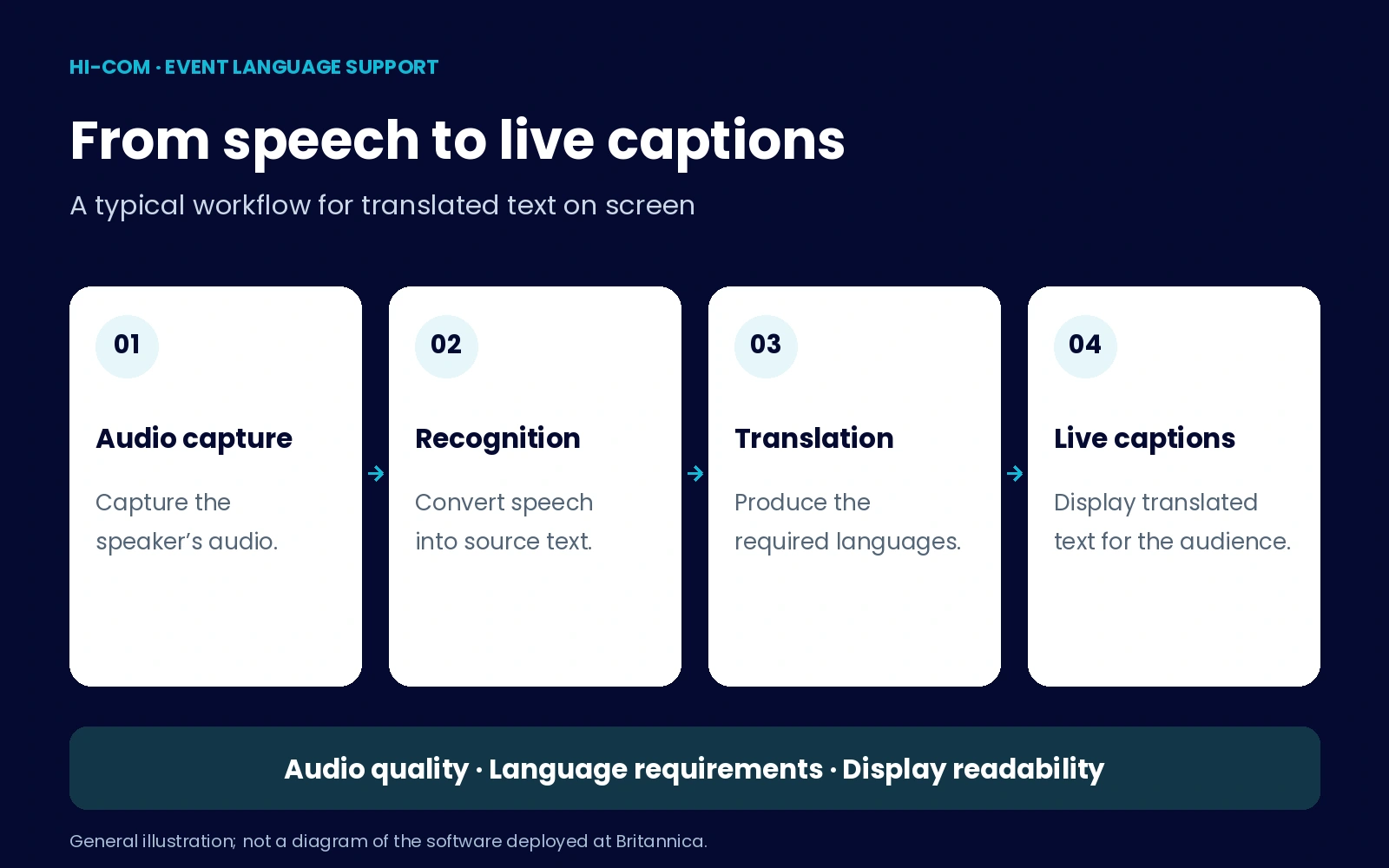
AI live captioning processes speech during an event and presents text that the audience can follow. Translated captions add a language-conversion step. A common workflow is:
- Audio capture: capture the speaker’s audio.
- Recognition: automatic speech recognition (ASR) turns speech into source text.
- Translation: machine translation produces the required audience languages.
- Live captions: the translated text appears on the agreed display.
Speech translation systems can also produce translated audio, depending on the platform and configuration. Text output and voice output are distinct choices in the event brief. [2] For the Britannica project, the audience-facing delivery was Chinese and Korean text supporting the presentation.
Where do LLMs fit into live translation?
Large language models (LLMs) can form part of speech and language technology. Other systems use dedicated recognition and translation models, and architectures vary. Microsoft’s documentation, for example, describes streaming speech translation separately from LLM-enhanced processing of recorded audio. [2][3]
The useful questions are operational: does the system support the required language directions, process live audio, deliver the chosen outputs and work with the venue? Audio capture, display integration and technical preparation matter as much as the model. A rehearsal should check the timing and readability of the output with representative speech and event vocabulary.

The Result: Positive Feedback From Britannica
After the workshop, Britannica shared the following feedback with HI-COM:
“Thank you so much for your help with the translation setup at today’s parent workshop! It worked really well and made the session accessible to more of our parents, helping them follow along and get more out of the content. We really appreciate your time and support in making this happen!”
Britannica International School, Shanghai
The feedback describes the outcome in the school’s own terms: more parents could follow the session and get more from the content. That was the purpose of the setup.
What This Means for Conferences and Business Events in China
The same planning questions arise at corporate seminars, training sessions, association events and international conferences: who is speaking, which languages does the audience need, and how will the language support reach them?
| Event need | Configuration to discuss |
|---|---|
| A structured presentation for a multilingual audience | AI live captions in the required target languages |
| Participants who need spoken language support | Translated audio, subject to the language directions and technical assessment |
| Sessions requiring close attention to nuance, interaction or specialist meaning | Professional human interpreting, with captions as an additional layer |
| A programme containing different session types | A combination of services scoped around each part of the agenda |
For human language support, explore HI-COM’s simultaneous and conference interpreting services in China. If you are still comparing formats, our guide to AI and human interpreting explains the decisions to consider.
Plan terminology and speaker interaction as well as equipment
For a future event, preparation should also cover unfamiliar names, acronyms, specialist vocabulary, speaker changes and audience questions. Ask how the proposed configuration handles the actual programme, including any Q&A. Technical supervision and linguistic review are different tasks, so the service scope should state what support is included.
HI-COM’s earlier AI translation and live captioning projects in Shanghai give further examples of this service in other event settings.
Turnkey AI Interpreting for Events in China
At Britannica, HI-COM brought the language requirement and the technical preparation into one coordinated project: the team adapted the connections to the venue, tested the audio options and prepared the system before the workshop. That coordination gives the event team one partner for both the language requirements and the equipment setup.
Planning a parent workshop, company presentation or conference in China? Send us:
- Date, city and venue.
- Agenda and expected audience size.
- Languages spoken by presenters and languages needed by attendees.
- Captions, translated audio or a combination.
- Available microphones, sound connections and screens.
- Any venue restrictions that affect the deployment.
HI-COM will review the brief and propose an appropriate scope for the language support and technical delivery. Prefer WeChat? Use the direct team contact on our contact page.
Frequently Asked Questions
What did HI-COM provide for the Britannica Shanghai parent workshop?
HI-COM managed the AI interpreting setup, technical coordination and pre-event audio testing for a workshop involving English, Chinese and Korean. The documented display shows Chinese and Korean live captions supporting the presentation.
What is the difference between AI interpreting and live captioning?
Live captioning presents speech as text during an event. Translated live captions make that text available in another language. AI interpreting services may provide translated text, translated audio or both; the chosen outputs need to be specified in the event brief.
Can HI-COM support English, Chinese and Korean events in Shanghai?
Yes. This project illustrates a workshop involving those three languages. For a new event, share the speaker languages and required audience languages so HI-COM can assess the directions, output format and technical setup.
Does AI interpreting always use a large language model?
No. Speech translation systems can use different combinations of speech recognition, translation and language models. An LLM label alone does not establish live-streaming capability, supported language directions or event suitability.
Can AI captions be added to a venue’s existing presentation setup?
They can be integrated where the venue’s equipment and connections support the required configuration. The audio path, processing system and display arrangement should be assessed and tested before the event.
How can I request AI interpreting for an event in China?
Send HI-COM the event date, city, venue, agenda, audience size, speaker languages and target languages. Explain whether you need captions, translated audio or both, and share any available information about the venue’s sound and display equipment.
Sources and Project Evidence
Project details and the client quotation were supplied by HI-COM for this case study. The documentary photographs show the venue, technical preparation and caption display. The technical references below explain general capabilities; they do not identify the software provider used for this mission.