

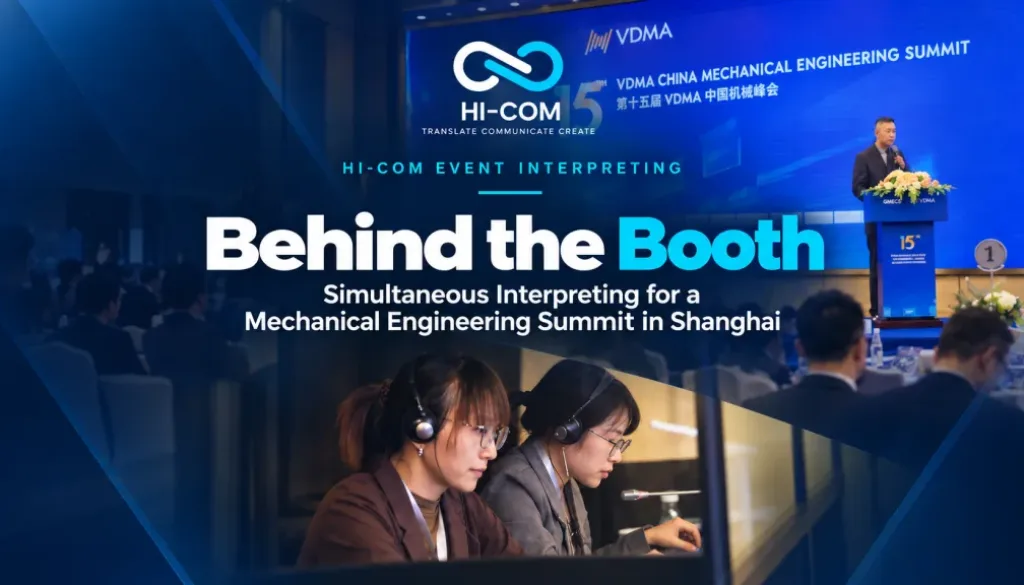
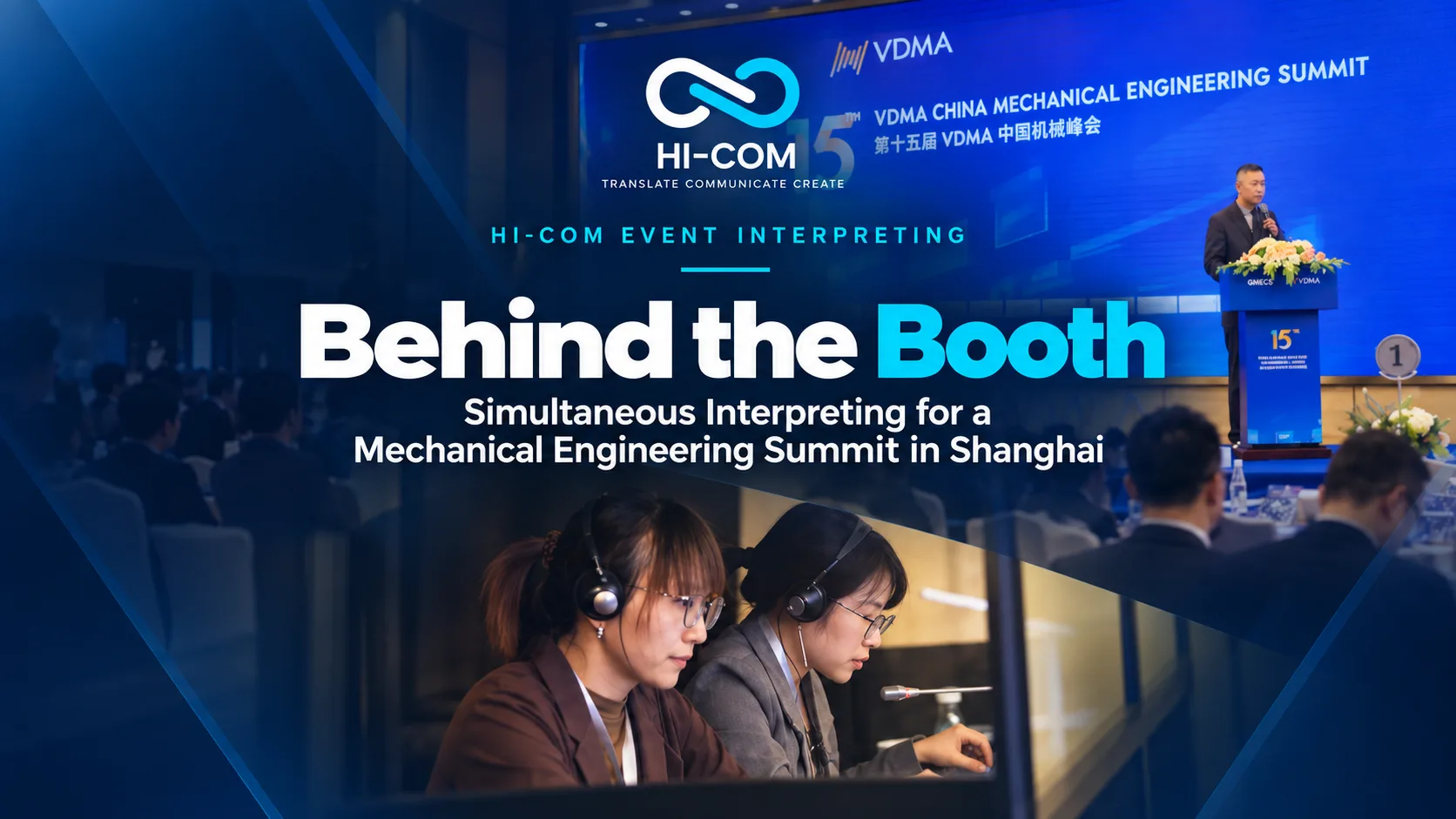
Behind the Booth: Simultaneous Interpreting for a Mechanical Engineering Summit in Shanghai
At a live industrial summit, every technical detail becomes part of the audience experience. Before the first session began at the 15th VDMA China Mechanical Engineering Summit in Shanghai, HI-COM’s work was already under way. HI-COM delivered the live interpreting setup behind the event’s bilingual sessions — interpreting support, booth installation, sound checks, transmitters and conference equipment, put in place before delegates took their seats. The project is a useful, concrete example of why technical planning matters as much as language expertise when an international industrial audience needs to follow a live programme without interruption.
The Event: A Bilingual Conversation About China’s Next Industrial Era
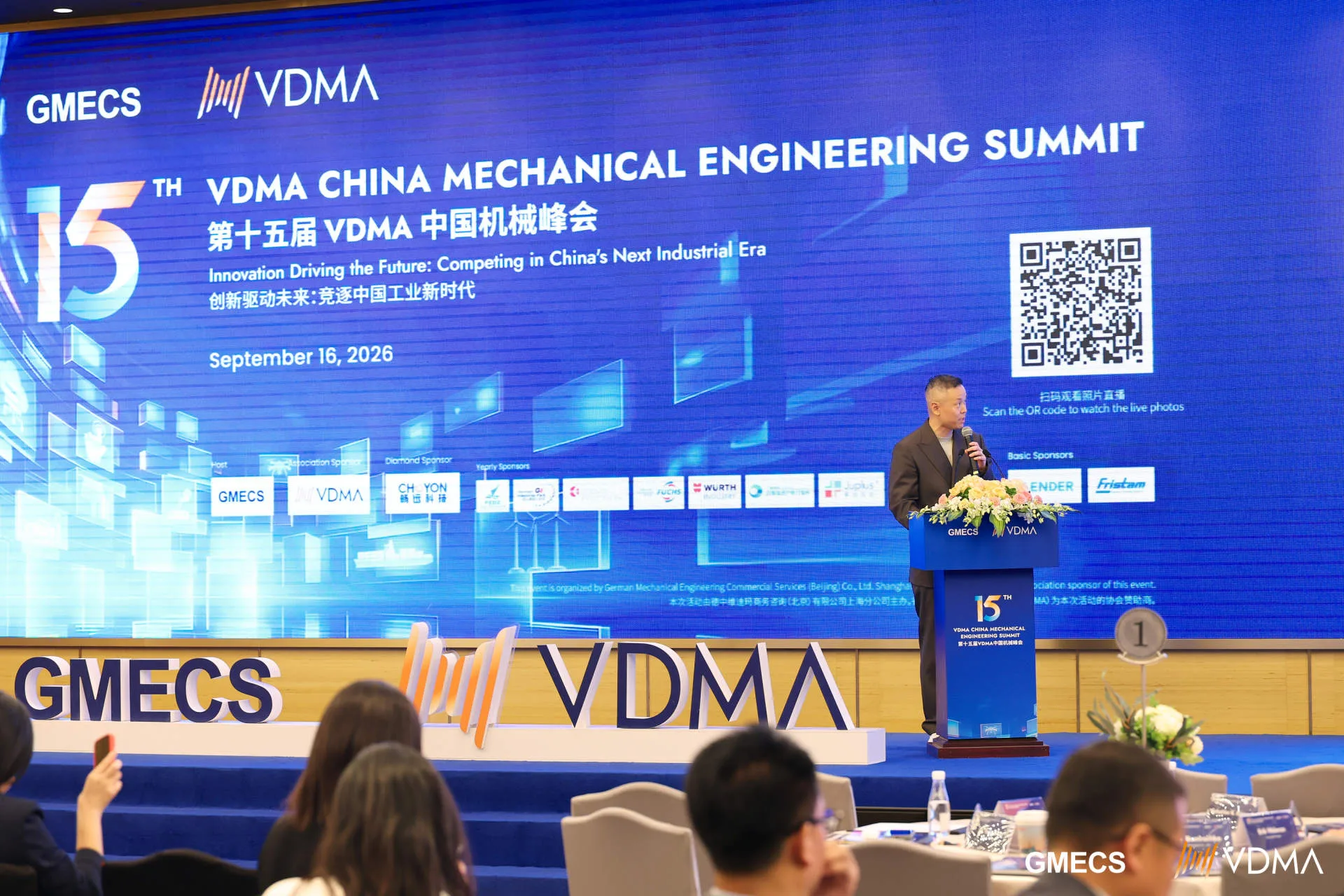
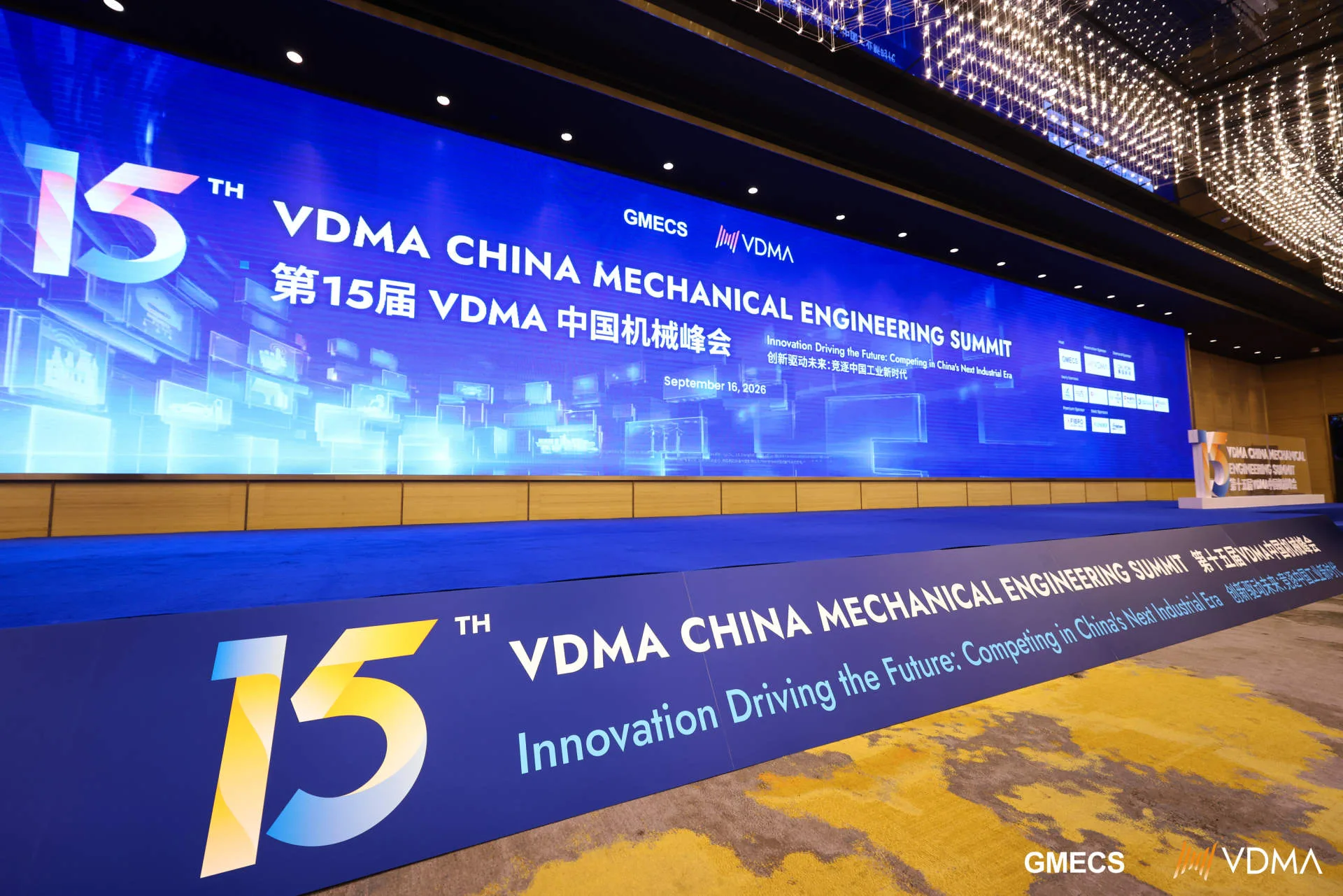
The 15th VDMA China Mechanical Engineering Summit took place on September 16, 2026, at Hotel Indigo Shanghai Jing’An, under the theme Innovation Driving the Future: Competing in China’s Next Industrial Era. The programme brought together machinery and equipment leaders to exchange views on industrial innovation, smart manufacturing, strategy and China’s evolving industrial landscape, combining keynote speeches with panel and table-discussion formats.
Formats like these are exactly where simultaneous interpreting earns its place. A keynote can be planned and paced in advance, but a panel or table discussion moves in real time, and an international audience following a bilingual event needs to stay with the conversation as it happens, not catch up afterwards.
The Challenge: Keeping Language, Audio and Timing Aligned
Simultaneous interpreting is not simply a language service. An interpreter has to hear the floor audio clearly through their own feed, the audience has to receive the correct channel through their own equipment, and the booth and equipment need to be fully ready before the first speaker begins. If any one of those links is weak, the gap shows up immediately, in the room, in front of the audience.
Why industrial events need preparation
A few practical realities make preparation especially important at an event like this one:
- Rapid speaker changes and panel or table-discussion formats can make a weak audio feed obvious to the audience almost immediately.
- Engineering, manufacturing and innovation terminology benefits from advance briefing, so interpreters are not meeting specialist vocabulary for the first time live.
- A live event cannot pause repeatedly for technical adjustments once the programme is under way, which is why setup and checks happen beforehand rather than during the sessions.
HI-COM’s Interpreting and Technical Setup
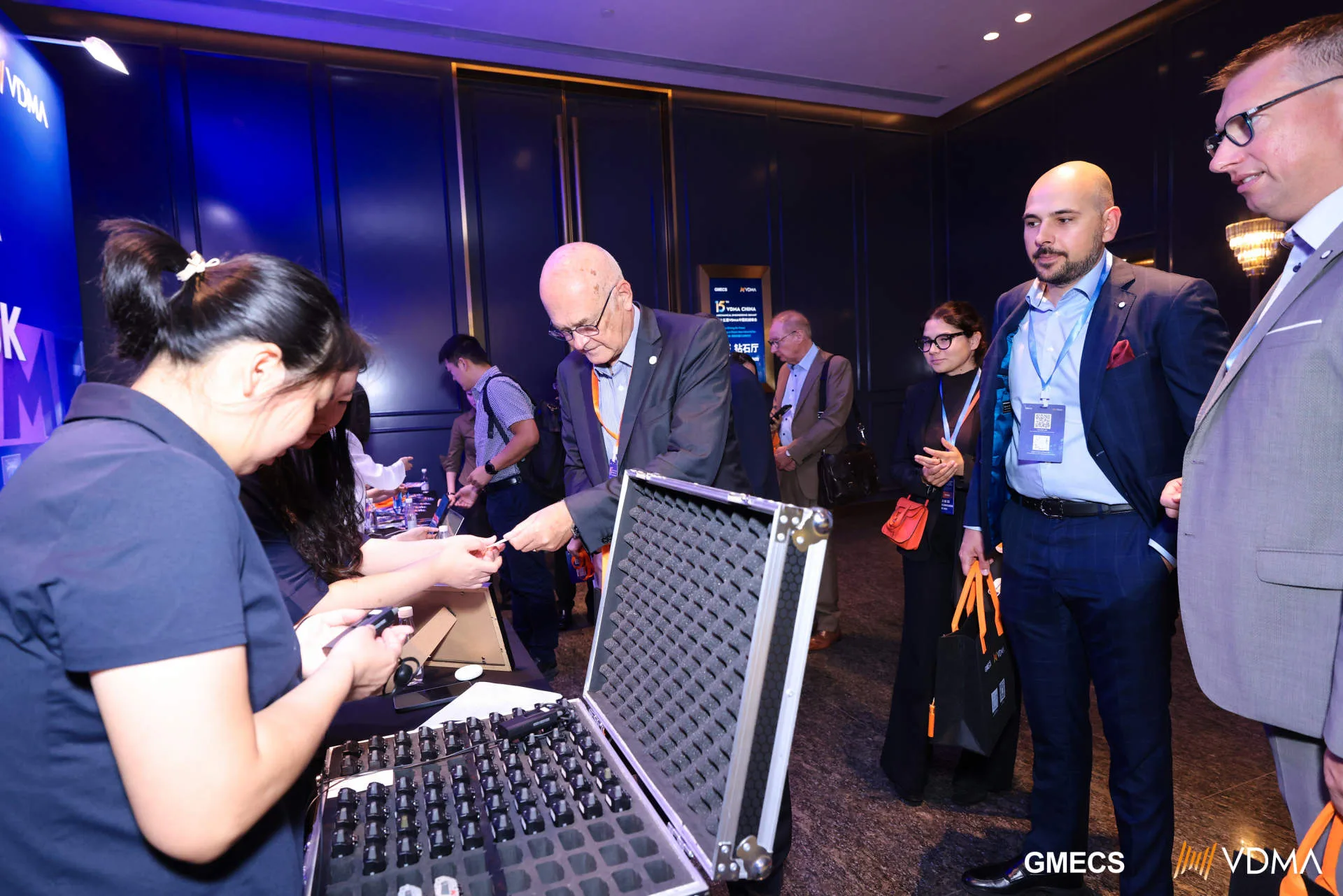
The confirmed scope for this project combined four elements: interpreting delivery, interpreting-booth installation, sound checking, and interpreting equipment and transmitters. Together, they cover the chain from the interpreter’s booth to the listener’s ear.
1. Interpreting preparation and team coordination
Ahead of the summit, preparation centred on reviewing the agenda and session format and coordinating the interpreters around the event’s schedule, so the interpreting team arrived already familiar with the day’s structure rather than encountering it for the first time on site.
2. Booth installation and equipment setup
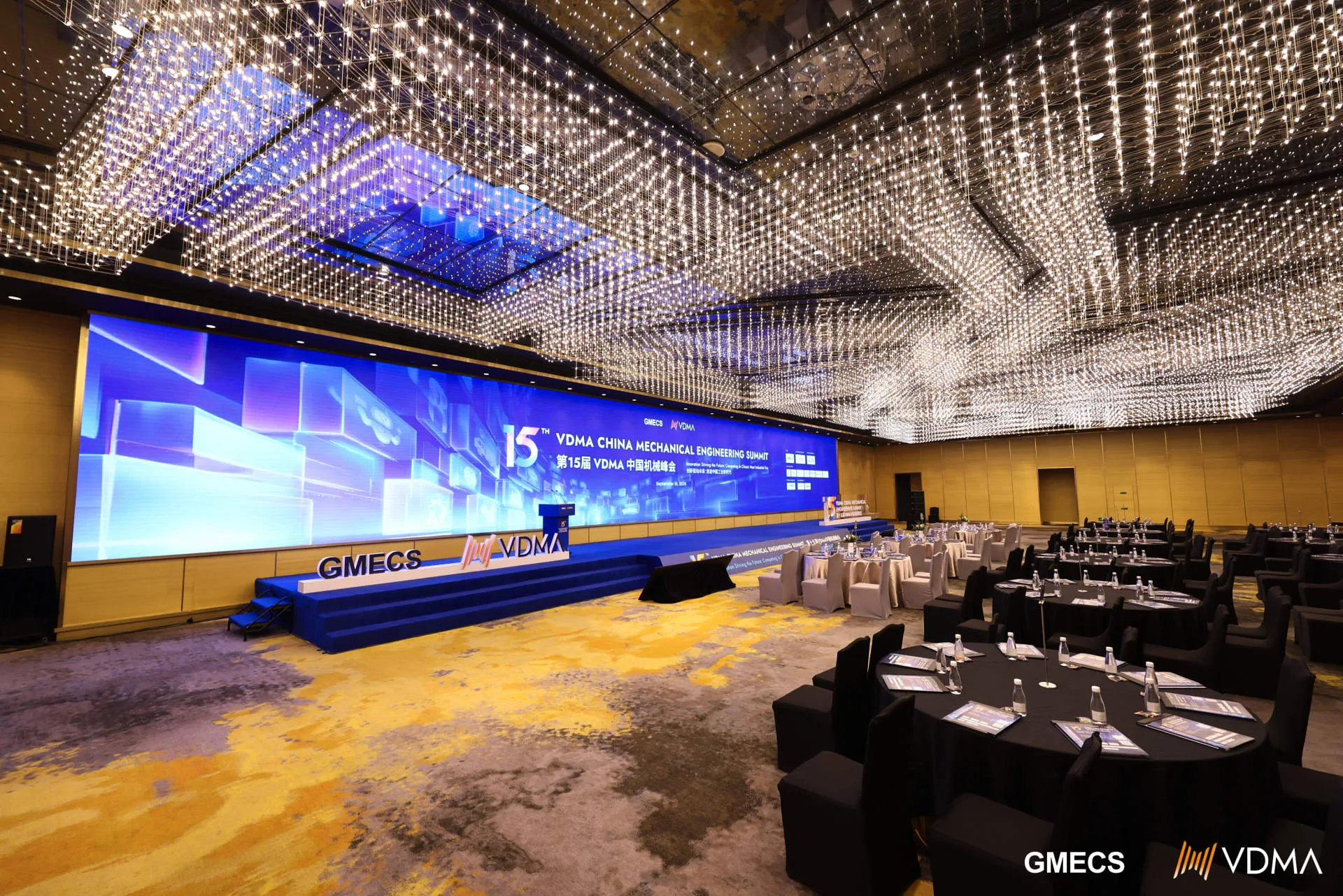
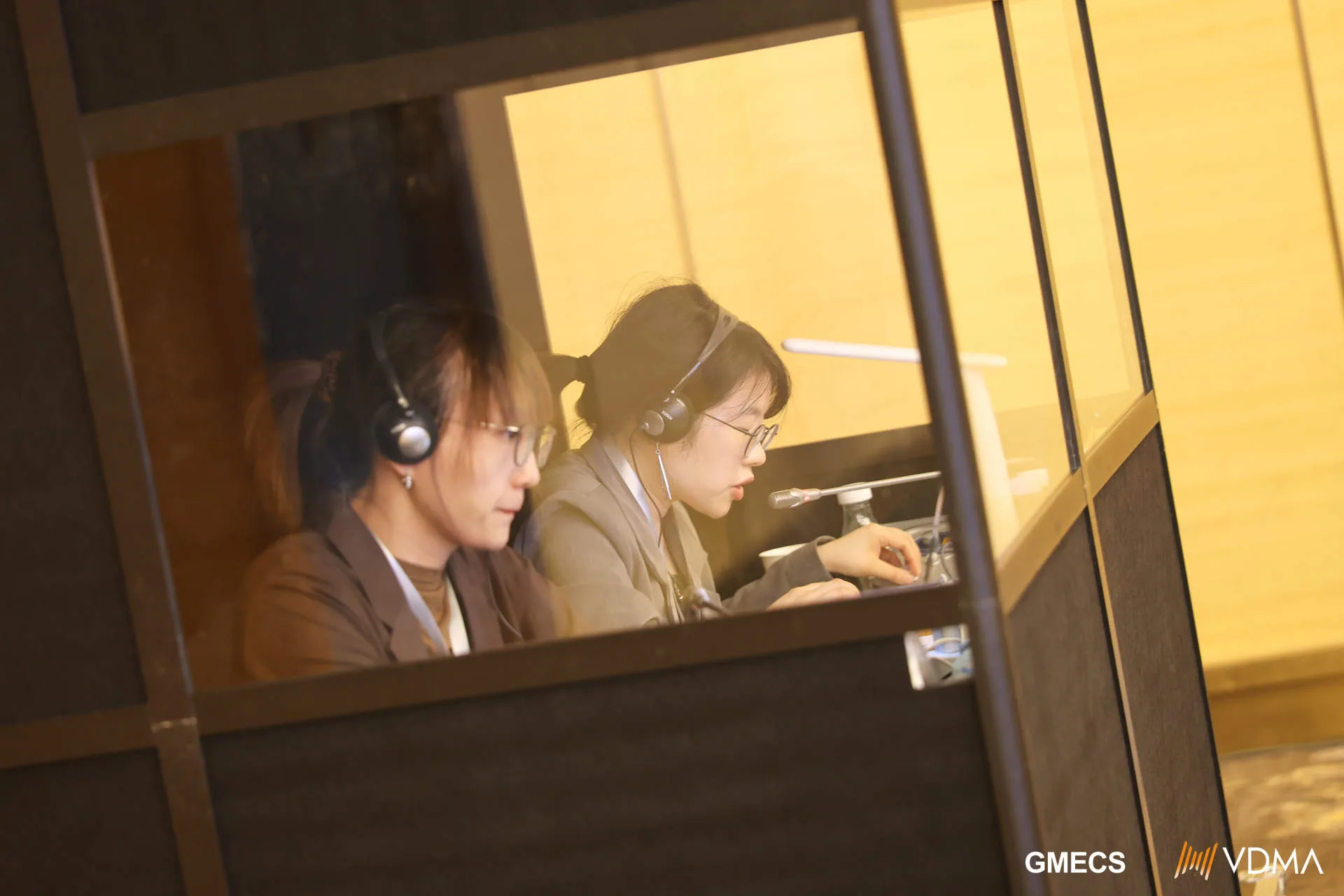
HI-COM installed the interpreting booth and set up the supporting equipment and transmitters ahead of the programme. Getting this right before delegates arrive is what allows the interpreting to run in the background of the event rather than becoming a visible part of it.
3. Sound checks before the programme
Before the first keynote, the team checked that the interpreters could clearly hear the floor audio and that the interpreting feed was reaching the equipment correctly. This step is what catches an audio issue while there is still time to fix it, rather than during a live session.
4. Live delivery during talks and panels
Once the programme began, the interpreters worked from the booth through the keynote speeches and the panel and table discussions, with the technical setup running alongside them for the full session. The audience could follow each format, whether a prepared keynote or a fast-moving panel exchange, without the interpreting becoming a visible interruption.
What Event Organizers Can Learn From This Setup
This kind of project is also a useful planning reference for anyone organising a bilingual industrial event, whether or not it involves HI-COM. Use the checklist below as a quick reference for the practical questions worth answering before confirming an interpreting setup — it works equally well as a briefing note for your own AV or events team.
None of these questions require specialist knowledge to answer, but working through them before the event, rather than during setup week, is what keeps the interpreting and technical plan matched to the actual room and agenda.
One Team for Interpreting and Technical Support in China
Organising interpreters and organising equipment are often treated as two separate bookings, sometimes from two suppliers who never speak to each other before the event. For this summit, HI-COM’s China-based team coordinated the interpreting, the booth and the supporting equipment as one project, rather than requiring the organiser to manage separate language and technical suppliers.
Explore HI-COM’s simultaneous and conference interpreting services in China for the full range of formats this team supports, from single-room sessions to multi-day summits.
This project follows an earlier 2026 VDMA assignment HI-COM supported at the VDMA Industry Future Fit Conference in Taicang, a different event with its own scope and setup. For a look at simultaneous interpreting and on-site equipment support in a different industry, see HI-COM’s case study on a Shanghai finance conference.
Planning an Industrial Conference in China?
Send HI-COM your event date, city, venue plan, audience size, language pairs and agenda. Our team can recommend an interpreting and technical setup matched to your format.
LET’S TALK ABOUT YOUR PROJECT
Prefer WeChat? Scan to contact HI-COM
Frequently Asked Questions
What equipment is needed for simultaneous interpreting at a conference?
At minimum, a simultaneous interpreting setup needs a way for the interpreter to hear the speaker clearly and a way for listeners to receive the interpretation, typically through a transmitter and individual receivers. Larger conferences often add a dedicated interpreting booth, while smaller single-room sessions can sometimes use a portable wireless system instead.
Does HI-COM provide interpreting booths, transmitters and receivers in China?
Yes. HI-COM supplies, sources and integrates the interpreting equipment an event needs, including booths, transmitters and receivers, and coordinates installation and sound checks on-site as part of the interpreting delivery.
What information should an organizer share before booking conference interpreters?
It helps to share the event date, venue and room plan, the language pairs required, the agenda and session format, the expected number of listeners, and any existing AV or microphone setup already in place. This lets the interpreting and technical plan be matched to the actual event rather than assumed in advance.
Why are sound checks important for simultaneous interpreting?
A sound check confirms that the interpreter can clearly hear the floor audio and that the interpreting feed reaches listeners correctly before the programme begins. Because a live event cannot pause repeatedly for technical adjustments once sessions are under way, this step is typically completed ahead of the first speaker.
How many interpreters are usually needed for a full-day conference?
This depends on the format, the number of language pairs and the length of the sessions, so it is usually assessed case by case. Sharing the agenda and session timings with HI-COM in advance is the fastest way to get an accurate recommendation for a specific event.
Prepared by the HI-COM Asia Interpreting Team, September 18, 2026.