Halloween in China 2026: How It’s Celebrated and What Brands Should Know
Last checked: 28 October 2026. Prepared by HI-COM Asia’s marketing team.
Quick answer
Yes, Halloween is celebrated in China, especially through themed entertainment, retail and organised events. It is not a national public holiday or the same occasion as the Hungry Ghost Festival. For brands, the opportunity depends on the audience, venue and purchasing journey, not simply on putting pumpkins on an October campaign.[1][2][3]
A costume can draw attention. A themed drink can give someone a reason to visit. Neither tells you whether a campaign has brought the right customers into the business.
That distinction matters in China, where a seasonal idea has to work across local language, platform behaviour, venue requirements and a crowded shopping calendar. Halloween can be a useful occasion for a restaurant, beauty brand or entertainment venue. It can also be an expensive distraction if the brand has no clear reason to take part.
Here is what international marketing teams should understand before planning a Halloween campaign in China.
Do Chinese People Celebrate Halloween?
There is no single national pattern. Halloween is visible in commercial entertainment and some urban social settings, but participation should not be assumed across every city, age group or household.
Its appeal can be quite practical: an opportunity to dress up, try a seasonal experience, take photographs or spend time with friends. For a brand, those are possible motivations to explore with its audience, rather than evidence that all Chinese consumers celebrate the festival.
The 2026 programmes at Universal Beijing Resort and Shanghai Disney Resort illustrate the range: one includes intense scare experiences, while the other combines characters, seasonal entertainment and family activities.[2][3]
Is Halloween a public holiday in China?
No. Halloween falls on 31 October and is not included in China’s official national public-holiday schedule. In 2026, National Day holiday arrangements ran from 1 to 7 October. Do not confuse a commercial Halloween season with a statutory holiday.[1]
Do children go trick-or-treating?
Organised trick-or-treat activities do exist. Shanghai Disney Resort’s 2026 announcement, for example, includes a Disneytown trick-or-treat trail. That is a scheduled venue experience, rather than evidence of a nationwide door-to-door custom.[3]
Where Halloween Happens in China: Verified 2026 Examples
Universal Beijing Resort: local and international stories in one experience
Universal Beijing Resort announced Scares @ Universal from 4 September to 1 November 2026. The programme includes five haunted mazes and four scare zones, bringing Chinese titles such as The Grave Robbers’ Chronicles and Identity V together with international properties including A Quiet Place.[2]
Our marketing interpretation: localisation can begin with the choice of stories and audience communities, well before copy is translated. A brand should ask which interests connect its product to the people it wants to reach.
Shanghai Disney Resort: a season with several reasons to visit
Shanghai Disney Resort announced Halloween from 4 October to 1 November 2026, with ten Spook-tacular Days on selected dates. Its programme brings together character entertainment, themed food, merchandise and Disneytown activities.[3]
Our marketing interpretation: an occasion becomes more useful when the experience, product and information work together. A visitor should understand what is available, when to come and what to do next.
These announcements verify the activities and dates. They do not establish campaign sales, return on investment or incremental visitor numbers. Check each operator’s current calendar before visiting; not every experience runs every day.
What about cafés, restaurants and smaller brands?
A smaller business can apply the same planning questions without reproducing a theme park. A restaurant might test a short seasonal menu; a beauty retailer might demonstrate a makeup look; a shop might create a modest photo area beside a relevant product display.
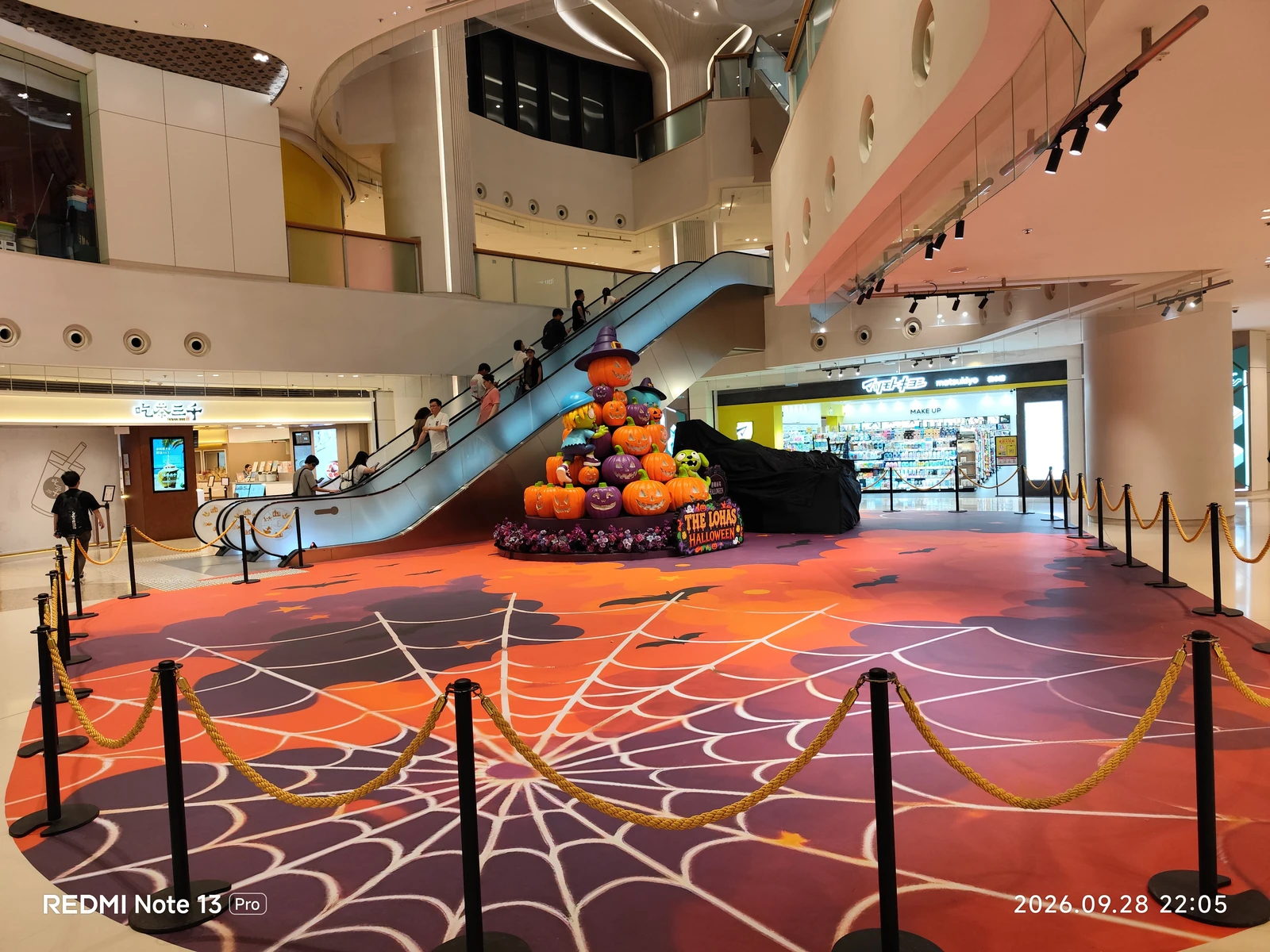
These are suggested formats, not claims about measured market-wide performance. The right scale depends on the customer base, available staff, budget and the action the business wants customers to take.
Is Halloween Banned in China? Check the Location and Format
Halloween programmes are being publicly promoted by major operators in 2026. That does not establish permission for every public gathering, costume activity or promotional format.[2][3]
Reuters reported restrictions on costume gatherings and notices to some Shanghai businesses in October 2024, while noting that no official citywide Halloween ban had been announced. This is historical reporting, not a statement of the rules for every location in 2026.[4]
For a brand activation, confirm the current arrangements with the venue and appropriate local contacts. Ask about capacity, queues, costume and prop restrictions, sound, filming and any approvals the proposed activity needs. An indoor event is not automatically exempt from those checks.
Is the Hungry Ghost Festival “Chinese Halloween”?
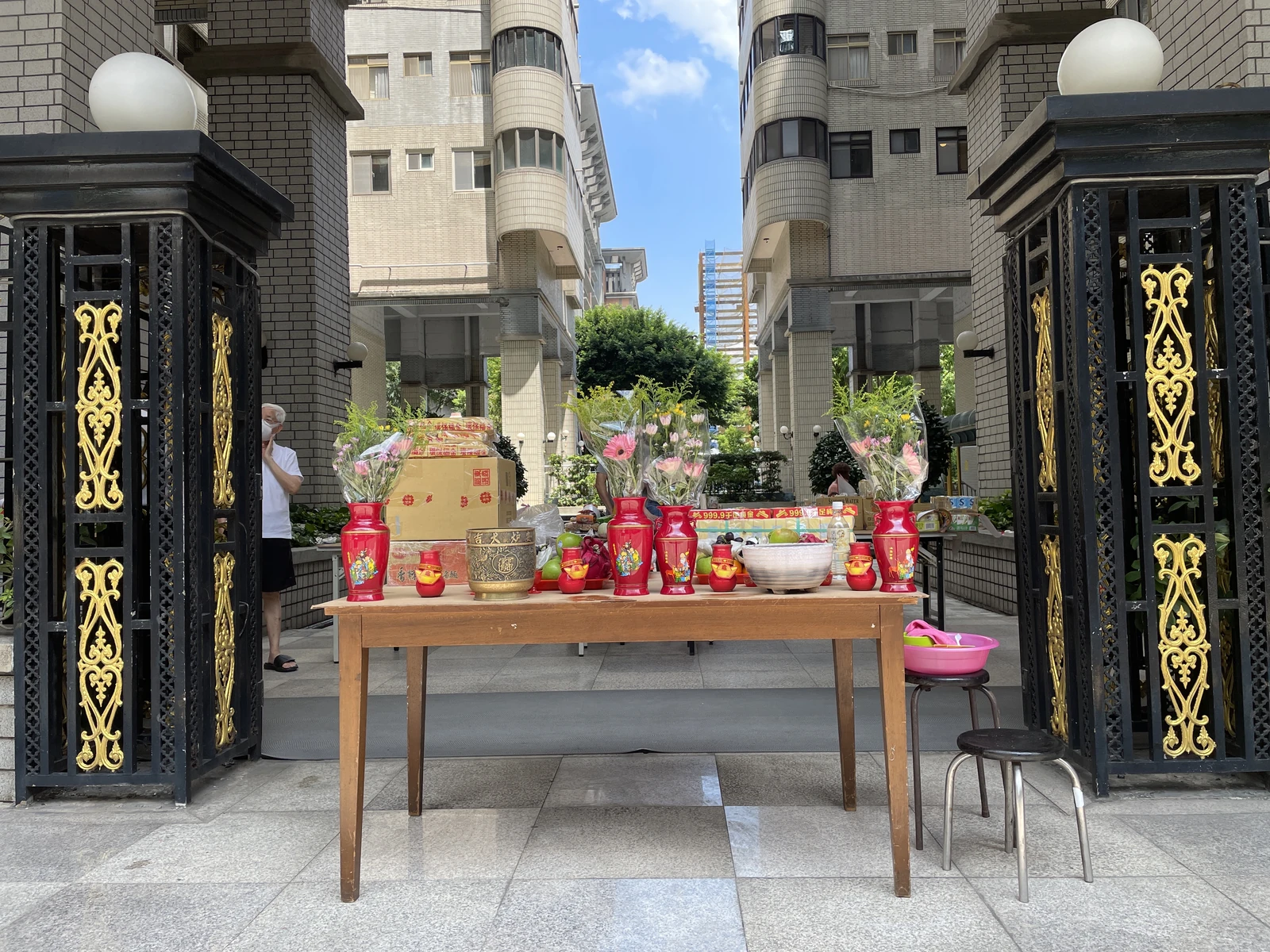
The label appears in English-language discussions, but it can obscure an important distinction. Zhongyuan Festival, or the Hungry Ghost Festival, is associated with ancestor remembrance and offerings. Traditional observance commonly falls on the fifteenth day of the seventh lunar month, with some communities observing the fourteenth or other related dates. Customs vary.[5]
In 2026, the fifteenth day of the seventh lunar month fell on 27 August, according to the Hong Kong Observatory’s calendar conversion table.[6]
| Occasion | Calendar | Context to understand |
|---|---|---|
| Halloween | 31 October; commercial seasons may start earlier | Imported seasonal entertainment and retail activities. |
| Zhongyuan / Hungry Ghost Festival | Seventh lunar month, with dates varying by tradition | Ancestor remembrance, offerings and local observances. |
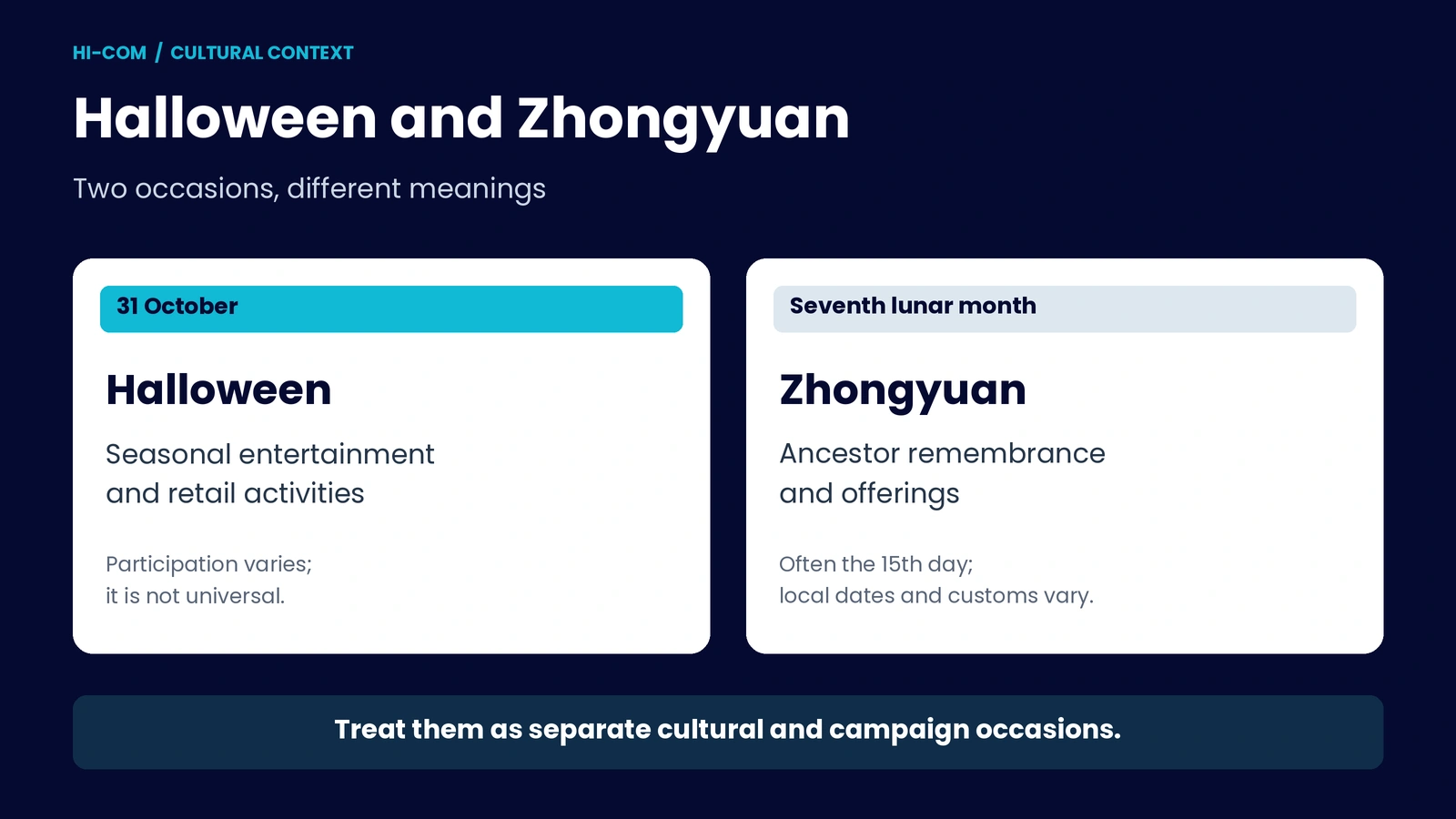
For marketers, treat them as separate occasions. Do not turn an ancestor-remembrance practice into interchangeable Halloween decoration or assume that beliefs and customs are shared by every customer.
Should Your Brand Run a Halloween Campaign in China?
Start with a customer reason to participate. A seasonal theme is most useful when it makes an existing product or experience more interesting and gives the customer a clear next step.
| Business | A format worth assessing | A commercial action to measure |
|---|---|---|
| Café or restaurant | A short menu, tasting or bookable themed evening | Reservations, attendance, redemptions and contribution after costs. |
| Beauty or fashion brand | A wearable look or product demonstration | Qualified product visits, purchases and returns. |
| Retail or entertainment venue | A product-linked photo area or scheduled experience | Check-ins, ticket bookings or attributable transactions. |
A specialist B2B company may have little reason to join a consumer Halloween promotion. Its budget could be better used on a relevant trade event, technical content or direct partner outreach.
Before approving the campaign, answer five questions: who is it for, why does the occasion suit the brand, what should the customer do, can the team deliver it, and what result would justify the cost?
How to Plan a Halloween Marketing Campaign in China
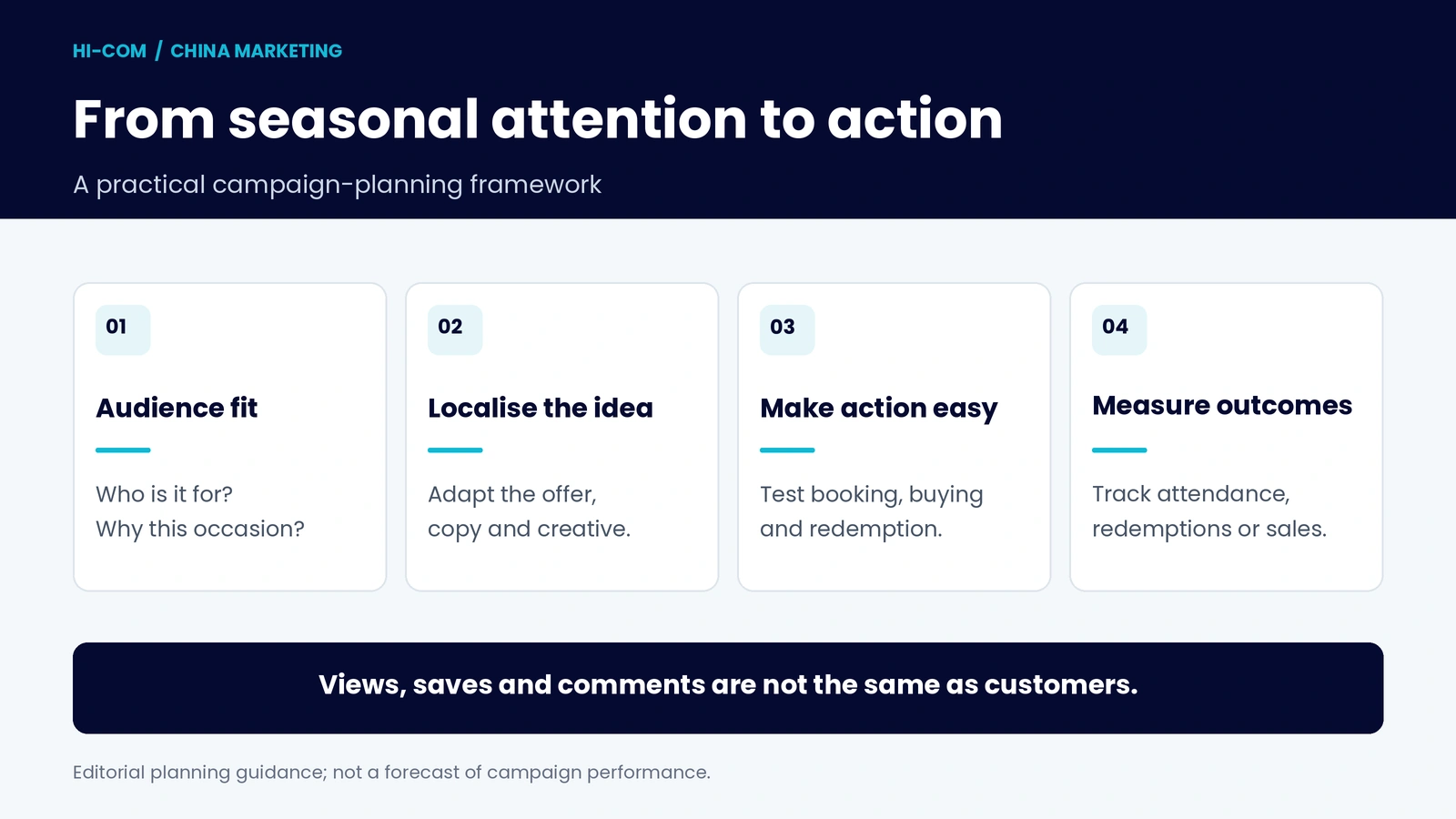
1. Localise the idea before producing the assets
Explain the product benefit and the intended customer action before discussing colours or costumes. Review the Chinese name, humour, tone, visual references and promotional wording together.
A pun that carries the campaign in English may not survive translation. HI-COM’s transcreation services for the Chinese market address this creative adaptation, including campaign copy and messaging.
Avoid a blanket assumption that China only responds to cute content. The verified theme-park examples show different approaches. Choose a tone for your actual audience and review the execution in context.
2. Give each platform a specific job
The table below is a planning framework. It is not a promise that a platform or format will deliver a particular result.
| Channel | A possible campaign role | What the customer needs |
|---|---|---|
| Xiaohongshu / RED | Searchable inspiration and useful creator content | A credible look at the product or experience, with clear practical details. |
| Douyin | Short video showing the experience or product in use | A clear hook, a real demonstration and a supported destination for the next step. |
| Existing-customer communication, event information and follow-up | Booking or redemption instructions that work in the actual account or mini-program setup. |
If you plan paid reach on WeChat, our WeChat advertising guide explains ad formats, minimum budgets and the rules for foreign brands.
For local discovery, test Chinese-language searches that match the offer and city: 上海万圣节活动 for Shanghai Halloween activities, 万圣节妆容 for Halloween makeup or 万圣节穿搭 for Halloween outfits. These are suggested research terms, not verified 2026 trending keywords.
Test the complete journey on a phone. Do not assume that links, QR codes or movement between platforms will work in the same way everywhere; use the destinations and promotional routes supported by the platform and account involved.
3. Brief creators around customer usefulness
A restaurant creator should make the menu, location, price and booking process understandable. A beauty creator should demonstrate the look and show which products are involved.
HI-COM’s KOL and influencer marketing services in China are relevant when a campaign needs creator selection and coordination. Choose for audience fit, location and content quality, rather than follower count alone. Agree deliverables, advertising identification, usage rights and reporting before production.
4. Connect attention to a real offer
Decide whether the next step is a reservation, ticket, shop visit or purchase. Keep the date, location, availability, price and conditions consistent across the creator brief, brand account and point of sale.
For example, a restaurant could pair a short video with a bookable set menu and a campaign-specific booking reference. That is an illustrative mechanism, not a HI-COM case study or a forecast of returns.
5. Review creative, claims and venue arrangements
China’s Advertising Law requires truthful advertising and sets restrictions on content, including provisions concerning superstition, terror and violence. Those rules make contextual review important; an entertainment operator’s programme is not blanket approval for another brand’s advertisement.[8]
Check the proposed copy, imagery and mechanics with appropriate local expertise. Confirm rights to characters, music and other creative material. For regulated products, obtain category-specific advice before launch.
Fit Halloween Into the Double 11 Calendar
In 2026, Halloween takes place while Double 11 selling is already underway. Alibaba announced Tmall presales from 15 October and the start of sales at 20:00 on 20 October, China time.[7]
Plan the seasonal offer alongside the wider commercial calendar. Check whether discounts conflict, whether stock is shared and whether customers will be confused by different prices or expiry dates.
Our Double 11 guide for international brands in China covers the wider platform and campaign-planning questions.
If you are planning at the end of October, keep the scope realistic. An approved product, an existing audience and a working booking route are more useful than rushing a complex collaboration into the final few days.
Measure What Happened After the Post
Choose the business objective before choosing the reporting dashboard. For a restaurant, compare bookings with attendance and actual spend. For retail, distinguish coupon collection from redemption, and orders from completed sales after cancellations or returns.
Record the period, platform, campaign identifier and attribution method. Compare against a relevant baseline and note other promotions running at the same time. A rise during Halloween is not automatically caused by the Halloween campaign.
Views, saves and comments can help explain discovery and interest. They should not be reported as buyers or qualified leads.
Plan Your Next China Campaign With HI-COM
HI-COM’s China-based team supports digital marketing for international brands in China, including local platforms, creator campaigns and content adaptation.
For a published example of our work, see the HI-COM Douyin and Xiaohongshu creator campaign case study. It is a separate project, not a Halloween campaign.
Planning a seasonal campaign in China? Send us:
- Your product and target audience.
- Target cities.
- The channels you already use.
- Timing and approximate budget.
Whether the occasion is Halloween, Double 11 or a product launch, our team will discuss a practical scope around the audience, the offer and the route to conversion. Prefer WeChat? Use the direct team contact on our contact page.
Add HI-COM as a preferred source on Google
Frequently Asked Questions
Is Halloween celebrated in China?
Yes, mainly through organised entertainment and retail, such as theme-park seasons and mall activities, although participation is not universal. It is not a national public holiday.
Is Halloween banned in China?
Do not assume a uniform answer for every activity. Advertised programmes, public gatherings and venue-specific promotions can be treated differently. Check the current requirements for the exact location and format.
What is “Chinese Halloween”?
The phrase is sometimes used for the Hungry Ghost Festival (Zhongyuan Festival), an observance linked to ancestor remembrance and offerings in the seventh lunar month. It is a distinct occasion, not another name for 31 October.
Can children go trick-or-treating in China?
Organised activities exist, such as the 2026 Disneytown trick-or-treat trail at Shanghai Disney Resort. Check the organiser’s current dates and participation rules.
Is Halloween worth including in a China marketing calendar?
Assess the audience fit and commercial action first. A relevant, manageable experience can be worth testing; joining solely because competitors have seasonal artwork is a weak brief.
Which platforms should a brand use?
Choose around the customer journey. Xiaohongshu, Douyin and WeChat can play different roles, but the mix should reflect your existing presence, product, city and available conversion tools.
Sources and Verification
Official programmes verify announced activities, not commercial results. The marketing frameworks and illustrative activation ideas in this article are HI-COM editorial recommendations rather than measured findings from those operators.
- General Office of the State Council, 2026 public-holiday arrangements. Official government republication.
- Universal Beijing Resort, Scares @ Universal 2026, official announcement, 7 August 2026.
- Shanghai Disney Resort, seasonal announcement, company-issued release via PR Newswire, 20 August 2026.
- Reuters, Shanghai Halloween restrictions, 28 October 2024. Historical context only.
- China Intangible Cultural Heritage website, Zhongyuan Festival.
- Hong Kong Observatory, Gregorian–Lunar Calendar Conversion Table of 2026.
- Alibaba Group, Tmall Supports Brand Growth as 11.11 Draws Record Participation, 15 October 2026.
- State Administration for Market Regulation, Advertising Law, particularly Articles 4 and 9.
Cover image: editorial illustration, not a real shop, HI-COM campaign or documented 2026 event.