

Certified translation in China in 2026: 20 cases when you need it
Last updated: September 2026 · Prepared by HI-COM Asia’s certified translation team
Certified translation in China is required whenever a Chinese authority, university, employer, bank or foreign institution needs proof that a foreign-language document has been accurately and officially translated. It applies to personal documents such as diplomas, marriage certificates and passports, as well as business documents such as business licenses and shareholders’ agreements. Below are 20 real cases where a certified translation in China is typically required.
HI-COM is an accredited expert in this field!
Many people won’t have heard of certified or notarized translations before traveling and working internationally. For many coming to or leaving China, it may come as a surprise when they’re asked for a certified translation, and moreover a challenge to figure out exactly how and by whom it can be done. Countries do not automatically recognize the authenticity of a given legal document, be it a diploma or birth certificate, in its original language. Whether applying for a visa, starting a company, or getting married, it’s often required that a translation is made of requisite documents and that it is made by a company that has been vetted, and is licensed, by the Chinese government. Nobody wants to apply for something only to find out they don’t have the right paperwork. So, to remove any unwanted surprises, below is a list of cases where a certified translation is needed in China.
What Counts as Certified Translation in China?
A certified translation is a translation carried out by a professional specialist agency, accompanied by a signed statement confirming it is an accurate and true translation of the original document, along with the translator’s signature and stamp. It is the standard requirement for most legal and administrative documents submitted in China. For a full breakdown of certified vs. sworn vs. notarized translation, see HI-COM’s guide: What is the Difference Between Certified, Sworn and Notarized Translation?
Key Takeaways
- Certified translation in China is required for both personal/civil documents (diplomas, marriage and birth certificates, passports) and business documents (business licenses, shareholders’ agreements, CPA reports).
- A certified translation must be produced by a company that has been vetted and licensed by the Chinese government, with a signed statement, translator signature and official stamp.
- Requirements vary by country and by receiving institution — always confirm the exact requirement (certified, sworn, or notarized) before submitting documents.
- Some visa and permit categories, such as the China-France 1000 Internships visa, require translation of specific supporting documents as part of a multi-step registration process.
Certified Translation for Personal & Civil Documents in China
1. Foreign Diplomas
If you are applying to a university in China, it is often required that any previous diplomas and degree certificates are translated by a certified body. Even if it’s not listed as a specific requirement in the application procedure, it is always good to be over-prepared. Likewise, if you gained a diploma in China, you may need a certified translation to prove its authenticity abroad.
2. Chinese Work Permits
When you apply for a work permit, there are several documents that need to be provided to the Chinese authorities, many of which need to be translated. Some examples of documents that need translating:
- Letters of recommendation from former employers
- Curriculum vitae
- Diplomas
- Grade cards
- Criminal record notes

3. Academic Transcripts
In the same vein as diploma translation, academic transcripts may be needed when applying to study in China. A good practice here is to also translate the guide to how the grading system is structured, as a percentage score in one system might denote something significantly different from that in another.
4. School Marks & Report Cards
You may wish to supplement translations of your school marks with the comments given in report cards, which gives a qualitative edge to your quantitative appeal — important for young students looking to study internationally.
5. International School Registration
Often families want their children to be immersed in an international environment, in order to learn fluent English and prepare them for their expatriate lives. One solution is to enroll the child at an international school. Here are the necessary documents needed for translation into English: proof of affiliation between parents and children, previous recommendations in mathematics, English, etc., certificate of any previous schooling (if applicable), and certificates of previous vaccinations.

6. University Registration in China
In order to register at a Chinese university, you will need to provide some documents translated from French/English into Chinese. Certified translation is required in this case. There is often mention of a degree in partnership with foreign universities, which can facilitate procedures. However, even within the framework of a partnership, the direct classical application is common and you may be asked to provide the translation of transcripts and diplomas in a digital format as well as the application file. Also, it is necessary to present the original documents and translations on the day of arrival at the university.

7. Non-Criminal Record Certificates
Leaving China? Depending on where you’re going, you may be asked for proof that you didn’t get up to anything untoward while you were here. Certified translations may be necessary for visas, employment and health insurance in other countries.
In need of a certified translation in China? Contact us today for a free quote!
8. Resumes and CVs
Those wishing to get a job with a large company in China might find that it’s a requirement for their HR to have a certified translation of their resume. Even for those who don’t require it, submitting one alongside a resume in the original language shows a degree of effort that might leave a good impression.
9. Marriage Certificates
In order to get a spousal visa (L-visa) using an international marriage certificate, it must be presented with a certified translation. Vice-versa, you may need a certified translation for your Chinese marriage certificate to be recognised elsewhere.

Documentation for a Franco-Chinese Marriage
The application is equivalent to civil marriage in many western countries, but it is entirely administrative and there is no ceremony. It normally takes just under an hour, sometimes as little as 15 minutes. Firstly, you should obtain the forms and complete them before attending the Civil Affairs Bureau. In some cities, there will be a special section for ‘international marriages’, which involves submitting an application with the following:
- Both: Single Status Certificate Original (for the foreign citizen – issued by consulate/embassy). If applicable, finalized divorce papers or the death certificate of the ex-spouse if widowed (translated, if issued in a foreign language)
- Both: Birth certificate (for the foreign citizen, the birth certificate shall be translated and the translation notarized by the notary of the country where the document was issued)
- Both: Three official-style photos of the couple together — generally, the civil affairs office provides this service
- Both: The fee
- Chinese person: Household registration book (hukou)
- Foreigner: Passport
After the wedding, the marriage certificate will be translated, notarized (by a Chinese notary), and legalized by the Chinese Legalization Authority. The final paper will be submitted to the Consulate/Embassy of the foreign citizen’s country for internal legalization in that country.
As from late 2019, two foreign citizens are not permitted to get legally married in China by the Chinese authorities (with the exception of getting married in one of the consulates/embassies, which varies per country).
10. Birth Certificates
Children born in China will be provided a Chinese birth certificate, which for a whole host of reasons might be necessary to translate for government agencies elsewhere in the world.
11. Death Certificates
This may be required to prove relationships between the deceased and those who wish to take care of their remains and effects.
12. Police Records
Slightly different from non-criminal record certificates, these are obtainable from the police office at which a temporary resident of China is registered. In some cases, a certified translation of police records abroad is sufficient in place of a notarized non-criminal record certificate.
13. Passports
A certified translation of a passport is often required for work and residence permits in countries all over the world. For Chinese nationals whose visa or residence permit may be tied to a foreign national in another country, it’s likely that a certified translation will be required.
14. Bank Statements
Applying for credit, a mortgage or even opening up a new account can often require that one’s financial history is robust and reliable. Banks, both in China and internationally, will often require bank statements as proof of an individual’s history, and will need to see these in a language they can understand. How to have your document certified? Learn more in our guide!
15. China–France 1000 Internships Visa Documents
This type of visa is issued to a limited number of young French students, allowing them to complete an internship in China. With this visa, it is only possible to obtain a work permit + category C resident permit. The duration of the internship ranges from 3 to 6 months, and only students enrolled at a French higher education institution can apply. France considers an intern as a trainee, while China considers an intern as a short-term employee — therefore pay is mandatory. This visa allows students to travel to and from China, which makes the procedure almost as complex as that of a work visa.
First step: Send the documents to a company located in China, for them to translate into Chinese. The two most essential documents in need of translation are the criminal record and the internship agreement.
Next step (similar to the work visa): Registration by the company at the Labor Bureau, the visa application in France, and then definitive registration after the medical tests in China, as well as the application for the Resident Permit.
Certified Translation for Business Documents in China
16. Business Licenses
China is a hub of multinational business. For contracts and deals negotiated across borders, it is simply a matter of due diligence for all parties involved to check each other’s credentials.
17. Certificates of Incorporation
The business license is only valid under the aegis of the certificate of incorporation. This is a document that details exactly what type of company was formed, and thereby what specific tax and scope limitations apply to it.
18. Shareholders’ Agreements
It can be vital that a shareholders’ agreement is translated verifiably, especially in the case of joint ventures. Shareholders in any company are prone to differences of opinion, internal strife, or unforeseen circumstances that cause one or more of them to want to leave. The conditions under which this may be done are better set crystal clear, and verified, from the get-go.
19. CPA Reports
When operating internationally, one or more governmental bodies might require that a certified translation of a CPA report be given as part of an audit.
20. Employee Handbooks
When you are working overseas, all the documents that concern your work, such as a labor contract or Employee Handbook, aren’t always translated into your mother tongue. Such a situation is not particularly beneficial, as it means employees are not aware of the rules and regulations to follow — especially in China, where they may vary a great deal from those in Western countries. Therefore, it is a necessity for every employer to know that their employees can understand and follow the Employee Handbook. Every China employer should have a set of rules and regulations that set out the duties and obligations of the employer and the employee.
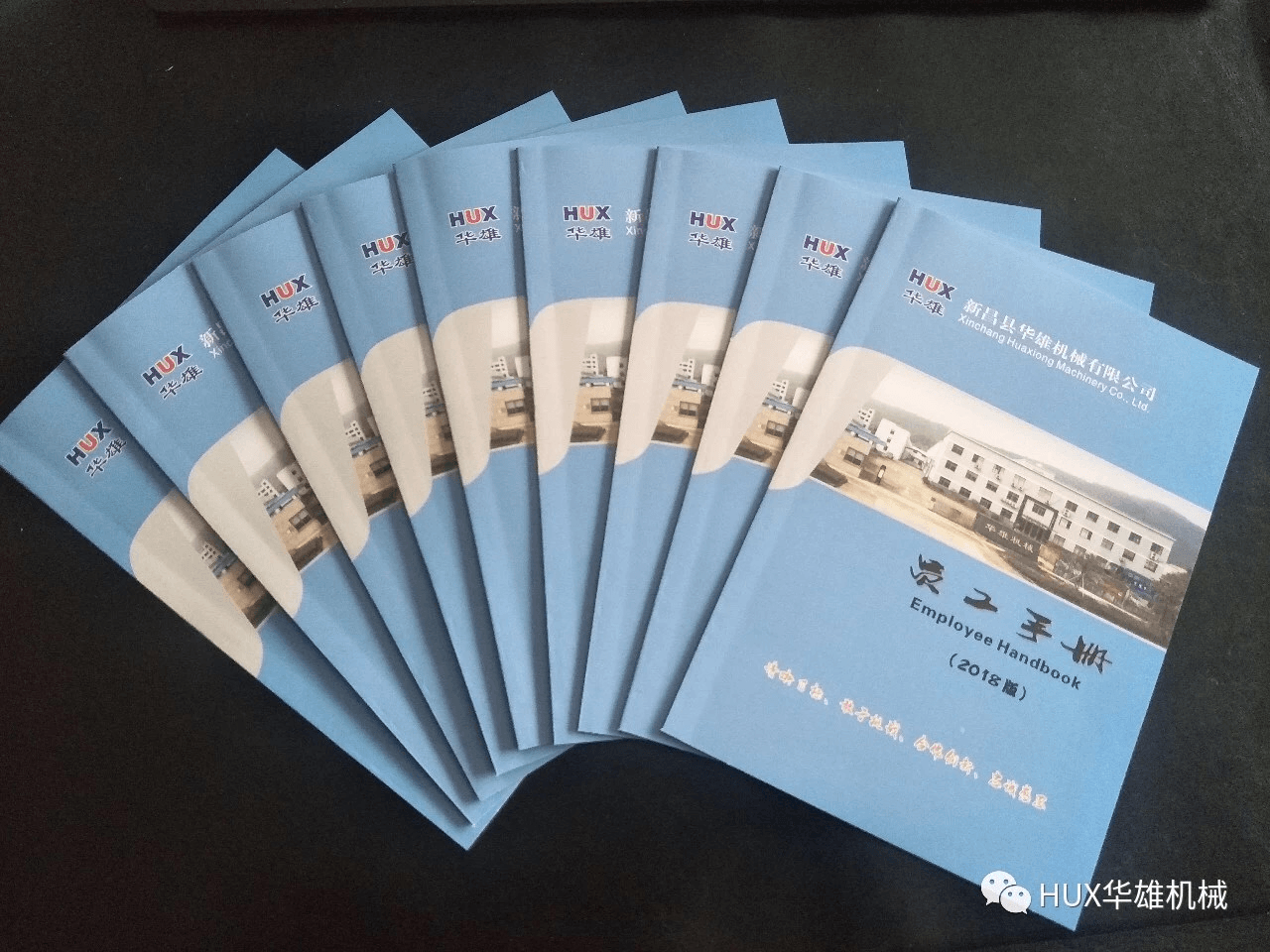
To begin with, you may find yourself in a situation where your employee handbook is available only in Chinese. If you can’t read or understand Chinese characters, you expose yourself to unknown legal risks. Labor rules and regulations in China may be very different from what you are familiar with, so not knowing your rights and what you can or cannot do represents a legal risk. If you decide to translate your employee handbook into a language you can fully understand, you reduce the risk of being confronted with a critical situation in the workplace. On the other hand, if your company has its employee handbook in English or French but you are still working in China, it’s important to have it translated into Chinese, in the event you need it for legal reasons.
Frequently Asked Questions
How many cases commonly require certified translation in China?
Twenty, spanning both personal and civil documents (diplomas, work permits, marriage and birth certificates, passports and more) and business documents (business licenses, certificates of incorporation, shareholders’ agreements, CPA reports and employee handbooks), as covered above.
What is the difference between certified, sworn and notarized translation?
The requirement depends on the receiving institution and country. HI-COM’s dedicated guide, What is the Difference Between Certified, Sworn and Notarized Translation?, breaks down each type in detail.
Where can I learn more about having a document certified?
See HI-COM’s guide, How to Have a Document Certified, for a walkthrough of the process.
Get Certified Translation Support in China
As the law changes frequently all around the world, there will inevitably be more cases where certified translation is required in the future. The best thing to do, when in doubt, is to reach out to a certified translation company and ask.
HI-COM is a multilingual translation agency dedicated to providing professional translation services to businesses around the world.
Contact us for your free consultation today!
If you’d like more information, feel free to get in touch as we’d be delighted to hear from you!
Other articles
All you need to know about NAATI Certified translation Types of Legal translation