

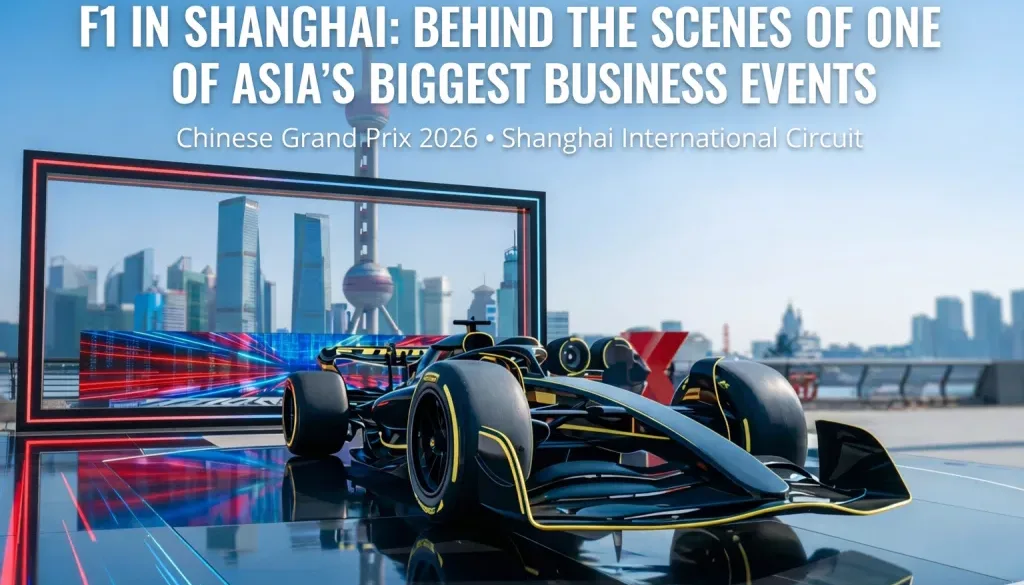
F1 Shanghai 2026: Business at the Chinese Grand Prix – Behind the Scenes
The Chinese Grand Prix in Shanghai has just come to a close. The high-speed cars have left the Shanghai International Circuit. But one question lingers: what truly happened off the track?
Behind the podiums and national anthems, Shanghai buzzed with a different energy this weekend. A business energy – international and flawlessly orchestrated for elite networking in the Chinese market.
Shanghai – More Than Just a Racing Circuit
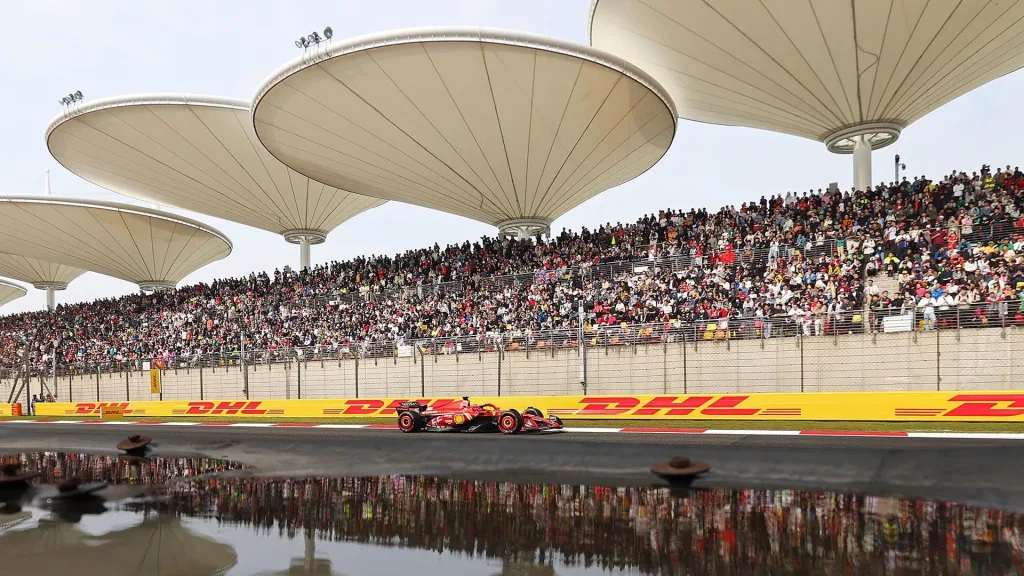
From March 13-15, 2026, the Shanghai International Circuit hosted Round 2 of the Formula 1 World Championship. Kimi Antonelli (Mercedes) secured a historic victory. At just 19, he became F1’s youngest pole-sitter ever. George Russell finished second, with Lewis Hamilton, now at Ferrari, taking third.
Beyond the track, the stats are telling. The event attracted about 230,000 spectators over the weekend – a near-20-year record. Foreign visitors made up 14% of attendees. Shanghai hotel bookings spiked 96% year-over-year. Inbound tourism grew 20% during the event.
 A Premier Business Powerhouse
Formula 1 paddocks go beyond technical areas. They’re power centres – spots where deals are sealed over coffee, far from stuffy boardrooms.
During this weekend in Shanghai, global delegations convened in team hospitality suites. Investors, executives, local and international partners were out in force, all hunting connections.
F1 is now among Asia’s most strategic business events, with Shanghai taking centre stage.
The Intercultural Dimension: A Key Challenge
Communication in China is much more than just speaking Mandarin. It’s mastering the codes. ‘Guanxi’ – the trust-built relationship network – powers every commercial dynamic in China. A sloppy pitch, poorly localised message, or mismatched tone can topple relationships.
Shanghai’s international brands nailed it. They invested in local adaptation – far beyond translation, into genuine intercultural communication strategies for the Chinese market.
F1 embraced this too. Chief Commercial Officer Emily Prazer affirmed on-site: anchoring in the local community year-round trumps race-week hype.
F1: A Global Marketing Laboratory
Formula 1 transcends motorsport. It’s a hyper-sophisticated marketing engine. In the last few years, F1’s worldwide fanbase has exploded – boosted by Netflix’s Drive to Survive series. China’s surge has been particularly noticeable.

Teams bet big on local digital presence. They adapt content for WeChat and Xiaohongshu, team with Chinese KOLs, and localise for young, urban, connected audiences. These activities lead to an increased fan base and new partnerships.
Influence and KOLs: Key players
Chinese social media platforms lit up with a buzz surrounding business activities at the Chinese Grand Prix in Shanghai. KOLs (Key Opinion Leaders) relayed live, sponsored content swamped Weibo and Xiaohongshu, and Lewis Hamilton sparked online chats with cultural visits – hitting millions of Chinese users in hours.
For global brands, it’s a prime opportunity, with huge audiences and strong engagement. But nailing it demands speed, local platform mastery, and tailored messaging.
China is Accelerating. Is Your Communication Keeping Up?
The Shanghai Grand Prix 2026 confirmed a trend: China is roaring back to global mega-events, and with it is fresh demand for premium brands, luxury experiences, and cross-cultural deals.
Firms excelling in authentic, localised communication in China are taking the lead.
Looking to boost your visibility in China or Asia? HI-COM Asia will set your localisation in China on the right path. Contact us today.