

China Economic Reforms 2026: What European Brands Must Adapt Now
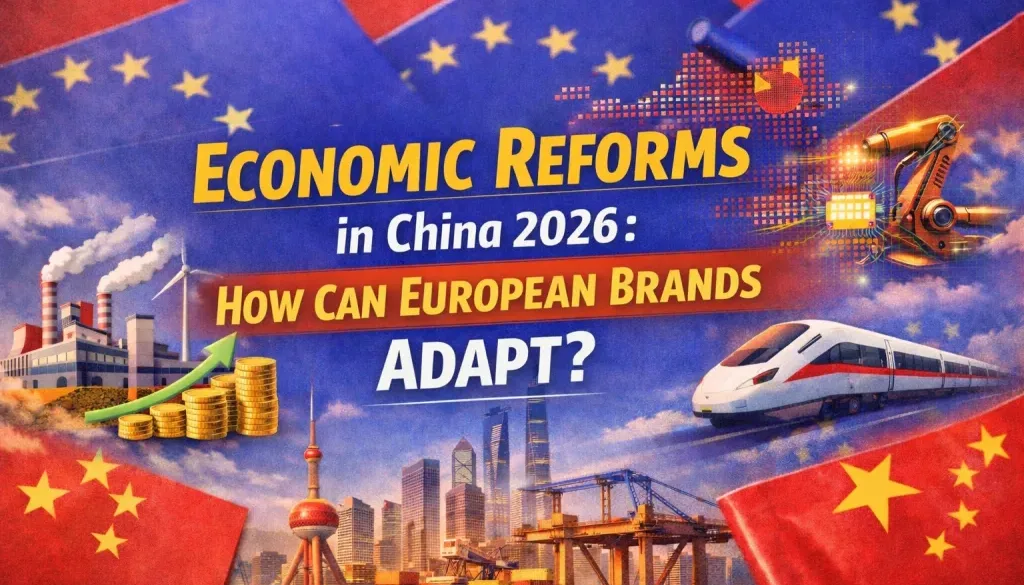
China economic reforms 2026 are reshaping market access for European brands, as domestic demand, green growth, and technological self-sufficiency become core priorities.
China is entering a new phase of economic transformation. The country is moving away from a growth model driven mainly by exports and infrastructure. Instead, it is focusing on domestic consumption, advanced technologies, energy security, and sustainable production.
For European brands, this shift changes the rules of competition. Reputation alone is no longer enough. Brands must localize faster, adapt their messaging, and operate within China’s digital ecosystem.
China Economic Reforms 2026: A New Market Context
China has made expanding domestic demand a top economic priority for 2026. Official policy communication highlights stronger consumption, better services, and economic resilience as key goals.
At the same time, China continues to strengthen strategic industries. These include artificial intelligence, advanced manufacturing, renewable energy, and electric vehicles. Therefore, European companies face stronger competition from local players with faster innovation cycles.
The Three Priorities Behind China’s Economic Shift
Domestic Consumption Becomes a Growth Engine
China wants to reduce its dependence on external demand. This means domestic consumers are becoming more important for future growth.
For European brands, this creates both opportunity and pressure. They can still grow in China. However, they must offer products, services, and messages that fit local consumer expectations.
Green Growth and Energy Transition Accelerate
China has confirmed its goal to peak carbon emissions before 2030 and reach carbon neutrality before 2060. This policy direction is already reshaping sectors such as automotive, energy, retail, and manufacturing.
For foreign brands, sustainability is no longer only a communication topic. It affects sourcing, production, packaging, logistics, and brand trust.
Technology and Local Innovation Gain Priority
China is also investing heavily in original innovation, basic research, and technological self-sufficiency. This matters because Chinese competitors are not simply lower-cost alternatives. Many are now innovation leaders in their categories.
What This Means for European Brands in China
European brands face a more complex Chinese market. Local companies such as BYD, Huawei, and Haier have built strong consumer trust through innovation, pricing, and local relevance.
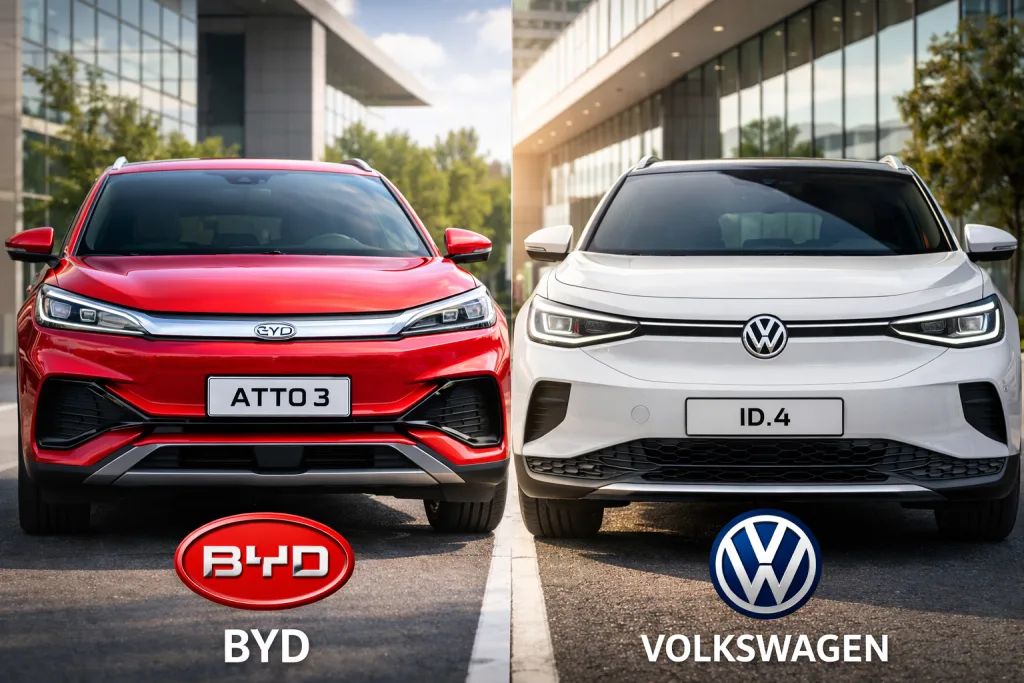
Meanwhile, Chinese consumers are becoming more selective. McKinsey’s China consumer research shows that consumer behavior is changing across mobility, culture, spending, and brand engagement.
Source: McKinsey China consumer market update
As a result, European brands must rethink three areas: positioning, localization, and channel strategy.
Need to understand your brand’s position in China? HI-COM can help you assess your market fit and build a localized growth strategy.
HI-COM’s Strategy for European Brands in China
At HI-COM ASIA, we help international brands adapt to China with a practical, local, and measurable approach. We do not treat China as a standard export market. We treat it as a complete digital, cultural, and commercial ecosystem.
Market Analysis and Consumer Insights
We help brands understand Chinese consumer behavior, category trends, platform habits, and competitor positioning. This allows companies to make decisions based on local market reality, not assumptions.
Localized Digital Marketing
China’s digital landscape is unique. Platforms such as WeChat, Weibo, Douyin, and Xiaohongshu shape how consumers discover, compare, and buy products.
HI-COM supports brands with localized content, Chinese social media strategy, paid media, community management, and campaign execution.
Operational and Cultural Adaptation
Success in China also depends on execution. This includes local partnerships, adapted messaging, platform-specific content, and strong coordination between brand, marketing, and sales teams.
KOL Marketing in China: A Key Growth Lever
KOL marketing in China remains one of the most effective ways to build trust. Chinese consumers often rely on influencers, creators, and expert voices before making purchase decisions.

However, choosing a KOL based only on audience size is risky. The right influencer must match the brand’s values, target audience, platform, and campaign goal.
HI-COM helps brands identify relevant KOLs, manage collaborations, localize campaign messages, and track performance. This ensures that influence supports business results, not only visibility.
Want to launch a KOL campaign in China? HI-COM can help you select the right influencers and build a localized campaign strategy.
Business Impact for European Companies
China economic reforms 2026 are not temporary. They reflect a long-term shift toward domestic demand, innovation, and sustainability.
European brands that adapt early can still capture growth. However, they need a clear China strategy, strong localization, and a deep understanding of digital platforms.
Brands that delay may lose visibility, pricing power, and relevance against faster local competitors.
Conclusion: Turning China’s Reforms into Opportunity
China economic reforms 2026 are changing how European brands must compete. Domestic consumption, green growth, and technological innovation are now central to market success.
For European companies, the opportunity is still significant. However, success requires more than translation or standard export marketing. It requires local insight, digital execution, KOL strategy, and long-term brand adaptation.
HI-COM ASIA helps European brands navigate China with strategy, localization, and on-the-ground execution.
Contact us to build your China market strategy for 2026.