

How luxury brands are co-creating the next generation of Chinese “glocal” brands from Shanghai
A strategic analysis focusing on cross-cultural issues, bilingual storytelling, and brand identity – by HI-COM Asia
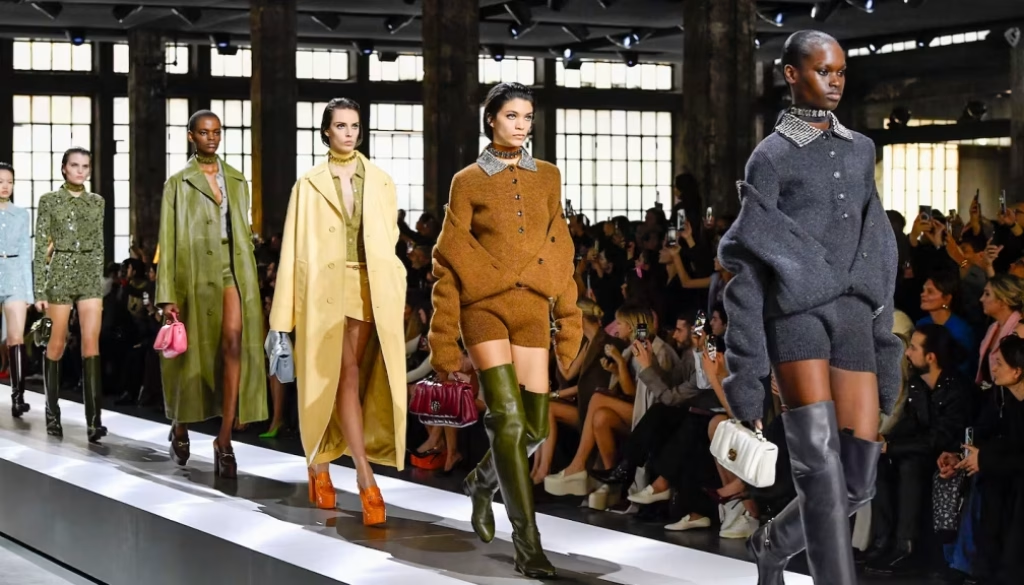
Shanghai is now acting as a global laboratory for innovation in the luxury sector. A creative capital, technological hub and nerve centre for Chinese Gen-Z, it is enabling the emergence of a new generation of ‘glocal’ brands: deeply rooted in local culture yet immediately recognisable to international markets.
Major fashion houses – Kering, LVMH, Moncler, as well as more specialised players in design and craftsmanship – are forging partnerships with Chinese designers, digital platforms and cultural institutions. This dynamic is creating a unique ecosystem where mentoring, co-branding, narrative innovation and immersive experiences are shaping the Chinese brands that will shine on the global stage tomorrow.
HI-COM Asia, a multilingual communications agency specialising in transcreation, bilingual storytelling and cross-cultural strategy, is supporting this movement.
I. Why Shanghai has become the driving force behing ‘glocal’ brands
1. An unrivalled creative and technological ecosystem
Shanghai brings together emerging designers, fashion schools, incubators, production studios, digital platforms and a young audience eager for new things. This density encourages experimentation between international luxury houses and local designers.
2. Chinese consumers: the real accelerator
Chinese Gen-Zers are looking for brands that can:
- promote local cultural codes,
- offer immersive experiences,
- tell a bilingual and authentic story,
- offer globally competitive designs.
The brands that succeed are those that know how to adapt their narratives, products and values to these expectations — without resorting to simple literal translation or ‘exoticising’ marketing.
II. The strategic role of international luxury houses
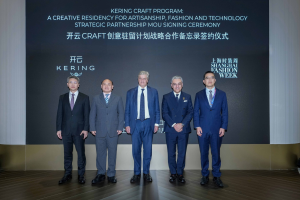
1. The emblematic case: Kering x Shanghai Fashion Week
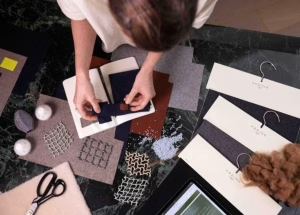
By collaborating with Shanghai Fashion Week, Kering reinforces excellence, mentoring and local innovation. Creative residencies, training programmes and international networking enable Chinese designers to develop a strong identity while respecting international luxury standards.
This type of partnership demonstrates that luxury is no longer limited to exporting a Western model, but is becoming a creative dialogue between cultures.
2. Cultural co-branding culturel : a Gen-Z success
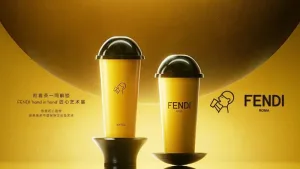
— Fendi × Heytea: a viral activation combining luxury and pop culture F&B (Food & Beverage)
This collaboration has enabled Fendi to become part of the daily lives of Chinese consumers by integrating its visual universe into one of the country’s most iconic drinks. The partnership was widely shared on Xiaohongshu, illustrating the ability of luxury to embrace highly accessible lifestyle codes without losing its premium aura.
– Louis Vuitton × League of Legends: a luxury–gaming hybrid that made its mark in China.
LV created exclusive skins and a custom trophy for the game’s world championship, strengthening its presence among a young and extremely engaged audience. This collaboration showed that a luxury brand could become relevant in the world of e-sports by transforming its couture codes into a digital visual language.


3. Events as a tool for identity: Moncler in Shanghai
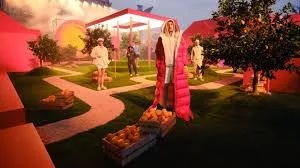
Moncler transformed Shanghai into a large-scale immersive stage. These massive events reinforce the brand’s international reputation while giving local designers a high-impact platform for expression.
International fashion houses continue to explore unexpected collaborations that connect luxury with cultural worlds that are highly popular with Chinese Gen-Z. These actions play a key role in building a glocal imagination, where prestige and contemporary culture meet.

III. How are Chinese brands becoming ‘glocal’?
1. A dual identity
A glocal brand succeeds when it simultaneously meets two requirements:
- Local: telling a story that is culturally accurate, relevant and emotionally resonant for the Chinese audience.
- Global: maintaining an aesthetic, positioning and quality that meet international luxury standards.
Shanghai offers the ideal terrain for this hybridisation.
2. The key role of bilingual storytelling
The new generation of Chinese brands is built on skilful storytelling in Chinese and English (or even French, depending on the market).
Best practices:
- transcreation (adapting the cultural meaning, not the language);
- hybrid videos (portraits of artisans + short formats for social media);
- micro-stories on Xiaohong Shu and WeChat;
- bilingual press kits for European or American markets.
It is precisely at this stage that HI-COM Asia’s expertise becomes crucial.
IV. HI-COM Asia’s decisive role in the rise of glocal brands
HI-COM Asia has established itself as one of the most essential strategic partners for brands – whether already established or emerging – seeking to be part of this new glocal dynamic.
Thanks to a unique combination of cross-cultural expertise, high-end transcreation and multilingual production, the agency supports luxury brands throughout their expansion into Chinese and international markets. Its role goes far beyond translation: HI-COM acts as a true narrative architect, enabling brands to build a consistent, fluid and culturally relevant identity in multiple languages
1. Creative translation & transcreation for luxury
Transcreation is at the heart of HI-COM Asia’s work. The agency does not simply adapt words, but transcribes worlds, artistic intentions, values and emotions into narratives capable of reaching a highly diverse audience.
For luxury brands, this aspect is crucial: every sentence, every symbol, every narrative element must preserve the brand’s DNA, while remaining intelligible and inspiring to global audiences.
The objective is twofold:
– to preserve the soul of the brand, its elegance and its imagination;
– to ensure perfect international understanding, without any loss of meaning or cultural awkwardness.
It is this finesse that allows brands to shine simultaneously in Shanghai, Paris, Dubai and New York.
2. Bilingual storytelling for designers and collaborations
HI-COM Asia also acts as a story creator. The agency builds and develops powerful storytelling for fashion, F&B, gaming and artistic collaborations, as well as for event campaigns in China, designer profiles and video formats for social media.
The approach consists of articulating a single narrative in two distinct cultural versions: one rooted in Chinese sensibilities and an international version designed for global luxury.
This mastery of dual storytelling – emotional, culturally accurate and globally accessible – enables brands to express themselves consistently across all their communications, regardless of the channels or audiences targeted.
The result: deeper, more credible storytelling that creates a genuine connection between the brand, local communities and global audiences.
3. Campaign localisation & cultural audits
Localisation is much more than linguistic adaptation: it involves cultural decoding. HI-COM Asia conducts comprehensive cultural audits to ensure that every element of a campaign – visuals, symbols, colours, historical references, tone – is perceived positively by the Chinese public.
The agency analyses:
- underlying cultural symbolism,
- risks of connotation or misinterpretation,
- the relevance of visual and narrative choices for China,
- harmony between brand values and local expectations.
This step, often overlooked by international brands, helps avoid costly mistakes and ensures the cultural consistency of campaigns. It is also a powerful lever for strengthening brand credibility with a Chinese audience that is extremely attentive to detail and cultural nuances.
4. Multilingual production: Chinese, English, French
Finally, HI-COM Asia provides truly multilingual content production in Chinese, English and French – a rarity in the industry. This capability ensures narrative consistency across continents, while respecting the linguistic and cultural specificities of each market.
Whether it’s digital content, press kits, video scripts, event campaigns or comprehensive creative strategies, the agency orchestrates seamless communication between European, Asian and Middle Eastern cultural spheres.
This multilingual expertise makes HI-COM Asia a trusted partner for brands seeking to deploy a strong, consistent and scalable identity across multiple markets simultaneously.
V. Examples of successful glocal strategies (inspiring models)
1. Emerging Chinese brands supported internationally
Many brands created in Shanghai now adopt a glocal identity:
– Shushu/Tong: hybrid feminine storytelling, international resonance;
– Xu Zhi: modern Chinese craftsmanship, global storytelling;
– Staffonly: visual humour and experimental design, highly appreciated in Europe.


2. What these brands have in common
- a clear local cultural universe;
- a global visual aesthetic;
- a coherent bilingual narrative;
- structuring international collaborations;
- a strong presence on Xiaohongshu, Douyin and WeChat.
Conclusion : the future of luxury lies in Shanghai – and in truly cross-cultural communication
Co-creation between international houses and Chinese designers heralds a new era: taht of glocal brands. These brands, born between Shanghai and the world, are capable of telling a local story while appealing to international audiences.
To succeed, they must master:
- an understanding of Chinese cultural codes,
- fluid and consistent bilingual storytelling,
- strategic adaptation of their content to global markets.
HI-COM Asia is at the heart of this transformation. Thanks to its expertise in transcreation, localisation and bilingual storytelling, the agency supports luxury brands, institutions and designers in building brand identities adapted to the future of the Chinese and international markets.