

The Chinese App Ecosystem Explained: What Foreign Companies Need to Succeed in 2025
In 2025, China boasts the world’s most advanced and unique mobile ecosystem. With over a billion smartphone users, the country offers massive opportunities for app developers, marketers, and tech-driven brands. But China isn’t just another mobile market—it’s an entirely different digital universe, governed by its own rules, platforms, and user behaviors.
If you’re a foreign company looking to launch an app or digital product in China, understanding this ecosystem is not just helpful—it’s essential.
What Makes the Chinese App Ecosystem Unique?
The Absence of Western Platforms
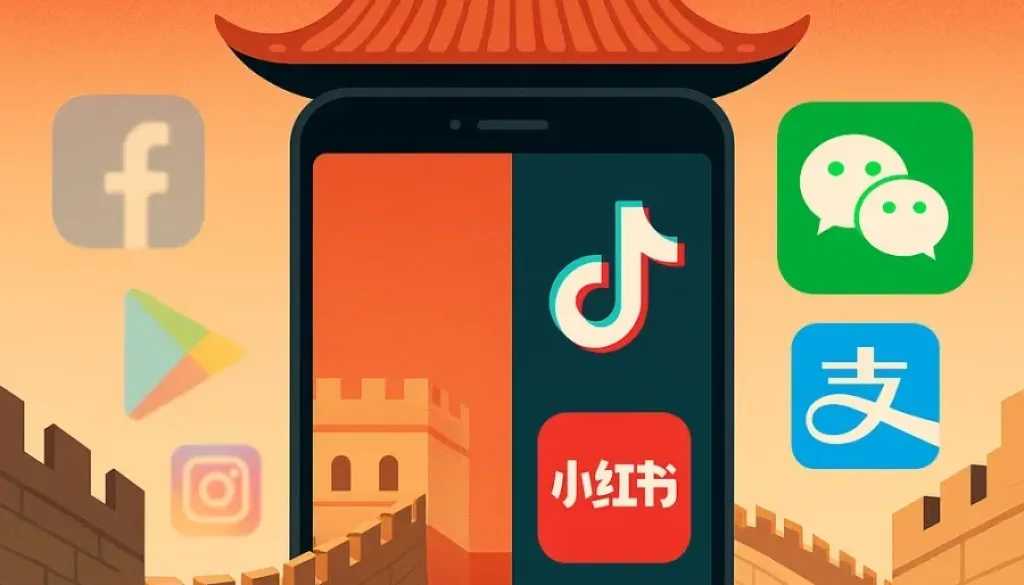
China’s internet operates behind the Great Firewall. That means no Google Play, Facebook, WhatsApp, Instagram, or Twitter. Western developers quickly realize that many of their go-to services, like Firebase, Google Maps, or Stripe, are either blocked or unreliable in China.
Instead, China has developed an entirely self-contained ecosystem with its own players, APIs, distribution platforms, and UX standards.
The Rise of Super Apps
In the West, apps are usually built to do one thing well. In China, users expect apps to do everything.
Take WeChat as the prime example: it started as a chat app but has evolved into a full-fledged platform with:
- Mini-programs (like mini-apps within the app)
- Mobile payments
- eCommerce stores
- Social media feeds
- Booking, messaging, CRM tools, and more
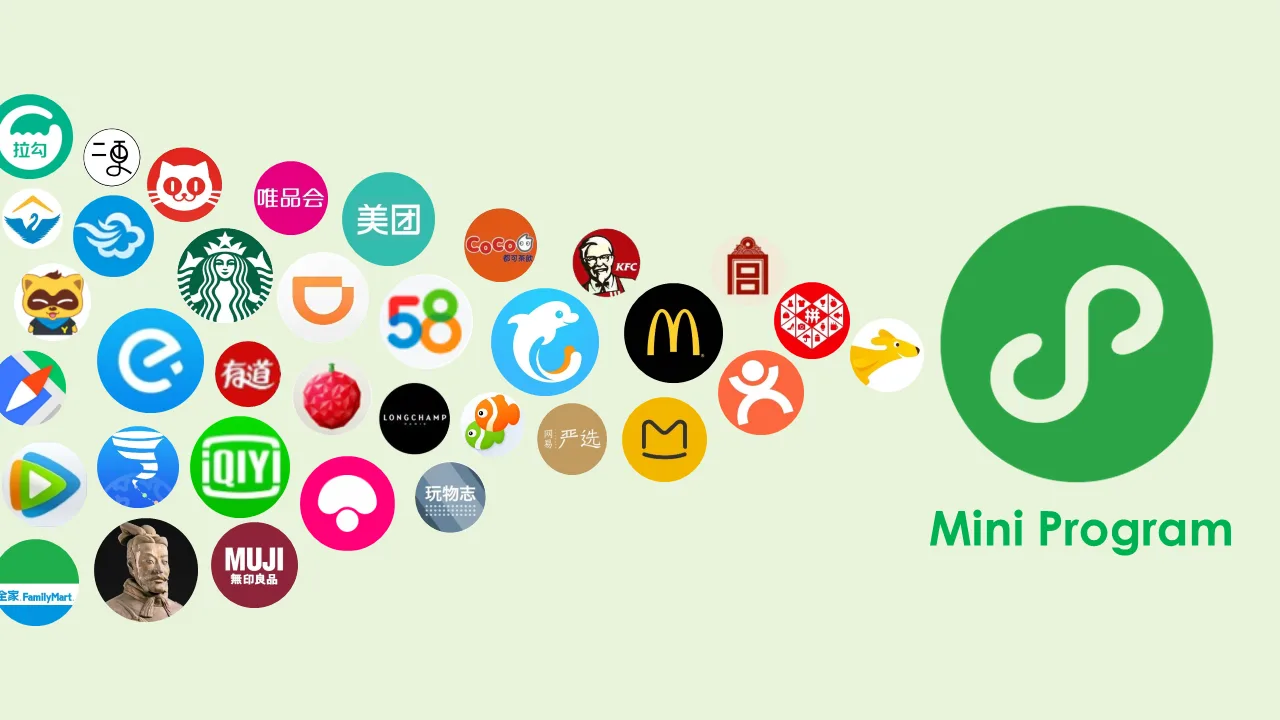
Other super apps include Alipay, Meituan, and DingTalk, each dominating wide verticals from finance to enterprise tools.
Closed Ecosystems and Data Laws
Chinese apps operate under tight regulatory oversight. Hosting must be localized, and sensitive user data must remain onshore. Content is also heavily monitored, and apps are expected to follow content moderation and licensing rules. The cost of non-compliance? Removal from app stores or even fines.
Core App Categories and Leaders in 2025
Social & Content:
- Xiaohongshu (Little Red Book)
- Douyin
- Bilibili
E-Commerce & Payments:
Mobility & Navigation:
- Didi Chuxing
- Gaode Maps (Amap)
Productivity & Enterprise:
- DingTalk and Feishu (Lark)
- WPS Office
App Distribution in China: Fragmented but Crucial
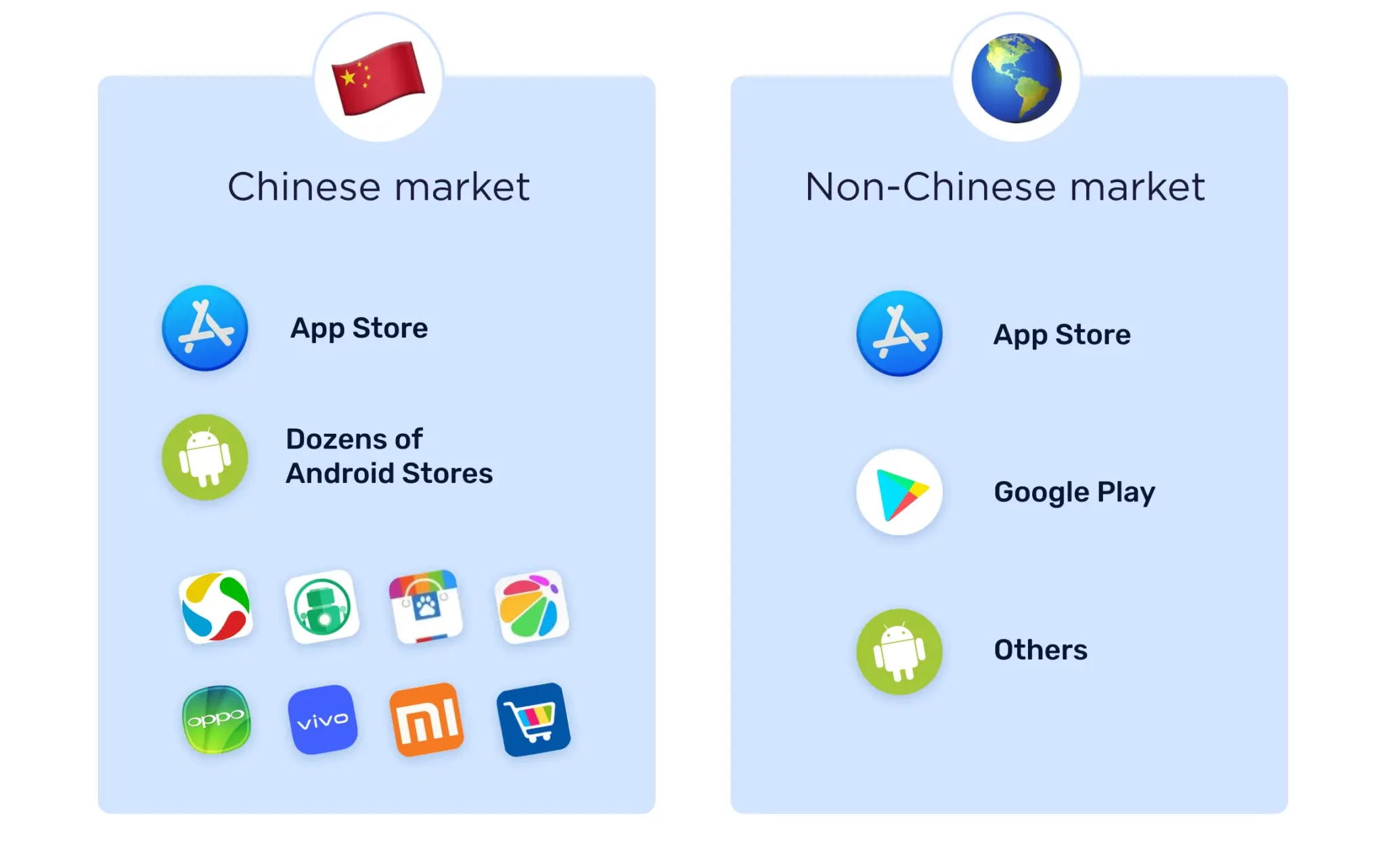
The lack of Google Play creates one of China’s most complex challenges: distribution. Android apps must be uploaded to multiple third-party app stores, such as:
- Tencent MyApp
- Huawei AppGallery
- Xiaomi Market
- 360 Store
- Oppo, Vivo, Baidu Store
Apple’s App Store is available in China, but apps there still need to comply with Chinese laws.
Localizing Your App for Chinese Users
- Language & Tone: More formal, context-heavy
- UI/UX Preferences: Visual density, QR codes, gamification
- Onboarding: WeChat or mobile sign-in expected
- Payment: WeChat Pay and Alipay are must-haves
- Legal: Local laws, simplified Chinese T&Cs
Common Mistakes Foreign Companies Make
- Assuming Chinese users speak English
- Using blocked or non-compliant services
- Global hosting causing performance issues
- Ignoring ASO in local app stores
- Underestimating local competitors
What You Need to Succeed in the Chinese App Market
- A Localization & Compliance Strategy
- Local Hosting & CDN Support
- Platform Partnerships (WeChat, app stores)
- User Feedback Loops
- An Experienced Partner
Why Work with HI-COM?
HI-COM is a multilingual communication agency based in Asia, with over a decade of experience helping international businesses localize apps, websites, and digital platforms for the Chinese market.
- App interface and content translation
- Legal adaptation and user policy localization
- Platform integration support (WeChat, Alipay, app stores)
- Cultural consulting and UX testing
Final Thoughts
China’s app ecosystem may be complex, but it’s also incredibly rewarding for companies who do it right. Local expectations are different, but with the right strategy and support, you can unlock a vast and loyal user base.
Ready to localize your app for China? Get in touch with our team today.