

Chinese New Year: How brands turn the holiday into a powerful driver for business
How Chinese New Year Became a Strategic Moment for Global Brands
Chinese New Year is one of the most influential moments in Asia, shaping consumption patterns, travel habits, and festive expectations every single year. During this period, brands compete to create strong emotional experiences, as they understand the importance consumers pay to symbols, traditions, and shared moments.
Companies adjust their messaging and designs built around lanterns, red hues, and family values. These choices are both aesthetic and strategic. Brands want to strengthen their presence in the Chinese market and connect with an audience that expects relevant and meaningful experiences.
Several major luxury houses have embraced this shift by creating immersive installations designed to attract crowds, boost online engagement, and blend luxury storytelling with cultural authenticity. Among the most notable examples are Tiffany & Co., Valentino, and Loewe.
Tiffany & Co. in Beijing: A Lantern-Shaped Boutique That Captures Attention
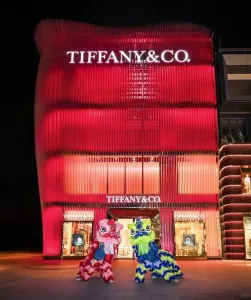
Tiffany & Co. created a pop-up store in Beijing shaped like a giant lantern, drawing visitors almost immediately. Its symbolic form evoked light, luck, and harmony – three themes central to Chinese New fYear celebrations.
The goal was clear: offer an experience that blended luxury, local culture, and emotion. Inside the lantern, visitors discovered key jewelry pieces, took photos, and created content for social platforms.
For Tiffany & Co., the challenge was twofold. First, strengthening its presence in the Chinese capital. Second, capturing the massive foot traffic generated during the holiday season. This installation proves that luxury today requires more than just a few elegant window displays. It must offer memorable experiences built for social sharing.
Valentino: A Lantern Festival That Blends Art and Emotion
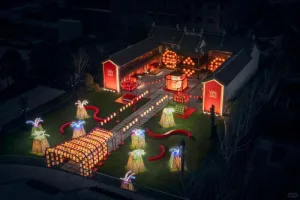
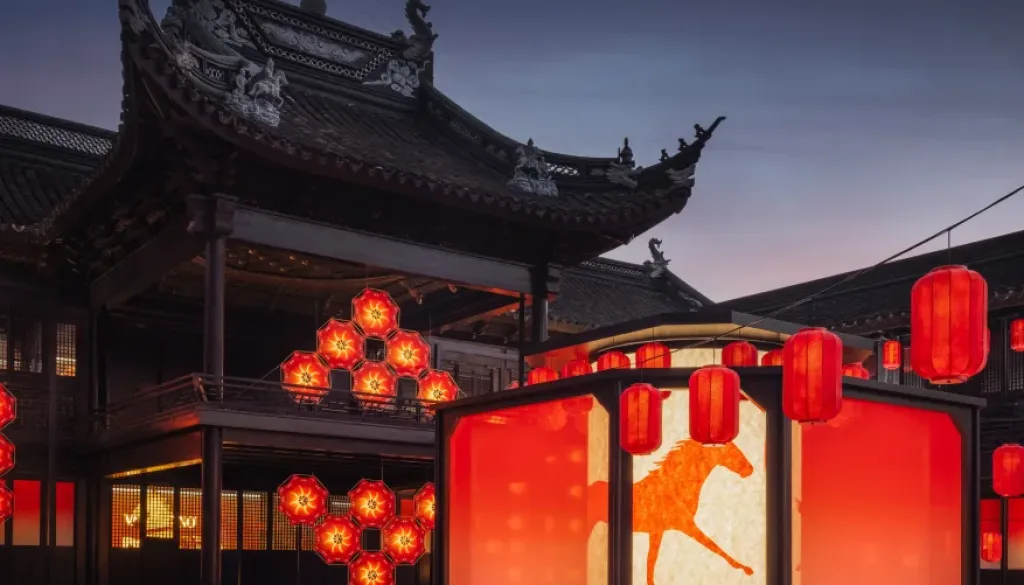
Valentino took an artistic approach by designing a lantern festival inspired by traditional patterns. Visitors walked through a visual journey where each lantern told its own story. The concept was simple: build an experience strong enough to go viral.
During Chinese New Year, social activity rises sharply. Users share photos of places that inspire them.
Valentino leveraged this behavior by designing an installation optimized for Douyin, Xiaohongshu, and WeChat. Red tones, vibrant lighting, and classic lantern shapes made the space visually irresistible.
This festival also reinforced Valentino’s long-term commitment to the Chinese market. By embracing cultural codes, the brand showed a desire to build an authentic relationship with local consumers.
Loewe: A Contemporary Interpretation of the Lantern Festival
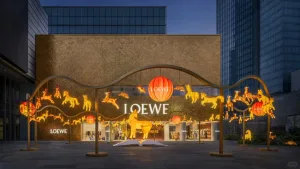 Loewe also explored the lantern theme, creating a modern festival where each element echoed light, celebration, and renewal.
Lanterns are deeply symbolic in China, representing hope, prosperity, and the start of a new cycle.
The brand adopted a contemporary aesthetic: smoother lines, minimalist shapes, and a more artistic tone.
The result was an elegant, photogenic space that appealed especially to younger visitors looking for unique experiences, different from traditional retail environments.
What Common Strategy Do These Brands Share?
All these initiatives reveal a clear trend. Brands now invest heavily in key cultural moments. They want to engage consumers when their attention is highest and when emotions shape purchasing decisions.
Chinese New Year generates exceptional traffic and spending, both offline and online. By creating immersive installations, brands boost awareness, encourage content creation, and strengthen long-term preference.
These experiences also help brands stand out in a competitive environment where visual impact and emotional storytelling are essential.
HI-COM’s Role: Guiding, Adapting, and Amplifying Brand Strategies
To succeed with this kind of installation, companies must understand cultural expectations and local behaviors. They also need content adapted to Chinese audiences—linguistically, visually, and symbolically. This is where HI-COM plays a key role.
HI-COM supports brands by adapting content, ensuring cultural accuracy, and building digital strategies tailored for Chinese platforms such as Douyin, WeChat, and Xiaohongshu. Our expertise includes translation, localization, and transcreation to ensure messages resonate with local users.
The goal is simple: help brands become visible, understood, and appreciated in one of the world’s most competitive markets.
Marketing Impact: A Rapid Growth Window During the Festive Season
Installations like those of Tiffany & Co., Valentino, and Loewe generate strong engagement. They attract visitors, boost footfall, and produce high-performing content online. Lantern-themed posts are widely shared, strengthening brand image and increasing marketing impact.
During Chinese New Year, every detail matters. Colours, decor, messaging, and digital displays and installations must align with cultural expectations. When brands succeed, they turn these celebrations into a powerful growth driver.
As well as being a important cultural celebration, The Chinese New Year is also a strategic business opportunity. It allows brands to connect with customers through meaningful experiences and reinforce long-lasting relationships.
If your company is looking to build a strong presence in the Chinese market and make a long-lasting local impact, HI-COM can support you at every stage.
Reach out to our team to create your next campaign in China.