





TRANSLATION HUB · SWORN & CERTIFIED TRANSLATION
Sworn & Certified Translation Services — China, Europe, the Americas and Australia
“Sworn,” “certified” and “NAATI-certified” translation each mean something different by country. HI-COM gets the right mechanism for each one — with a confirmed network in France, Russia and the USA.

“Sworn Translation” Means Something Different in Every Country
The term “sworn translation” gets used loosely, but the actual legal mechanism behind it differs in almost every country — and knowing which one applies to your document matters more than the label itself. This is operational guidance, not legal advice: requirements vary by receiving authority and should be confirmed for your specific case.
An individually court-appointed sworn translator, appointed by the public prosecutor at the relevant Court of Appeal for a renewable five-year term, personally attests to the translation’s accuracy.
A traductor jurado, appointed by Spain’s Ministry of Foreign Affairs (MAEC) via a competitive exam rather than court appointment, signs and seals the translation as a true and accurate version of the original.
Authorised at the state level through regional courts, not one federal body — the exact title (beeidigter, vereidigter or ermächtigter Übersetzer) depends on the Bundesland.
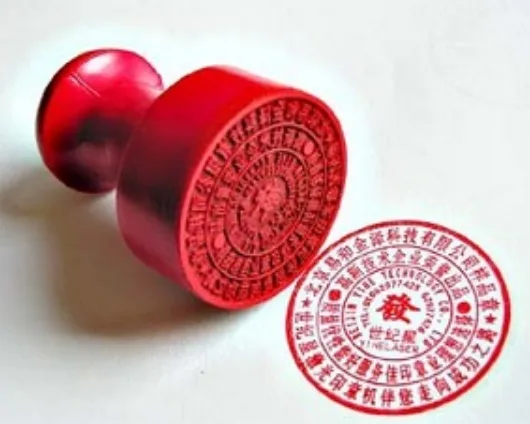
No individual sworn-translator system. Certification runs through a registered translation company’s official seals. See HI-COM’s Certified Chinese Translation page for the full explanation.
Not a sworn-translator system. Any competent translator can prepare the translation; a notary then authenticates the translator’s identity and signature, not the translation’s accuracy. Documents leaving Russia typically also need an apostille.
No government-registered translator system at all. Any individual or company can certify; what’s required is a certification statement (name, fluency attestation, accuracy statement, date, signature, contact). ATA certification is optional, not required.
Also no government-regulated system. Professional bodies (ITI, CIOL, ATC) recommend a translator or company affiliated with a recognised professional body, with a certification statement declaring the translation “a true and accurate translation of the original document.”
Regulated provincially, not nationally — OTTIAQ in Quebec, ATIO in Ontario and equivalent bodies elsewhere. Carries the translator’s seal/signature, a certification statement, and their professional membership number.
NAATI (the National Accreditation Authority for Translators and Interpreters) is the credentialing body; a NAATI-certified translation carries the translator’s NAATI credential number. Not “sworn” — Australia does not operate a court-sworn system.
HI-COM’s Sworn & Certified Translation Network
Positioned as a bridge service, not a standalone SKU: HI-COM sits in both worlds — China-based certification expertise and a network in sworn-translation-requiring countries — for clients whose documents need to work in more than one system.
France
HI-COM works with a network of court-appointed sworn translators in France for business documents, bank statements, credit history, contracts and civil-status documents.
Russia
HI-COM prepares translations for Russia’s notary-based process, with apostille guidance where the document is leaving Russia for use abroad.
USA
HI-COM provides certified translation meeting USCIS and standard US institutional requirements, with ATA-certified translators available where that added credential matters for your receiving institution.
Spain, Germany, the UK, Canada, Australia and other destinations — contact HI-COM to confirm sworn or certified translation support for your specific country before committing to a timeline.
Common Documents We Handle
 Business licenses
 Bank statements
 Credit history
 Contracts
 Civil-status documents
Tell Us About Your Cross-Border Documents
If your documents need to cross between China and a sworn-translation country — a Chinese company opening a subsidiary abroad, or a document from France, Russia or the USA that also needs Chinese certification — tell us the document type, destination country and deadline, and we will confirm the right translation and certification path.
Contact Us
Scan to contact us on WeChat
Frequently Asked Questions
What’s the difference between sworn, certified, and notarized translation?
The mechanism depends on the country: France uses an individually court-appointed sworn translator; China uses a registered company’s official seals; Russia uses a notary who authenticates the translator’s signature, not the translation itself; the USA has no government registry at all and relies on a certification statement. Notarization is a separate, additional verification step some receiving authorities require on top of any of these. See HI-COM’s Certified Chinese Translation page for more on how China’s own certification works.
Do I need sworn translation for documents used in China?
No. China does not operate a sworn-translator system; certified translation through a registered company is the standard requirement there.
Does Russia have sworn translators like France?
No. Russia uses a notary-based model instead: a notary authenticates the translator’s identity and signature, not a court-appointed individual sworn translator the way France does.
Does the USA require a certified or sworn translator?
Neither, strictly speaking. The US has no government-registered translator system; what’s required is a certification statement meeting the receiving institution’s requirements (USCIS, for example). ATA certification adds credibility but isn’t legally required.
Is a NAATI-certified translation the same as a sworn translation?
No. NAATI (National Accreditation Authority for Translators and Interpreters) is Australia’s national credentialing body for translators, but Australia doesn’t operate a court-sworn system the way France or Spain does — “NAATI-certified” is the correct term for Australia, not “sworn.”
Does the UK or Canada require a sworn translator?
No, neither has a government-regulated sworn-translator system. The UK relies on professional-body best practice (ITI, CIOL, ATC); Canada regulates translation provincially, through bodies like OTTIAQ in Quebec and ATIO in Ontario, using the term “certified translation” in both cases.
How much does sworn or certified translation cost?
Cost depends on the destination country, document type and length, and turnaround urgency. Send your document details for a specific quote — HI-COM does not publish a flat rate because requirements and translator fees vary by country.
Can HI-COM handle documents that need both Chinese certification and sworn or certified translation for another country?
Yes, for the countries in our confirmed network — France, Russia and the USA today. This is exactly the kind of cross-border case HI-COM’s network is built for. For other destinations, contact us to confirm what we can deliver before you commit to a timeline.
Get Your Sworn Translation Quote
Tell us your document type, destination country and deadline — HI-COM will confirm the right sworn, certified or notarized translation path for your situation.
Prefer WeChat? Scan the QR code above.